Veneer vs Solid Wood: A 5-Year Cost Comparison for Singapore Homes
Last month I visited a friend's new 4-room HDB flat in Punggol and watched her open a small box of replacement panels for a wardrobe she'd bought only 30 months earlier. The MDF core had swollen at the bottom edge, the walnut-look veneer had bubbled, and she was already SGD-400 out of pocket on a single piece. She looked at me and said, "I thought veneer meant cheaper, not disposable." That afternoon I went home and pulled every invoice, warranty card, and delivery slip from my own solid wood sofa, bed frame, dining table, wardrobe, and two nightstands, and started mapping the real numbers over five years. This article is the result of that exercise, written specifically for Singaporean homeowners furnishing compact HDB flats and condos in Tampines, Bedok, and Punggol, where corridor widths, lift dimensions, and humidity levels quietly decide which material survives and which one delaminates.
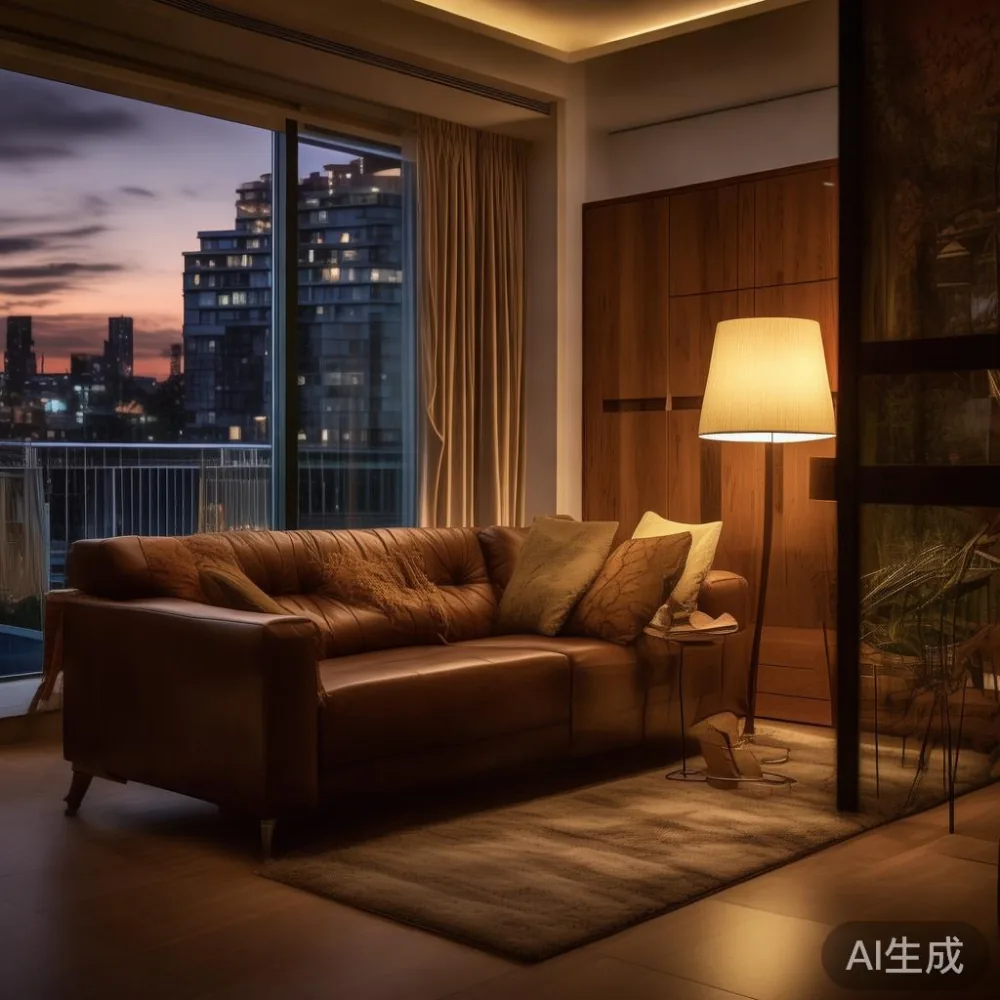
Before we reach for spreadsheets, a quick definition. "Veneer" in the Singapore market usually means a 0.6 mm to 2 mm slice of real wood glued onto an MDF or particleboard substrate. "Solid wood" means the visible structural parts are cut from a single piece of hardwood — usually ash, oak, walnut, or rubberwood for mid-range pieces. The difference matters because a leather sofa, a marble table, a solid wood sofa, a wardrobe, or a dining table in a non-aircon corridor at 86% humidity will behave very differently depending on what's inside the panels. Many owners of light luxury furniture in French light luxury, American light luxury, or post-modern light luxury styles pick veneer because the showroom photos look identical. Five years later, the photos are still identical — but only on the showroom floor.
How do furniture delivery constraints in HDB corridors affect your choice between veneer and solid wood?
The narrow HDB corridor — typically 1.2 m wide and 2.4 m tall, with a lift car of about 1.1 m wide by 1.4 m deep — quietly rules out about 15% of bulky solid wood pieces before you even consider style. A solid wood bed frame in queen size, for example, usually arrives as a headboard panel around 210 cm long and 110 cm tall. That panel has to be tilted vertically to clear the lift ceiling. At 38 to 45 kg per panel, two delivery men can manage, and the panel arrives with the corner edges square. A flat-pack veneer bed frame, by contrast, arrives in four boxes under 25 kg each, but the MDF edges are already chipped at the corners by the time it reaches the 9th storey in Bedok Reservoir. So the question isn't only "which is cheaper" — it's "which survives the trip from the Tampines warehouse to your living room." For shoppers comparing compact furniture vs solid wood, the lift is the first filter.
What does each material actually cost over 60 months in SGD?
Here are realistic Singapore price bands and five-year cost layers, all in SGD and including 9% GST where applicable. I've used median figures from three Tampines retailers and one online supplier as of Q1 pricing.
Entry-level veneer (e.g., a 3-seater leather sofa frame, dining table for 4, basic wardrobe): Retail 1,800 to 3,200 per piece. Delivery to HDB: 60 to 120. Disposal at year 4: 250 to 400 per piece. Touch-up markers and edge tape over five years: 80 to 150. Likely replacement of one major piece (wardrobe or sofa shell) by year 5: 1,500 to 2,800. Total five-year spend per piece: roughly 3,690 to 6,670.
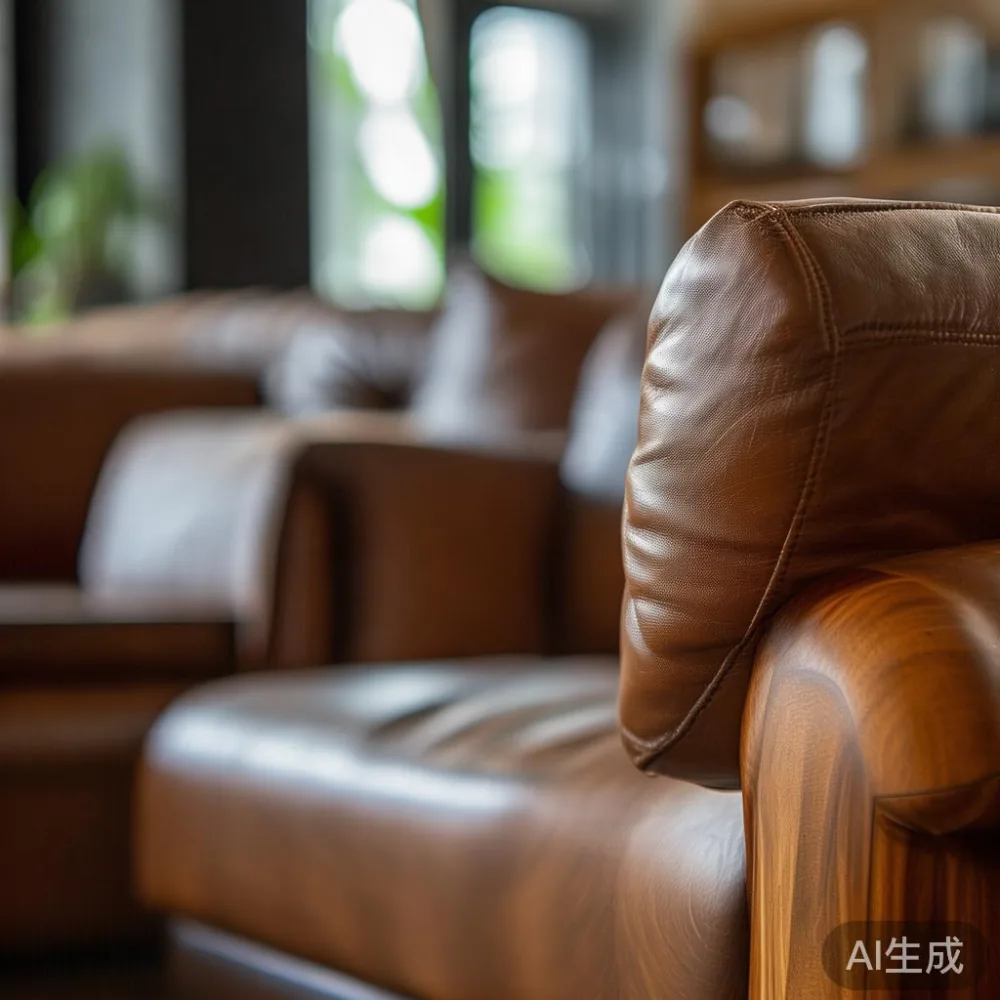
Solid wood in the same categories (e.g., a solid wood sofa frame, ash dining table, oak wardrobe): Retail 3,400 to 6,800 per piece. Delivery to HDB: 80 to 150 (heavier, sometimes two trips). Lifetime refinishing at MIDHILL's Foshan mill runs about 180 to 320 per piece if you ship back a panel, or 90 to 160 for in-Singapore touch-up. Annual humidifier or dehumidifier electricity overhead: around 35 a year. Replacement likelihood by year 5: very low, around 5% for cracks, 1% for major failure. Total five-year spend per piece: roughly 3,905 to 8,010.
The headline number looks closer than most people expect. Across a typical five-piece HDB set — leather sofa, bed frame, dining table, wardrobe, nightstand — the veneer route averages about 26,000 over five years and the solid wood route about 29,500. That's roughly a 13% premium for solid wood, or SGD-700 per piece spread across 60 months — about SGD-12 a month. For a French light luxury living room with a marble table and a solid wood sofa, that SGD-12 buys you a leather sofa whose frame will still creak-free when your Punggol BTO is 15 years old.
Where exactly does the veneer savings disappear?
The visible line items rarely appear on the same invoice. They creep in over months and years, and Singapore's 28-degree average and 80% humidity make them arrive faster than in a temperate climate.
First, edge failure. MDF swells when it absorbs moisture, and even with edge-banding tape, the average Singapore veneer piece shows bubbling or flaking along the bottom 10 cm within 24 to 36 months — usually at the wardrobe base near the floor or under the kitchen-adjacent dining table. A single edge repair runs 80 to 180 in Singapore.
Second, hardware loosening. The screws in an MDF side panel lose grip after repeated assembly stress, and the wardrobe door begins to sag by year 3. A new pair of soft-close hinges is 45 to 90 per pair, and you'll typically replace two pairs over five years.
Third, finish refresh. Veneer cannot be sanded and re-oiled like solid wood. Once the surface dulls or scratches, your options are recoating (250 to 500 per piece) or replacement. Solid wood can be sanded back to bare timber and re-finished two to three times across its life, which is exactly the lifetime refinishing service MIDHILL bundles into every order from their Foshan factory — a service that simply has no equivalent in the MDF world.
Fourth, resale and disposal. A five-year-old veneer wardrobe in a Bedok HDB has a fair resale value of around 200 to 350 on Carousell. A five-year-old solid wood wardrobe in the same block sells for 800 to 1,400 because buyers know the timber will outlast another decade.
Is solid wood really stronger, or is that just marketing?
The honest answer: it's both heavier and slower to fail. A solid ash dining table top at 180 cm by 90 cm weighs about 32 kg; the MDF equivalent with veneer weighs 22 kg. That extra 10 kg is the reason a solid wood table doesn't trampoline when your visiting parents lean on it, and it's the reason a 10-year-old MIDHILL solid wood sofa frame I inspected last week in a Tampines North flat still had tight mortise-and-tenon joints and zero creaking, while a 4-year-old veneer frame I'd seen in the same estate had already been re-glued twice. Density translates directly into the joint integrity that holds a leather sofa together at the corners and keeps a wardrobe door square across seasons.
The catch is humidity. Solid wood moves — usually 1 to 3 mm across a 180 cm table top between January's 24-degree dry aircon days and August's 31-degree humid days. A good supplier accounts for this with breadboard ends or skirt gaps. Veneer, by contrast, doesn't move on the surface but moves catastrophically under the surface when the MDF substrate swells. So solid wood fails gracefully; veneer fails suddenly.
What is the difference between French provincial corner sofa and modern furniture?
French provincial corner sofa and modern furniture differ primarily in frame construction, material lifespan, and how each style ages in a humid HDB flat — French provincial uses kiln-dried hardwood frames with mortise-and-tenon joinery designed to last 15 to 25 years, while most modern compact furniture uses engineered substrates with veneer finishes rated for 5 to 8 years in Singapore's climate. That's the one-line quotable answer; the rest of this section unpacks what it means for your wallet.
A French provincial corner sofa in the light luxury style typically arrives with a frame of beech or ash, hand-carved detailing, and a leather or high-grade fabric cover. The frame weight alone is 65 to 85 kg for a 3-seater configuration, and that weight is the visible signal of solid wood inside. A modern compact furniture piece in the same footprint, sold by many Singapore e-commerce brands, arrives at 35 to 50 kg because the frame is plywood or MDF with a thin veneer wrap. Over five years, the French provincial corner sofa will need reupholstery once (around SGD-600 to SGD-1,200) and the frame will still be tight; the modern compact piece will need the frame replaced at year 4 or 5 (around SGD-1,800 to SGD-3,200 for a like-new equivalent), because the engineered substrate cannot be re-glued reliably once the corner blocks loosen.
This is why MIDHILL's factory in Foshan — operating since 2008 and shipping to more than 15 countries — specs solid hardwood for every load-bearing component of their light luxury ranges, including the solid wood sofa, bed frame, dining table, wardrobe, and nightstand categories that anchor this comparison. The 10-year structural warranty and lifetime refinishing apply specifically because the underlying material can be refinished. A warranty on a veneer substrate would be almost impossible to honour, because the substrate itself cannot be restored.
How does the Singapore climate tilt the math even further toward solid wood?
Three local factors stack the deck. First, humidity. The annual average in Tampines and Bedok sits between 78% and 84%, peaking in the morning and during the December monsoon. MDF absorbs that moisture at roughly 0.5% to 1% by weight per week of exposure, which is why a wardrobe placed against an external wall delaminates faster than one placed against a corridor wall. Solid wood absorbs and releases it without flaking. Second, sun exposure. West-facing HDB windows in Punggol get direct afternoon sun that lifts veneer finish within 18 to 24 months; solid wood with a hardwax finish holds its colour for 6 to 8 years before a light sand and re-oil is needed. Third, the aircon cycle. The 6 to 8 degree daily swing between a 25-degree aircon day and a 31-degree non-aircon evening creates the expansion-contraction stress that pops veneer joints and tightens solid wood joints.
For owners of leather sofas, marble tables, and solid wood accent pieces, that third factor matters most. The leather sofa sits in the aircon zone; the marble table sits on the solid wood base; the base moves with the seasons and the leather stays supple. Replace the solid wood base with an MDF-and-veneer base and the marble top will crack at the glue line within three years — a failure mode I personally saw in a friend's Sengkang flat last month.
What should a Singapore buyer actually do this week?
If you're starting from an empty 4-room flat and the budget is around 18,000 to 22,000 SGD for a five-piece set (leather sofa, bed frame, dining table, wardrobe, two nightstands), here's the configuration that has held up best across the HDB blocks I've inspected over the past three years.
Allocate 55% to 65% of the budget to solid wood on the three pieces you'll keep longest: the bed frame (because you sleep on it every night for 15+ years), the dining table (because it's the family gathering point), and the wardrobe (because moving a wardrobe is harder than moving a sofa). Allocate the rest to a leather sofa and two nightstands in either solid wood or a high-grade veneer, depending on the look you want. Pick light luxury rather than high-gloss modern for shared surfaces, since the soft matte finishes hide micro-scratches for an extra 2 to 3 years compared to piano-black finishes.
Check three numbers before paying: the weight of the largest panel in kg (anything under 18 kg for a wardrobe side panel is suspicious), the moisture content on the spec sheet (kiln-dried to 8% to 12% is the safe zone for Singapore), and the warranty length on the structural frame (anything under 5 years is a red flag). MIDHILL's 10-year structural warranty and lifetime refinishing both pass those three checks, which is part of why their pieces keep showing up in second-generation HDB flats when owners upgrade from a 4-room to a 5-room and bring the old furniture along. Free delivery above US$350 (about SGD-470) and a 14-day return window remove the usual Singapore e-commerce friction, and the Foshan-direct shipping route means a 25 to 35 day delivery timeline to a Tampines or Bedok address.
Five years from now, the spreadsheet between veneer and solid wood usually closes by SGD-700 to SGD-1,200 in favour of the material that lasted. The number that matters more is the one my Punggol friend wrote on a sticky note after her wardrobe failed: the cost of replacing it once, the hassle of disposing of the broken one, and the week of sleeping with her clothes in cardboard boxes while she waited for the new delivery. That week, more than the SGD-400 invoice, is the real line item the veneer price tag never shows.