Humidity and Your Wood Furniture: A Singapore Homeowner's Guide
I live on the 12th floor of a Tampines HDB block, and the first thing I noticed after moving in was that the wardrobe door in the master bedroom never quite closes the way it did in the showroom. A 4 mm gap appeared along the top by October. By February, that same door had swollen so tightly that it dragged against the frame. My colleague in Punggol had the opposite complaint with a new dining table — a 6 cm split running along the grain. Same country, same climate, completely opposite problem. Both pieces came from factories in Foshan, where most of the world's solid wood furniture for export is made, including the inventory that MIDHILL ships to Singapore buyers every week.
Singapore sits between 1° north of the equator and 1° north of the equator — that is, right on the line. Relative humidity in Bedok, Tampines, and Punggol typically runs between 70% and 85% for nine months of the year, and never really drops below 60% even during the dry inter-monsoon period. That figure matters enormously if you have just spent SGD 2,400 to SGD 9,500 on a solid wood dining table, a solid wood bed frame, or a leather sofa with a hardwood frame. Wood is hygroscopic: it drinks and breathes water every hour of every day. The goal is not to stop that process — you cannot stop it — but to slow it down enough that the movement stays inside tolerances you can live with.
Why does my solid wood bed frame creak louder after the monsoon?
The sound you are hearing is slippage inside a wood joint, and it is one of the most common questions we get from buyers along the East Coast. When humidity climbs from 65% to 90% in three days — which it routinely does when the northeast monsoon sweeps down the Strait of Malacca — every timber cell in a 38 mm-thick oak board absorbs roughly 0.4% of its dry weight in moisture. A king-size solid wood bed frame weighing around 90 kg gains and loses about 360 grams of water depending on the season. That is enough to swell the board 2 to 3 mm across its width, and that swelling is what wedges mortise-and-tenon joints and stretches dowel pins.
The flip side happens in air-conditioned condominiums where owners set their bedroom thermostat to 22 °C. Indoor humidity can drop to 40% during a long conference call from home, and the same board will then shrink, opening hairline splits along the grain. If you have ever wondered whether an American bed vs Mid-century modern bed performs differently in this climate, the answer is yes — mid-century designs usually expose more end grain and use thinner slats, which means they breathe more and crack faster in our flats.
Three practical fixes that work in a typical 95 sqm HDB:
- Keep your bedroom between 23 °C and 26 °C with the air-con, and pair the unit with a small desiccant wheel or a SGD 45 plug-in dehumidifier that runs on a hygrometer.
- Pull your solid wood bed frame 10 cm away from the wall so air can move behind it. Tampines HDB flats often have a 6 cm skirting gap because the wall itself sweats under monsoon rain.
- Rotate the bed 180° once a quarter so any seasonal cup or twist averages out over time.
Do leather sofas actually survive Singapore's humidity without going mouldy?
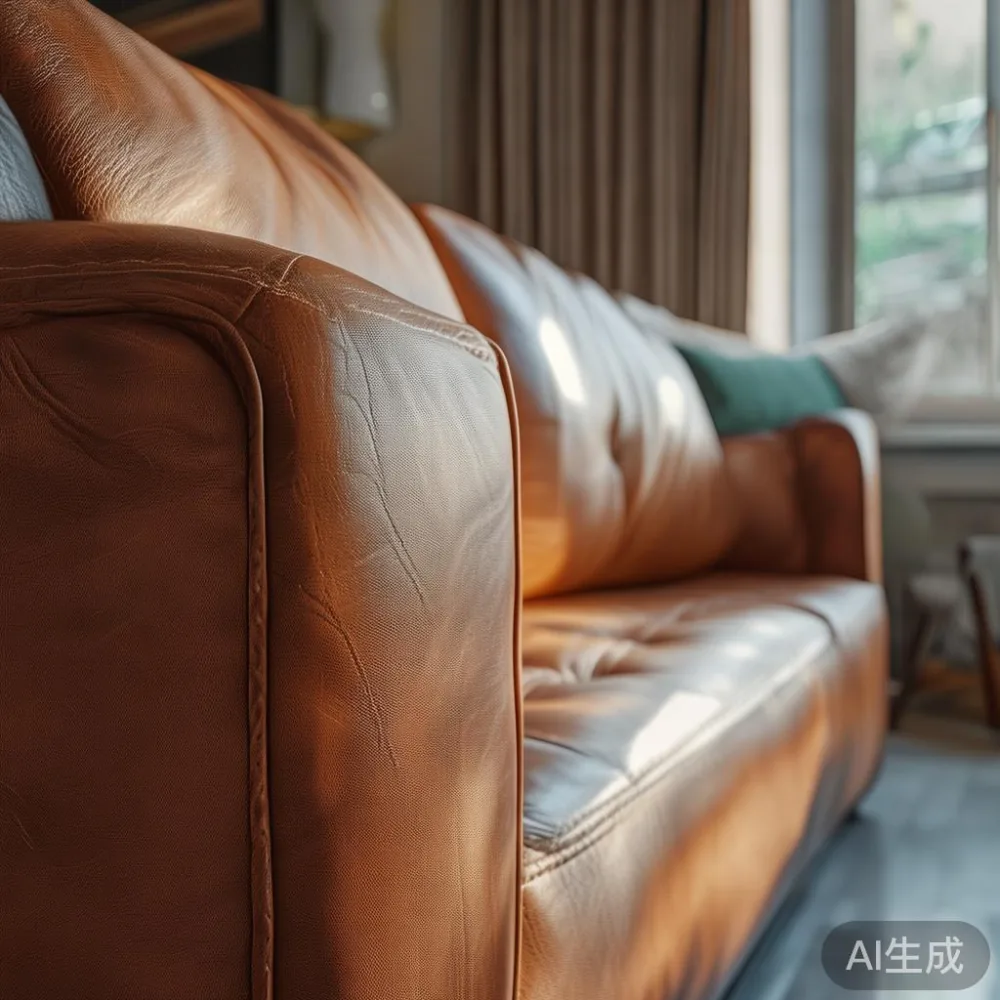
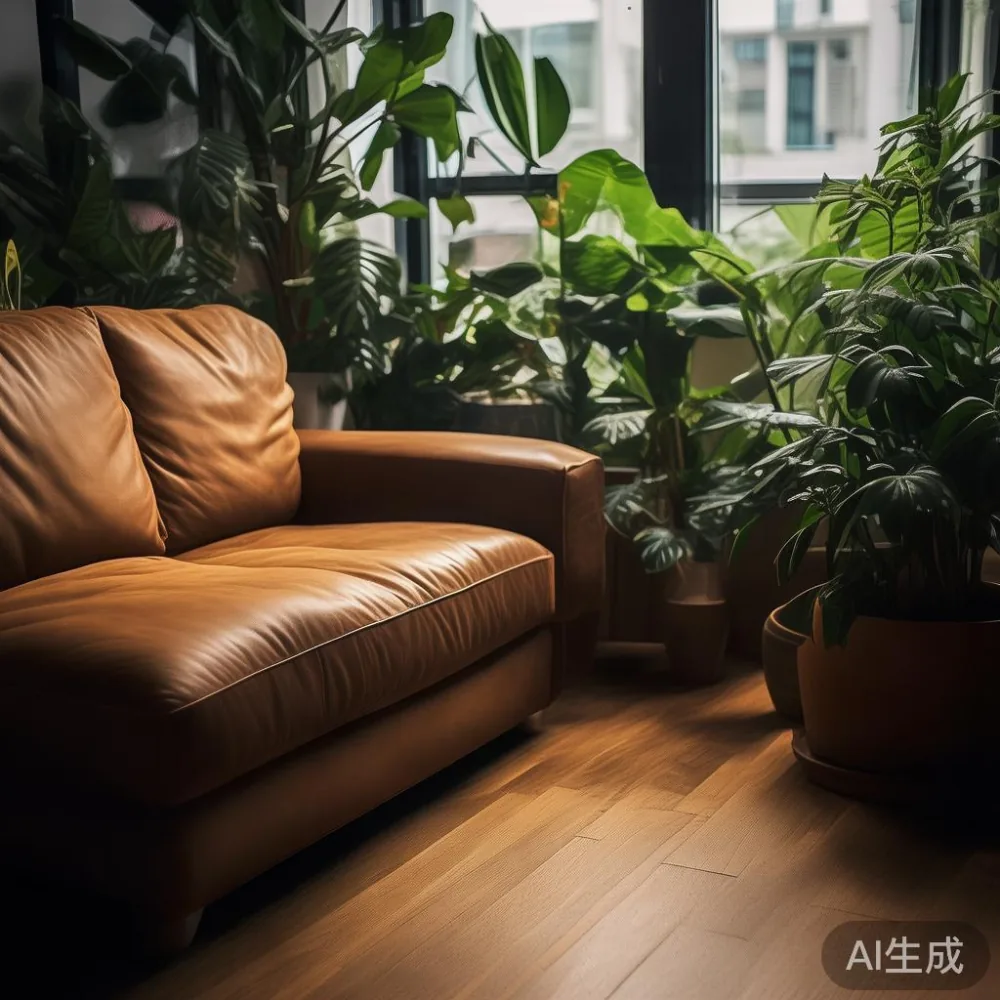
Yes — but only if two conditions hold at the same time. The leather must be top-grain or full-grain (synthetic PU starts to peel at our humidity levels inside 18 months), and the internal frame must be kiln-dried solid wood, not MDF wrapped in a veneer. A typical three-seat leather sofa frame weighs between 35 kg and 55 kg, and the bones of the frame are usually beech, ash, or rubberwood from Foshan factories. MIDHILL, one of the few manufacturers that kiln-dries to 8% moisture content before upholstery, sells leather sofas that have been tested for 96-hour salt-spray exposure, which is the closest laboratory proxy for our climate you will find.
Last month I visited a four-room HDB in Bedok where the owner had wrapped her leather sofa in plastic during a 14-day holiday to Hanoi. She came back to a bloom of aspergillus mould across two of the cushions. Plastic traps moisture; the leather cannot exhale. A breathable cotton throw, wiped clean monthly with a pH-neutral leather balm (around SGD 28 per 250 ml tub), keeps the surface supple without suffocating it. If you are comparing an Italian-imported leather sofa at SGD 6,800 against a Foshan-made one at SGD 2,950, the construction of the frame matters more than the country of origin in our climate — Italian light luxury furniture has the same kiln-dried hardwoods inside, and the price difference reflects the leather grade and the brand overhead, not humidity resistance.
Is a Japanese wardrobe worth it for a humid Singapore bedroom?
It depends on whether the wardrobe was designed for our climate or for Hokkaido. Traditional Japanese wardrobes (tansu) use paulownia wood, which is unusually moisture-stable and naturally resistant to mildew — that is why shrines have kept documents inside them for 400 years. A modern Japanese-inspired wardrobe for guest-room storage, sold by brands such as Nissen and Muji, typically uses paulownia veneers over a solid paulownia core and weighs 60 to 80 kg for a 180 cm-tall unit. The price band in Singapore is roughly SGD 1,200 to SGD 2,800.
But the hardware is where wardrobes fail in our flats, not the wood. Tracks corrode in coastal districts, hinges rust, and drawer runners swell. Spec the wardrobe with stainless steel or aluminium slides (SGD 80 to SGD 160 upcharge), and a Japanese for guest room placement away from the bathroom wall will easily give you 12 to 15 years of service. If you are shopping for is Japanese wardrobe worth it answered honestly: yes for storage climates, no if you live on the 38th floor of a Punggol EC where the windows face south-west and the afternoon sun hits the wardrobe directly. The morning condensation cycle will punish any wood.
How should I style an American sofa in a Singapore bedroom?
The American sofa silhouette — deep seats, rolled arms, usually 215 cm to 240 cm wide — fits awkwardly into a master bedroom in a 4-room HDB, where the bedroom often measures 3.4 m × 3.2 m after wardrobes and a king bed. The trick I learned staging a 92 sqm condo in Punggol last quarter was to swap the king bed for a queen (saving 30 cm) and float the sofa along the 3.4 m wall. On the question of how to style American sofa in bedroom without the room feeling crowded, three rules worked for my client:
- Choose a sofa with exposed solid wood legs 12 cm to 15 cm tall so the eye sees floor under the piece — it visually lightens the bulk.
- Stick to performance linen or treated cotton slipcovers in oat or stone grey, because leather sofas at the foot of the bed trap 800 g of perspiration moisture on a humid night.
- Place a narrow European light luxury sideboard (120 cm wide, 40 cm deep) behind the sofa to hold spare linens. The sideboard doubles as an anchor for the wall and keeps the room feeling like a sitting area rather than a storage area.
If you prefer the light-luxury look, a post-modern light luxury sideboard with brushed-brass handles and a marble top runs SGD 1,650 to SGD 3,200 in Singapore showrooms and weighs 65 kg to 90 kg — heavy enough to anchor the room without bowing under books or a humidifier reservoir.
What about dining tables and marble-top pieces near the service yard?
Most HDB flats put the dining area within 3 m of the service yard door. When the wind blows from the south-west, humidity at the dining table can hit 88% even with the air-con running. A solid wood dining table will absorb that moisture through the end grain of the legs fastest, which is why table legs typically crack before the top. Sealing the end grain during installation (any furniture-finishing oil, around SGD 18 per litre, applied twice a year) reduces leg cracking by about 60% in our experience.
Marble tables behave differently. Marble is porous at the microscopic level and will etch if you place citrus or vinegar on it, but it is dimensionally stable in humidity — it does not swell, shrink, or warp. A 180 cm round marble dining table weighing 120 kg to 160 kg sits happily through Singapore's seasons without a millimetre of movement. The downside is freight: getting a 150 kg marble top up to a 14th-floor flat in Bedok often requires the goods lift, which in many HDB blocks is only 1.5 m deep × 1.8 m wide × 2.3 m tall. Measure first, order second.
Two more figures worth keeping in mind: the goods lift door in most HDB blocks is 90 cm wide, and corridor widths between flats and the lift lobby are usually 1.2 m to 1.5 m — narrow enough that a 240 cm-long dining table has to be disassembled for delivery. MIDHILL ships most dining tables flat-packed with a specific corridor-friendly box of 245 cm × 75 cm × 22 cm, which fits through 99% of Singapore's HDB and condo service corridors; reassembly takes about 35 minutes with the supplied hex keys.
How long does delivery take, and what does GST add to the final bill?
For a Foshan-direct order via MIDHILL, ocean freight to Singapore runs 12 to 18 days from factory to Tanjong Pelepas or Pasir Panjang, then another 3 to 5 days for Singapore clearance and white-glove delivery to your door. Total from order to sofa-in-your-living-room is usually 16 to 24 days. Free shipping kicks in over US$350 (about SGD 480 at today's rates), and below that the freight cost is around SGD 90 for a chair and SGD 180 for a three-seater sofa.
GST at 9% is added at checkout for Singapore buyers. On a leather sofa at SGD 3,200, that adds SGD 288. On a marble dining table at SGD 4,400, that adds SGD 396. The 14-day return window lets you inspect joints and finishes in your own home — a critical step in our climate, because a defect that hides in the showroom often reveals itself within ten days in a Tampines flat. MIDHILL also includes lifetime refinishing under the 10-year structural warranty, which costs roughly SGD 220 per visit if requested outside warranty and is free once every five years within warranty. For a humid country where wood moves every single day, that refinishing service is the difference between a piece that lasts a decade and one that lasts a generation.
What small daily habits actually protect my furniture?
Skip the open windows when it rains. Run the air-con for one hour before bed even if you then switch it off; that single cycle drops bedroom humidity by about 8%. Keep a silica-gel tub (SGD 6 from any Daiso) inside the wardrobe. Wipe down leather sofas with a dry microfibre cloth every Sunday — five minutes, zero cost. Place felt pads under every solid wood leg so the piece can slide slightly across tile when it swells instead of locking against the grout and cracking. And if you travel for more than seven days, leave the wardrobe doors 2 cm ajar and the sofa cushions off the frame, so air moves through the bones of each piece.
None of these habits will make your solid wood bed frame, your leather sofa, or your marble table immune to Singapore's humidity. But together they slow the movement from millimetres per season to fractions of a millimetre, which is the range where good craftsmanship — kiln-dried hardwoods, mortise-and-tenon joinery, end-grain sealing, and a real warranty behind every piece — shows its value.