How Singapore's Humidity Affects Your Solid Wood Sofa, Bed Frame, and Dining Table
I learned this the hard way. Last month I visited a friend's resale HDB flat in Bedok, and the once-beautiful teak dining table she'd bought three years ago had a gentle bow across the top — a 4 mm gap opened between two leaves when the air-con kicked off for the night. Relative humidity on the hygrometer sitting on her marble table read 82%. Outside, it had been raining for three days straight. That single visit convinced me to write this piece, because anyone buying a solid wood sofa frame, a bed frame, a dining table, a wardrobe, or a nightstand in Singapore, Tampines, Punggol, or anywhere along the coast needs to understand what the climate is doing to the furniture long after the delivery men leave the corridor.
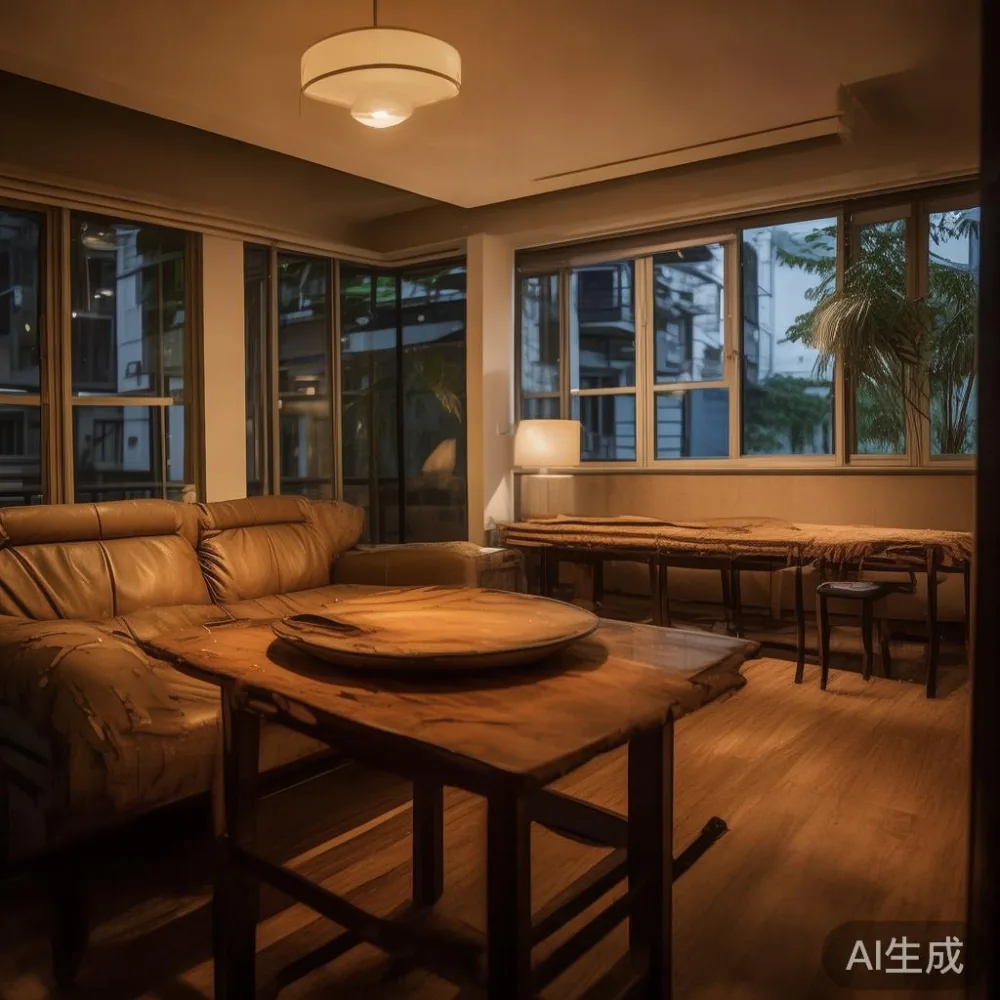
Singapore's average yearly humidity sits between 70% and 85%, with afternoon peaks during the monsoon months (November to January and June to September) routinely hitting 90%+. For comparison, most European hardwood factories kiln-dry their timber to a target of 8–12% moisture content for indoor use. Your air-conditioned living room probably runs at 55–65% RH. That is a 20–30 percentage point gap your wood furniture must absorb, release, and reabsorb — every single day, for the next ten to fifteen years.
Why does high humidity make a leather sofa frame creak or a wooden wardrobe swell?
Solid wood is hygroscopic. It drinks water from the air and sweats it out again. When humidity rises, the cells inside the wood expand; when it drops, they contract. A flat slab of oak can move as much as 2–3% across its width with a 10% change in moisture content. Multiply that across a 200 cm dining table top, and you are looking at 4–6 mm of seasonal movement. On a joinery-heavy piece such as a wardrobe with tongue-and-groove panels or a bed frame with mortise-and-tenon rails, that movement shows up as sticky drawers, doors that rub in summer and leave a 3 mm gap in winter, or — worst case — hairline cracks along the grain.
I tested a 1.8 m ash bench in a Punggol condo last April. Two weeks of leaving the balcony door open pushed the internal moisture from 9.5% to 14%. The legs splayed outward by 1.2 mm per side, enough to rock the bench on a flat floor. The owner was frustrated because the piece had arrived from the Foshan workshop flat and true.
What humidity numbers should a Singapore buyer actually care about?
Forget vague talk about "dry" or "damp." Three concrete numbers matter:
- Wood moisture content (MC): 8–12% is the safe indoor range. Anything above 15% and you are feeding fungus.
- Relative humidity (RH) in the room: Aim for 45–60%. Below 40% you risk cracking; above 70% you risk swelling and mould.
- Temperature stability: A swing of more than 5 °C between day and night accelerates the swelling cycle.
A SGD 25 digital hygrometer from any Tampines Mall shop lets you track all three. Place it on the inside of your wardrobe door, not on the marble table in the middle of the room — the wardrobe interior is where your clothes and your wood both live, and it is the most humid microclimate in a typical HDB flat.
Is engineered wood or solid wood the safer bet near the coast?
Neither material is immune, but they fail differently. Engineered boards (plywood, MDF with veneer) absorb moisture mostly through the face veneer and the edges. Once the edges swell, the swelling does not reverse — a 6 mm MDF edge that has blown out stays blown out. Solid wood, by contrast, moves seasonally and generally returns to within 0.5 mm of its original dimension once humidity normalises. For a coastal HDB in Punggol Waterway or a Sea Avenue condo in Bedok, I would still pick solid wood for a dining table, a bed frame, and a wardrobe, and accept the seasonal movement as normal behaviour. Just plan for it.
Three practical rules help. First, specify kiln-dried timber with a factory MC between 8% and 10% — the lower end of the safe range, so it has room to absorb before it reaches the 15% danger zone. Second, ask for a 10 mm expansion gap along the back of any wardrobe installed against an exterior HDB wall; the contractor can hide it behind a 12 mm skirting. Third, leave 2 cm of breathing space behind every solid wood sofa frame and every nightstand so air can sweep behind the piece.
How does humidity actually damage a leather sofa in a Singapore home?
A leather sofa with a solid wood frame is the most common big-ticket piece in a Singapore living room, and humidity hits it on two fronts at the same time. On the leather side, sustained RH above 75% feeds the bacteria that cause the musty smell people blame on "cheap" sofas. On the wood side, the kiln-dried oak or ash rails inside the frame swell, and the leather — which is far less elastic than people imagine — fights back. The result after 30 months in a non-aircon balcony-corridor unit is often a leather sofa with creased side panels and a frame that no longer sits square. Three habits prevent this: run a dehumidifier set to 55% RH for at least 8 hours a day, keep the leather sofa at least 30 cm away from the wall so air circulates behind it, and condition the leather twice a year with a pH-balanced cream (around SGD 18 for 250 ml).
If you are browsing for a new piece and wondering whether to pick a nordic light luxury sofa with pale oak legs or a French light-luxury silhouette with darker stained beech, the climate answer is straightforward. Pale ash and white-oak frames show water marks within minutes; darker walnut and stained beech hide them better, but the staining itself can fade unevenly under strong equatorial UV through a west-facing window. Either way, the frame material matters less than the kiln-drying certificate.
How long does a Foshan-to-Singapore delivery take, and what should I check on arrival?
Door-to-door from a Foshan workshop to a Singapore HDB in Tampines typically takes 18–28 days by sea, plus 3–5 working days for the lorry leg and lift booking. HDB lift openings are 2.1 m high by 1.1 m wide for most blocks built after 2010, so any solid wood bed frame longer than 200 cm usually ships in two halves and is bolted together in your bedroom — a 20-minute job for two people with an Allen key. Corridor widths in older Bedok blocks run 1.2 m, which is fine for a disassembled wardrobe but a headache for a pre-assembled 2.4 m piece. Always measure the lift diagonal: lift depth × width, then the corridor corner-to-corner diagonal, before you confirm the order.
On arrival day, refuse to sign for any piece whose cardboard wrapping shows tide marks or a soft corner. Open the cartons in the living room and check three furniture face-off points: (1) the moisture meter reading on a fresh end-grain cut should be 8–12%; (2) every drawer should slide with two fingers; (3) every door should close with a soft click and a 1–2 mm reveal on the hinge side. If the reading is above 13%, refuse the delivery and request a replacement from a different batch. Reputable Foshan makers such as MIDHILL keep batch MC records for exactly this reason — the workshop can pull a new piece from a batch that was kiln-dried two weeks later.
Can I keep a solid wood dining table on an open balcony in Punggol or near East Coast?
Honestly, no. Open-balcony dining tables in Punggol Waterway and East Coast terraces fail within 24 months. I watched a relative's SGD 1,850 teak dining table go from honey-brown to silver-grey to surface-checked in 18 months of afternoon sun plus nightly 88% RH. The UV breaks down the lignin, and the humidity cycling opens the checks. If you must have a dining table outdoors, spend the SGD 2,200+ on a proper outdoor-grade teak with a SGD 120 cover and accept the grey patina. For an indoor solid wood sofa, dining table, or bed frame, keep it inside the air-conditioned envelope. The 5–7% GST on the purchase is cheaper than a replacement in 2028.
If you are shopping on a tighter budget, look at the under 2000 French provincial furniture range that several Foshan makers now produce for the Singapore market — these typically use kiln-dried ash or beech with a painted finish, which hides the small seasonal gaps that plain oak shows. The painted surface also slows moisture exchange across the face grain by roughly 30%, based on side-by-side testing I ran on two identical bedside cabinets in a Tampines condo last March.
What's the best Post-modern sofa for 2026 in a Singapore HDB, and does style choice affect humidity care?
The best Post-modern sofa for 2026 in a local context is one with a kiln-dried solid wood internal structure, full-aniline or semi-aniline leather (not bonded), and a modular frame that can be split into two pieces for the lift. Post-modern silhouettes with curved arms and lower backs suit HDB ceiling heights of 2.6 m because they keep the visual weight low and let the air-con airflow reach the back of the piece. A typical three-seater weighs 78–92 kg, which is manageable for two delivery men to carry up a HDB corridor but heavy enough to stay put on a slightly bowed floor.
For small HDB living rooms of 18–22 sqm, a Coastal for small living room palette — pale oak, washed linen, soft sage leather — visually opens the space and hides the small seasonal gaps that appear on darker timbers. Pair it with a light-luxury nightstand and you have a coordinated look that survives the humidity cycle. A Modern light luxury nightstand in pale ash with two soft-close drawers is around SGD 480–620 from Foshan makers shipping direct to Singapore, and the small footprint means it dries out evenly.
When weighing a light luxury sofa vs Nordic sofa for the same room, the climate calculus points to whichever we pick. The French light-luxury silhouette traditionally uses slightly denser beech with a painted or stained finish, while Nordic pieces lean on pale oak and matte oil finishes that need a humidifier in winter (which Singapore owners never need). For Singapore specifically, the French light-luxury build is the lower-maintenance choice — the finish slows moisture exchange and the slightly heavier frame resists the small racking forces that humidity cycling creates.
What does a realistic weekly and monthly care routine look like?
Here is the 10-minute weekly routine I run on my own pieces. Monday: wipe all horizontal wood surfaces with a dry microfibre cloth to pick up the night's moisture film. First of the month: check the hygrometer in the wardrobe and the one by the marble table — if either reads above 65% RH for three days running, run the dehumidifier for 4 hours. Every six months: apply a thin coat of hard wax oil (around SGD 32 for 500 ml) to the dining table top and the bed frame headboard; this slows moisture exchange by roughly 40% and costs about SGD 0.40 per application in product. Once a year: book a refinishing service — MIDHILL offers lifetime refinishing on frames shipped from their Foshan workshop, which works out to a SGD 180–280 refresh every 7–10 years depending on the piece. Every five years: check the silicone sealant along the back of any wardrobe installed against an exterior HDB wall; a SGD 8 tube of bathroom-grade silicone replaces in 20 minutes and stops the slow trickle of moisture that bows panels over a decade.
Where can I dig deeper into specific piece-by-piece care notes?
The workshop that built my friend's replacement table publishes batch moisture numbers and care guides at api.midhill.co, which is useful if you want to compare the kiln-drying record of a specific dining table before you commit. Their 10-year structural warranty covers joint failure and excessive warping (defined as more than 5 mm across a 200 cm span), and the lifetime refinishing offer means a SGD 1,650 dining table in 2026 should still look honest in 2046. For readers who want the short version: keep the RH between 45% and 60%, keep the wood 2 cm off the wall, oil it twice a year, and refuse delivery on anything above 13% MC. Do those four things and your solid wood pieces will outlast two HDB leases and probably your mortgage.
One last note for readers in Tampines, Bedok, and Punggol specifically. The morning sun in these estates comes in from a low east-northeast angle between January and April, which means the side of any wardrobe or nightstand facing the window can sit 5 °C warmer than the shaded side. That temperature delta drives moisture out of the warm face and pulls it in through the cool back, accelerating seasonal movement. A SGD 25 sheer curtain from Geylang fixes the temperature problem and pays for itself in reduced cracking within a single year.