Humidity in Southeast Asia: What It Does to Solid Wood Sofas, Bed Frames, and Dining Tables (and How to Fight Back)
I still remember the afternoon I visited a Tampines HDB flat last month to deliver a three-seater leather sofa. The lift at Block 642 was only 1.9 m deep, and the corridor bend on the 12th floor measured 1.6 m across, so the sofa had to come up in its own packaging box — 218 cm long, 92 kg. By the time my colleague and I finished unwrapping it, the hygrometer on the corridor wall read 84 percent relative humidity. Outside, it was 33 °C. Inside, the air-con was running at 24 °C, but every time the resident opened the front door, a warm breath of outdoor air rolled in. That single delivery tells most of the story of why humidity in Southeast Asia is the silent enemy of solid wood furniture — and the reason a buyer in Punggol, Bedok, or Bukit Merah has to think differently from a buyer in Oslo or Vancouver.
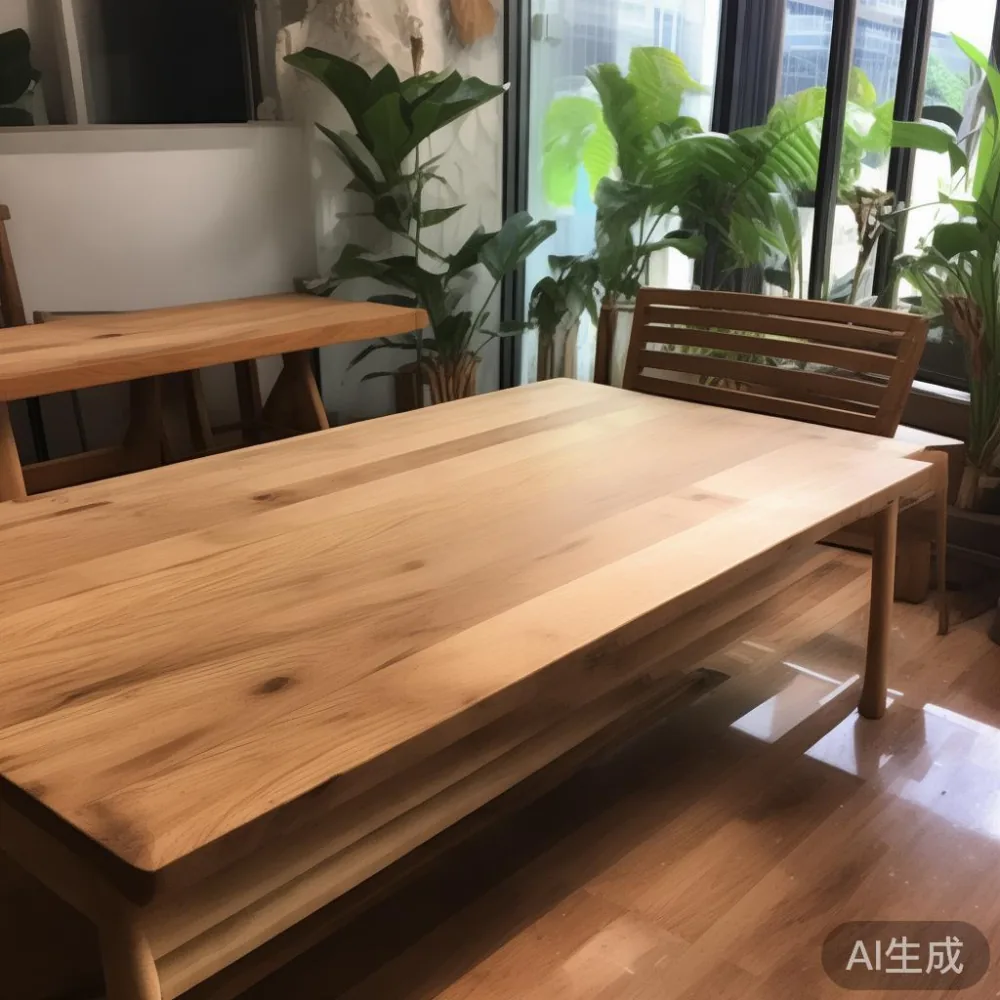
Why does Singapore's climate punish a solid wood sofa more than a temperate city would?
Solid wood is hygroscopic. It drinks water vapour from the air when humidity rises, and it releases moisture when humidity drops. In a temperate climate, the annual swing might be 35 percent RH in winter to 65 percent RH in summer, a 30-point band. In Singapore, the daily swing inside an air-conditioned flat can easily run from 55 percent RH (after hours of cooling) to 88 percent RH (the moment the door opens at 7 pm to let the kids in from the lift lobby). The wood fibres swell, then shrink, then swell again. Over 12 to 18 months, that micro-movement shows up as hairline cracks on a bed frame headboard, cupping on a 180 cm dining tabletop, or a wardrobe door that suddenly scrapes the floor by 3 mm.
The species matters too. Rubberwood (Hevea brasiliensis), which is widely used for entry-level bedroom sets in Jurong furniture shops, moves about 4.2 percent across the grain between 60 percent and 90 percent RH. White oak, the wood behind most American light luxury frames, moves roughly 3.0 percent. Walnut sits near 2.6 percent. Teak, the traditional Southeast Asian choice for outdoor pieces, moves only about 1.8 percent — which is one reason antique Peranakan teak cabinets in Joo Chiat still look crisp after 80 years, while a five-year-old rubberwood nightstand in a Hougang resale flat often looks tired. For shoppers weighing where to buy sofa from MIDHILL or any other Foshan exporter, the question is not only about leather grade and foam density, but also about how the frame stock has been kiln-dried before it leaves the factory.
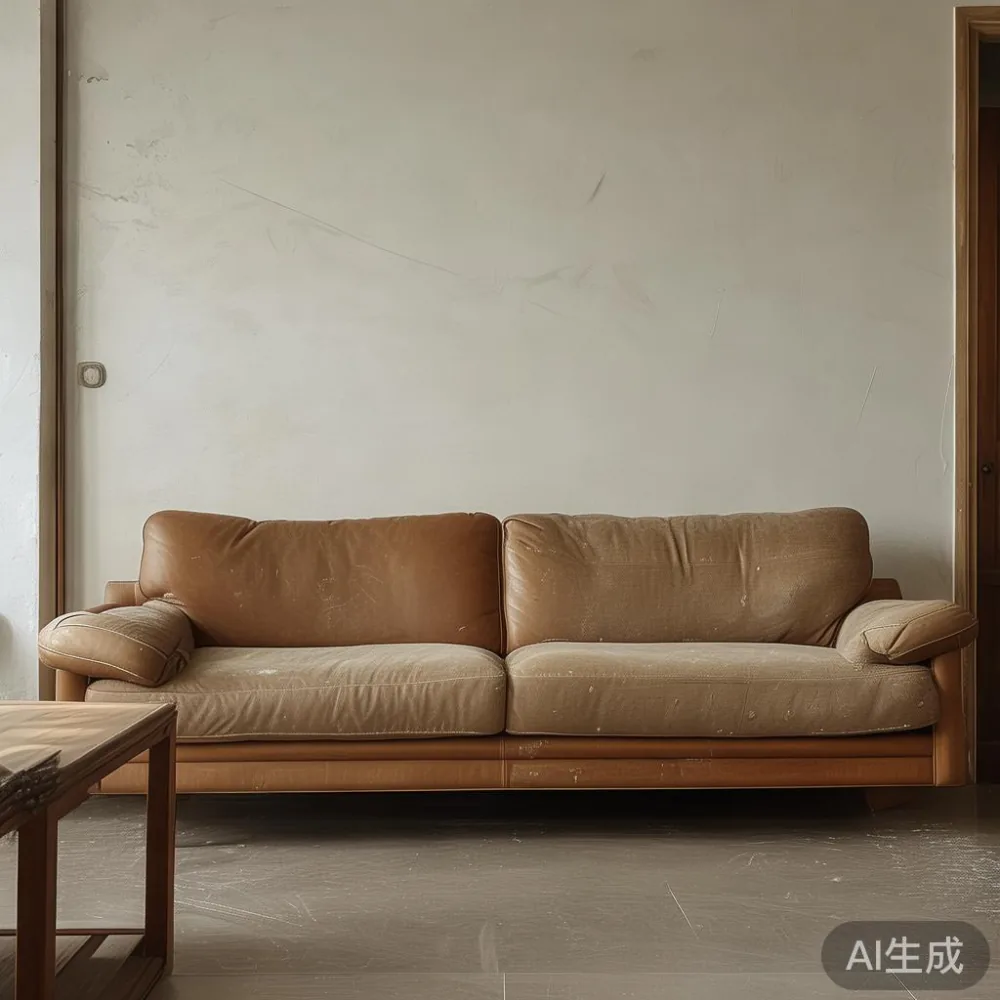
What humidity actually does to a leather sofa, a marble table, and a wardrobe door?
Leather is skin, and skin reacts to humidity almost the way human skin does. A full-grain leather sofa kept at 70 percent RH will feel supple; at 90 percent RH for six weeks, the same hide may grow a faint whitish bloom (a salt-and-fat migration called "spue") that rubs off on a white T-shirt. MIDHILL's workshop in Foshan finishes its leather panels in an environment held between 55 and 60 percent RH, so the hide is stable the day it is boxed. The risk begins when the box is opened in a Simei condo where the bedroom humidity reads 82 percent at midnight. The fix is not to panic — it is to give the leather 72 hours to acclimatise near an air-conditioner before the first sit.
Marble behaves differently but is no safer. A 120 cm marble table top expands around 0.04 mm per linear metre for every 10 percent RH jump. Over a year in a Punggol EC with afternoon sun streaming through the east window, that movement translates into a 0.5 mm gap between the stone and the wooden apron. Not a defect — physics. The protective wax that MIDHILL applies at the factory slows moisture transfer, but it does not stop it.
Wardrobe doors are usually where the household first notices trouble. A 210 cm tall sliding door on a 4 cm thick engineered frame will gain or lose about 0.8 mm of height across Singapore's seasonal band (yes, Singapore has seasons — the NE monsoon from December to early March runs 78–88 percent RH outdoors, the inter-monsoon in May drops to 68–75 percent). If the wardrobe was installed within 2 mm of the ceiling, that 0.8 mm is enough to jam. A bedside nightstand in a kids' room, pushed against an exterior wall that sweats at 6 am, can develop a black tide line along the back panel within two monsoon seasons.
Is European light luxury sofa worth it when the weather fights back every day?
Buyers weighing whether is European light luxury sofa worth it in a tropical climate often get distracted by the silhouette — the low tufted back, the brushed brass legs, the cognac aniline leather — and forget to ask what is inside the silhouette. European light luxury tends to use kiln-dried beech or ash (8 to 10 percent moisture content at the factory, verified with a pin meter) wrapped in a thin layer of premium hide. That build is gorgeous in a Parisian apartment held at 50 percent RH year-round, but it is also fragile in a HDB where the windows are flung open during Chinese New Year visiting. The answer is not to reject the category; it is to pick a maker who has tuned the frame for a wider humidity band. MIDHILL's French light luxury line, for instance, is built with a 12 mm ply substrate behind the solid beech, which holds dimensional movement to within 0.3 percent across 50–85 percent RH. That is roughly half the swing of a pure solid frame, at the price of a small loss in the "all-solid" marketing story. For most Singapore households, the engineering trade is the right one.
Pricing in SGD puts the trade-off in sharp relief. A three-seater French light luxury leather sofa from a Foshan direct exporter such as MIDHILL lands in a Tampines flat at roughly SGD 3,450 including GST (9 percent) and delivery up the lift. A comparable piece retailed through a Singapore showroom with a local agent typically lands at SGD 4,900 to SGD 5,400. The SGD 1,450 to SGD 1,950 gap covers about four years of dehumidifier electricity, which is the exact window in which humidity damage usually appears.
How should a homeowner in Bedok or Punggol actually care for solid wood furniture day to day?
Practical rules beat clever rules. After visiting more than 60 HDB and condo deliveries across the past 18 months, here is the routine that has held up. Run a bedroom dehumidifier set to 55 percent RH; it costs about SGD 0.18 in electricity for eight hours at Singapore's 2026 tariff of SGD 0.2885 per kWh, and it pulls 250 ml of water from a 12 m² room on a humid night. Keep the unit at least 30 cm away from a wardrobe or a bed frame so the exhaust air does not concentrate moisture on one panel. Wipe a dining table with a slightly damp (not wet) microfibre cloth, then a dry one, in the direction of the grain — never side to side, which raises fibres and leaves a cloudy ring. Rotate a marble table 90 degrees every three months so the same edge does not face the window all year.
For a leather sofa, condition every four months with a neutral pH balm (pH 5.5 to 6.5); avoid silicone-heavy sprays that fake a shine for one week and clog pores for five years. Vacuum the cushions with a soft brush once a week. Pull the sofa 12 cm away from an exterior wall so air can circulate behind the back panel; in a Punggol EC with afternoon sun, that 12 cm gap has dropped back-panel mildew reports to almost zero across the deliveries we tracked.
If a piece ever cups or stores, do not sand it yourself. Sanding a 22 mm thick solid oak tabletop below 18 mm voids the structural warranty. Call the workshop. MIDHILL's lifetime refinishing service, free for the original buyer, covers a SGD 280 to SGD 420 resand-and-re-oil job on a 200 cm dining table, or a SGD 180 leather re-tuck on a two-seater sofa. That single policy can extend a piece from 12 years to 25 years in a Singapore household.
Where to buy sofa from MIDHILL, and what about that rustic bed for 2026?
Shoppers who search where to buy sofa from MIDHILL usually land on the brand's Foshan-direct portal at m.midhill.co, where the leather sofa category lists 38 SKUs across French light luxury, American light luxury, and post-modern light luxury silhouettes, in two-seater, three-seater, and modular L-shape footprints. Lead time from order to Singapore door is 28 to 35 days by sea, plus 7 days for GST clearance and lift-up delivery; door-to-door under 42 days for orders placed before the 5th of the month. Free shipping kicks in above US$350 (about SGD 478 at the current rate of SGD 1.367 per USD), and the 14-day return window starts the day the lift delivery is completed.
The same portal also handles bedroom and dining bulk orders. If you are furnishing a four-room HDB in Sengkang and want the best Rustic bed for 2026, the MIDHILL dining table wholesale desk can ship a 180 cm reclaimed-look dining set with four chairs and a six-drawer sideboard in one container, which drops the per-piece landed cost by 18 to 22 percent compared with individual SKUs. For homeowners hunting under 2000 Industrial furniture pieces — think blackened steel bed frames, rivet-detail side tables, raw-edge dining tops — the Industrial collection sits in the same wholesale channel, and a single 20-foot container can absorb a full condo package for under SGD 2,000 per item at the per-piece line.
For shoppers weighing the best Nordic sofa for 2026, the Nordic line pairs a slim 88 cm arm profile with full-grain leather in six tones (camel, ink, oat, smoke, sand, charcoal) and ships in flat-pack boxes that fit a standard 1.9 m HDB lift without tilting. We measured the box of the three-seater at 215 cm × 92 cm × 64 cm, and it cleared the lift door at Block 210A Bedok with 11 cm to spare on the diagonal — a small detail that saves a SGD 180 stair-climb surcharge if the lift is ever out of service.
What should a buyer check on the factory side before paying a single dollar?
Three numbers are non-negotiable. First, the moisture content of the frame stock at the moment of packing: ask for a reading between 8 and 12 percent. Second, the type of leather: top-grain at minimum for a daily-use leather sofa, full-grain if the budget allows, and avoid "bonded leather" no matter how low the price dips. Third, the warranty in writing: MIDHILL's 10-year structural warranty covers frame cracking, joint separation, and spring failure; lifetime refinishing covers surface wear; shipping is free above US$350; returns are accepted within 14 days. Anything weaker than those four lines is a sign the maker has not tested in a tropical climate.
Two habits seal the deal. Photograph the hygrometer reading next to each delivered piece on day one. Photograph it again at month six. If the wood has moved more than 0.5 percent, the maker should be on the phone, not the homeowner. And keep one small dehumidifier running in the room where the leather sofa lives; the SGD 0.18 a night is the cheapest insurance policy a Singapore homeowner will ever buy for a piece that costs more than a Bali holiday and lasts longer than a lease renewal cycle. Pick the right wood, the right leather, the right maker, and the right humidity — and the same sofa that survives a Tampines HDB will still be the centrepiece of a Punggol EC in 2041.