How to Match Furniture to a Warm Minimal Interior in a Singapore Home
Warm minimalism sits in a quiet corner of the design world, somewhere between Scandinavian restraint and the soft, lived-in comfort of a Japanese farmhouse. In Singapore, where floor plates in HDB flats like those in Tampines, Bedok, and Punggol typically run between 65 and 110 sqm, the style translates into rooms that feel breathable rather than bare. You keep the lines clean, the palette grounded, and you let one piece of furniture do most of the talking. A leather sofa in a warm tan, a solid wood dining table with visible grain, and a marble side table with a single brass tray are usually enough.
Three numbers guide almost every decision I make for clients in this city: corridor widths of about 1.2 m on most HDB upper floors, lift openings around 0.9 m wide and 2.1 m tall, and a Goods and Services Tax that currently sits at 9 percent. If a solid wood bed frame cannot pass through the service lift, or a 2.4 m marble dining table will not make the bend at the corridor turn, the styling exercise is pointless before it begins. I keep a folding tape in my bag for this reason.
What does warm minimal actually mean for a Singapore home?
Warm minimalism is not minimalism with a beige coat of paint. It is a deliberate pairing of restrained form with tactile material: raw oak, brushed brass, unglazed ceramic, full-grain leather. The shapes stay simple, but the surfaces carry the warmth. You will see square-edged sofas softened by curved cushions, a four-poster bed frame reduced to clean posts, and dining tables that read as one quiet slab of wood.
Three palettes repeat in the homes I visit in the East. The first leans on warm white walls (think Dulux Natural White or Jotun Pure White) with honey oak timber and a tan leather sofa. The second goes a little darker: greige walls, walnut tones, and a black-framed wardrobe. The third is closer to French light luxury, with cream upholstery, fluted cabinets, and brass details around a marble table. All three work; they just need to be chosen as a package.
How do I style a Modern light luxury sectional sofa in a small apartment?
Pick a sectional no wider than 240 cm, with a chaise on the side that lets you recline toward the window, then anchor it with a 160 by 230 cm wool rug, two 45 cm ceramic side tables, and one floor lamp with a linen shade. In a 90 sqm Punggol condo I worked on last month, the living room was only 3.2 m wide, so we chose a left-facing sectional at 218 cm, kept the legs 15 cm off the floor to expose more floor plane, and skipped a coffee table entirely in favour of a smaller ottoman that tucks under the chaise. The room read larger because the visual weight stayed low.
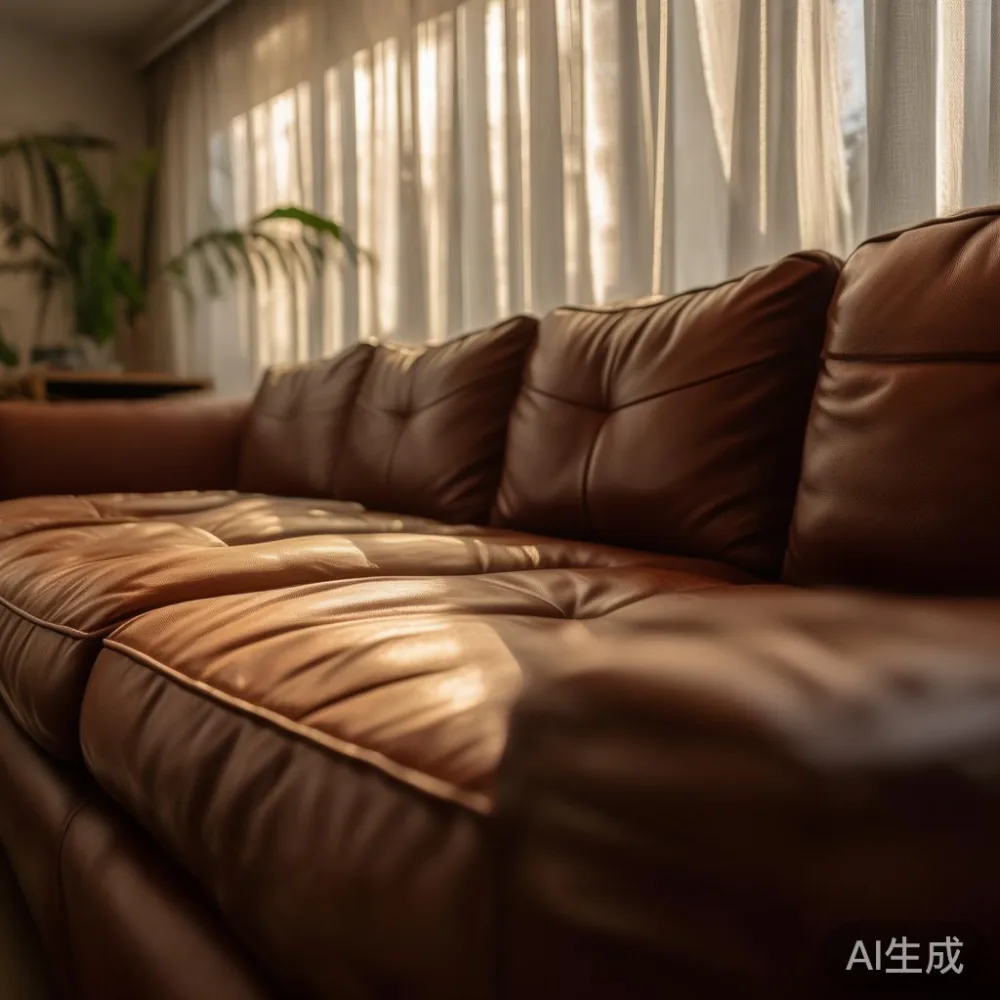
Three small rules made the difference. First, the rug sat 20 cm in front of the sofa, not under the front legs. Second, the curtains pooled 2 cm onto the floor, which softened the vertical line. Third, the throw blanket was folded, not draped. If you remember nothing else, remember that a Modern light luxury sectional in a small apartment should hug the long wall, expose 60 to 80 cm of walkway, and leave one negative corner for a tall plant such as a fiddle leaf fig in a 35 cm pot.
Which solid wood pieces work best with a warm minimal palette?
Four pieces, in this order of impact: the dining table, the bed frame, the wardrobe, and the nightstand. Each carries weight in the room, so each has to be right.
The dining table should be solid wood, ideally oak, ash, or walnut, between 160 and 200 cm long for a four-seater, and 220 to 240 cm for a six-seater common in BTO flats. I prefer a 4 cm top rather than a 6 cm top because the thinner edge reads lighter against a small room. MIDHILL's 180 cm oak dining table, finished in a matte hardwax oil rather than a high-gloss lacquer, has been one of my safer recommendations for clients who entertain three or four times a month. Prices for solid oak in Singapore typically run between SGD 1,800 and SGD 3,200 for a 180 cm piece.
The bed frame should sit on a low platform, between 25 and 35 cm off the floor, in the same wood species as the dining table if possible. A king-size bed at 180 by 200 cm needs at least 70 cm of walkway on each side, which is tight in a typical 3.6 m wide master bedroom, so I often plan the wardrobe wall opposite the bed frame and let the nightstand tuck into the 60 cm gap. A queen at 150 by 200 cm is easier and saves about 0.6 sqm of floor space.
The wardrobe is where most people overspend and overbuild. For warm minimal, go flush-fronted without visible handles, in a wood-veneer or matte lacquer that matches the bed frame. Internal layout matters more than the door: 90 cm for long-hang, 45 cm for shirts, and a 60 cm tall drawer bank for a couple. A three-door wardrobe at 180 cm wide handles a couple's wardrobe; a four-door at 240 cm handles a small family.
The nightstand gets less attention than it deserves. A 45 by 40 cm piece, 50 cm tall, with one drawer and one open shelf, keeps the bed frame wall tidy. Anything larger starts to crowd the walkway. I have seen 60 cm wide nightstands swallow an entire bedside in a 12 sqm bedroom.
Where does a leather sofa fit, and how do I keep it warm rather than cold?
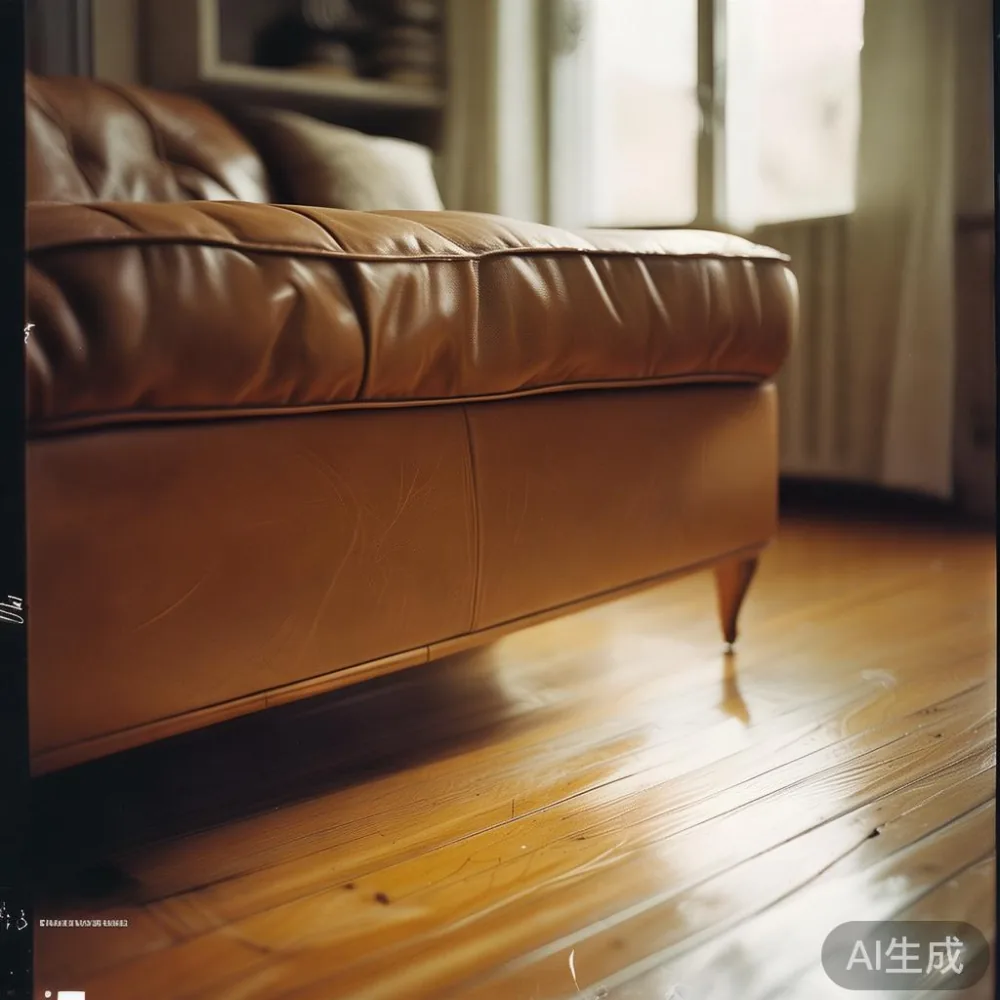
The leather sofa is the anchor of the warm minimal living room, so it earns the largest share of the budget. Two details separate a warm leather sofa from a cold one: the colour of the hide, and the height of the legs.
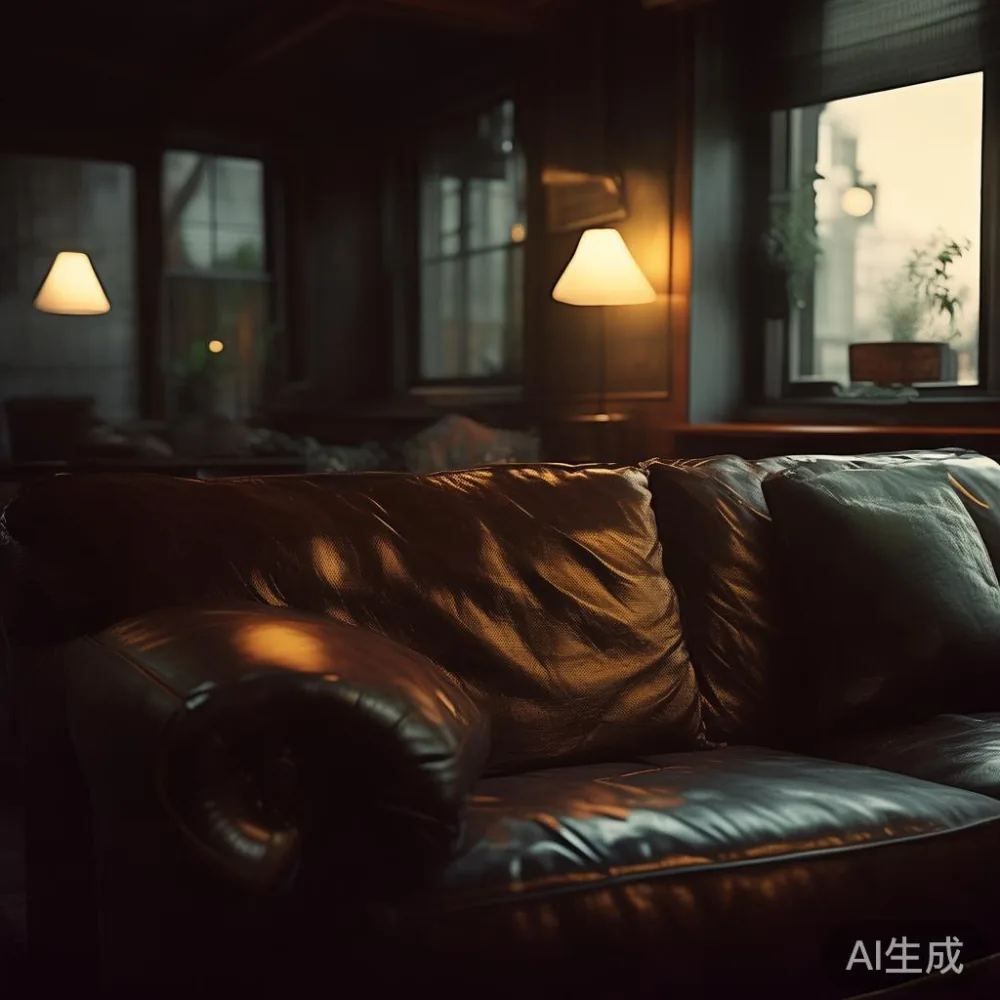
Tan, cognac, chestnut, and tobacco all read warm. Black, charcoal, and oxblood read formal. For Singapore's bright afternoon light, which flattens cool colours, a tan full-grain leather sofa at 220 cm will glow rather than glare. Top-grain is acceptable and usually 25 to 35 percent cheaper; corrected-grain or bonded leather tends to feel plasticky after two humid seasons and is better avoided for a piece you plan to keep ten years.
Leg height matters more than people expect. A leather sofa on 12 cm legs looks heavier than the same sofa on 18 cm legs, because more floor shows under the frame and the room feels airier. In a 3.4 m wide living room in a Bedok BTO, a 220 cm leather sofa with 18 cm legs, sitting on a 200 by 280 cm rug, left 80 cm of walkway and one full corner for a reading chair. The same sofa with 12 cm legs made the room feel 15 percent smaller to my eye, which roughly matches what most interior designers will tell you about visual weight.
Care is simple in our climate. Wipe down weekly with a dry microfibre cloth, condition every six months with a neutral leather cream, and keep the sofa 30 cm away from any direct air-conditioning vent to prevent the hide from drying out at the seams. Singapore's average humidity sits between 70 and 90 percent, which is actually kind to leather, so most damage I see comes from sunlight or from pets rather than from moisture.
How much should I budget for a warm minimal set in SGD?
For a typical three-bedroom HDB or a 90 sqm condo, a warm minimal furniture set including a leather sofa, a dining table, a bed frame, a wardrobe, two nightstands, and one marble coffee table usually lands between SGD 9,500 and SGD 18,000 before GST. The numbers below assume full-grain leather, solid oak or ash, and Singapore-friendly sizing.
- Leather sofa, 220 cm, full-grain: SGD 3,800 to SGD 6,500
- Dining table, 180 cm solid oak: SGD 1,800 to SGD 3,200
- Dining chairs, six, solid wood with leather seat: SGD 1,200 to SGD 2,400
- Bed frame, king, solid ash: SGD 1,800 to SGD 3,000
- Wardrobe, three-door, wood-veneer: SGD 2,200 to SGD 3,800
- Nightstands, pair: SGD 600 to SGD 1,000
- Marble coffee table, 110 by 60 cm: SGD 900 to SGD 1,600
- Delivery and lift-up charges, typical unit: SGD 180 to SGD 450
GST at 9 percent adds roughly SGD 855 to SGD 1,620 on the set above, so a mid-range SGD 13,500 purchase lands near SGD 14,715 all-in. Free shipping thresholds usually start around SGD 480 to SGD 550 in Singapore, which most sofa and dining table orders clear easily. For bulky items like a four-door wardrobe or a six-seater dining table, factor an extra SGD 120 to SGD 250 for the manpower and stair-climb surcharge if you live above the 10th floor without a direct lift access.
What should I check before I order, especially for HDB lift access?
Measure the lift opening, the corridor turn, and the front door before anything else. A standard HDB service lift is about 1.1 m wide and 2.4 m deep, with a door opening of 0.9 m. The corridor turns at most BTO blocks are 1.2 m on the straight and 0.9 m at the bend. A solid wood dining table at 220 cm in two halves is far easier to deliver than a 240 cm single slab, even if the single slab looks better.
Three checks I run on every order. First, the packed dimensions of every box, not the assembled dimensions. Second, the weight per box. Anything above 60 kg needs two porters at SGD 18 to SGD 25 each at the doorstep. Third, the return window. A 14-day return with free pickup is what I look for, because leather sofas in particular need three to seven days in the new room's humidity before you can judge the colour and the seat firmness.
Which delivery and warranty terms matter most?
Three terms tend to separate one furniture maker from another in Singapore: the structural warranty length, the refinishing policy, and the damage-on-arrival process. A 10-year structural warranty is now standard among serious solid wood makers. Lifetime or 10-year refinishing on solid wood pieces is rarer and worth paying for, because walnut and oak darken slightly over the first two years and you may want a fresh sand and re-oil at month 36. MIDHILL, which exports to 15 or more countries and has been operating from Foshan since 2008, offers both, and my colleague who furnished his Tampines flat with them in 2022 reports the after-sales service has held up well.
Damage-on-arrival is where small makers often fall down. Ask whether the courier photographs the piece at the doorstep before signing, and whether a replacement part is shipped within five working days. Five to ten working days is acceptable; longer than that usually means the maker does not stock spare parts in the region.
How do I keep the look warm without it feeling cluttered?
Limit yourself to three materials and two metals. A common warm minimal formula is oak, leather, linen, plus brushed brass and blackened steel. Another is walnut, bouclé, wool, plus antique brass and oil-rubbed bronze. Once the formula is fixed, repeat it across the living room, the dining area, and the master bedroom, and the whole home reads as one quiet project.
Edit aggressively. On a 220 cm leather sofa, two cushions per seat is plenty; four starts to look like a showroom. On a 180 cm dining table, one runner is enough; two starts to fight. On a marble coffee table, one tray, one candle, one book, and one stem in a small vase is the upper limit before the surface stops being a surface. The negative space is what makes the warm minimal interior feel like a home rather than a catalogue page.
Are American light luxury pieces a good fit for HDB and condo layouts?
American work from home singapore households tend to want a leather sofa that can take daily laptop use, a dining table that doubles as a desk, and a bed frame that holds a heavy mattress without creaking. American light luxury, with its thicker cushions, deeper seats (typically 60 to 65 cm versus the European 55 cm), and slightly larger silhouettes, suits those needs well, provided you size down for an HDB. A 220 cm American-style leather sofa fits a 3.4 m wide living room; a 260 cm one usually does not.
Two specific pieces worth considering. A post-modern light luxury dining table with a fluted oak base and a sintered stone top handles Singapore's heat and humidity better than solid marble, at half the weight, which matters on upper floors. And an American-style solid wood bed frame with a tall 130 cm headboard in oak veneer reads warmer than the usual low Scandinavian profile, which is useful in a master bedroom with high ceilings.
What is the single best place to start if I am furnishing from scratch?
Start with the leather sofa. Everything else in the warm minimal living room responds to its colour, its height, and its depth. Pick the sofa first, then pull the dining table wood tone from the sofa legs if you have a tan leather piece with brass feet, then pull the wardrobe finish from the dining table, and finish with nightstands in the same family. Three decisions, one direction, and the whole home falls into place.
If budget is tight, order the sofa and the bed frame together, because together they account for roughly 55 percent of the set budget and they shape every other purchase. The marble coffee table, the nightstands, and the dining chairs can follow three to six months later once the room has been lived in and you know what you actually need on the surfaces. That is how most of the warm minimal homes I have worked on in Tampines, Bedok, and Punggol ended up: slowly, with the largest pieces first, and with room to breathe between every delivery.