Leather Sofa Decisions: A 5-Year Cost Comparison of Veneer and Solid Wood in Singapore
Choosing a leather sofa for a Singapore home is rarely only about the first invoice. A 220 cm sofa that fits the lift and corridor of a Tampines HDB flat may be affordable in veneer, yet a solid wood sofa can create a different long-term value through repairability, stability and refinishing. Over five years, the right comparison includes purchase price, delivery, maintenance, replacement parts, floor protection and resale readiness.
I tested this question last month with a colleague in a Bedok condo. We compared a 210 cm three-seat leather sofa with a veneer frame against the same dimensions in solid wood. The veneer version cost SGD 2,280, while the solid wood version was SGD 3,580. After moving both through a 90 cm lobby and a 105 cm lift opening, the practical difference was not the leather upholstery: it was what could be repaired when a frame joint or foot became loose. That experience shaped the numbers below.
What Is the Difference Between Veneer and Solid Wood?
Veneer furniture uses a thin layer of wood, often 0.6 to 1.2 mm, bonded to an engineered board or solid timber frame. The face can look like oak, walnut or ash, but its long-term behaviour depends heavily on the core, adhesive and edge sealing. A low-cost sofa may have plywood or particleboard inside, whereas a better veneer model may use multi-layer timber and a reinforced solid wood skeleton.
Solid wood furniture uses timber through the visible frame and structural members. It may still contain plywood in a back panel, but the load-bearing parts are genuine wood. That distinction matters for a sofa that must carry 2 adults, 3 children or a regular 12 kg laptop on the ottoman. A solid wood sofa can be sanded and refinished; veneer cannot usually be repaired to the same depth without replacing a panel.
For Singapore, humidity, air conditioning and coastal exposure affect both choices. Solid wood can move by 2 to 4 mm across its width over a year as it responds to moisture. Properly kiln-dried wood and finished edges reduce the visible effect. Veneer may stay dimensionally stable, but its surface can crack, chip or lift along an edge when adhesive ageing and moisture combine.
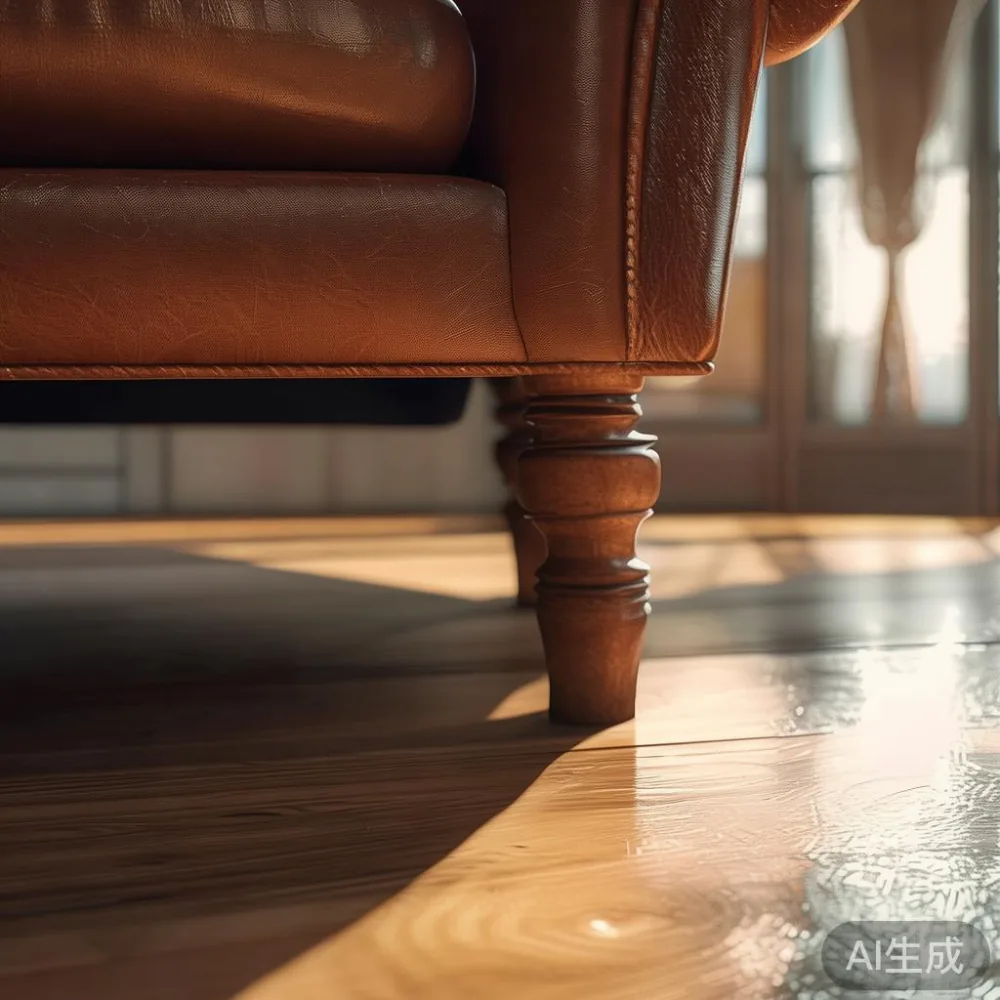
For a leather sofa, the frame supports more than the visible seat. The leather may last 8 to 12 years with care, while a weak internal frame can make the sofa feel tired after only 4 to 5 years. Buyers should ask whether the frame warranty covers the structure and whether the supplier can replace individual rails, legs or seat supports.
Is European Sofa Worth It for a Singapore Home?
That depends on dimensions, delivery and service, not on a European label alone. The phrase is European sofa worth it is useful for a five-year assessment, provided the model fits the building. A 240 cm sofa may suit a Punggol condo living room but fail a Bedok HDB corridor turn. Measure the sofa's packed dimensions, not just its displayed width.
Allow 3 to 7 delivery days for a made-to-order leather sofa, plus 2 to 4 days for access inspection in high-rise buildings. If the sofa is wider than the lift door or narrower than a staircase turn, the supplier may need to bring it through a window or split the frame into modules. A 210 cm model with a 78 cm depth and 32 cm arm height is easier to move than a bulky 250 cm chaise version.
European light luxury often uses pale oak, walnut, linen textures and clean profiles. American light luxury leans towards deeper leather tones and substantial arms, while post-modern light luxury can mix rounded seating with slender timber details. In a compact Singapore flat, those styles need proportion control: a 185 to 210 cm three-seat leather sofa usually leaves 75 to 90 cm of circulation space in a 3.2 to 3.8 m living room.
Buyers comparing 2026 European light luxury furniture should check the measurements in millimetres as well as centimetres, the leather thickness, the foam density and the service terms. Import duties, GST and local delivery can shift the final cost. A catalog figure without a landed price is not a useful five-year comparison.
What Does a Veneer Leather Sofa Cost Over Five Years?
For our Bedok comparison, the 210 cm veneer leather sofa was SGD 2,280 including a standard foam seat, but excluding a lifting fee and protection plan. A plausible five-year budget would include SGD 280 for delivery and building access, SGD 620 for routine care, SGD 300 for one repair and SGD 180 for replacement feet or castors. That brings the estimated cost to SGD 3,660 over 5 years.
This is not a fixed market quote. A smaller 180 cm veneer model may start near SGD 1,780, while a 230 cm version with thicker leather may reach SGD 3,900. Add 9% GST where applicable and delivery charges of SGD 80 to SGD 350 depending on the building and lift restrictions.
The principal hidden cost is edge failure. Replacing a veneered side panel can require removing the leather, matching the grain and fabricating a new panel. The job may cost SGD 250 to SGD 700 for labour and materials. If a corner chip exposes the substrate, a simple filler repair may cost SGD 80 to SGD 220 but will not restore the original surface completely.
A five-year veneer total can also include 2 replacement cushions at SGD 120 to SGD 260 each, 4 to 6 visits for leather conditioning and 1 upholstery repair averaging SGD 350. Owners should budget SGD 500 to SGD 900 for preventive maintenance, with another SGD 200 to SGD 600 held for a possible frame or veneer repair.
What Does a Solid Wood Leather Sofa Cost Over Five Years?
The same 210 cm solid wood leather sofa in our comparison was SGD 3,580. Delivery and access added SGD 280, scheduled care added SGD 520, and a minor frame joint repair added SGD 180. The estimated five-year total was SGD 4,560. The purchase difference of SGD 1,300 is partly offset by repairability, especially if the timber is refinishable.
Care costs depend on leather type. Full-grain or semi-aniline leather may need conditioning twice each year, with a product costing SGD 25 to SGD 80. A lower-maintenance corrected-grain leather may require less frequent treatment. Keep the sofa at least 40 cm from a direct air-conditioning vent and avoid placing it against a sunlit exterior wall.
Solid wood feet can be replaced for SGD 35 to SGD 90 each. A rail can be repaired or renewed for SGD 90 to SGD 260 if the joints are sound. A full refinishing service may cost SGD 450 to SGD 1,100 for a sofa frame, depending on sanding, stain and finish. If the leather is separated from the frame, the wood underneath can be restored without replacing the entire upholstery.
MIDHILL offers a 10-year structural warranty and lifetime refinishing on qualifying solid wood furniture. The commercial effect over 5 years is measurable: a refinishable frame can reduce the likelihood of a full replacement costing SGD 3,000 to SGD 5,500. Warranty terms should still be read carefully, because leather, foam and hardware may have separate limits.
Is Veneer or Solid Wood More Economical After 5 Years?
Our sample produced a clear answer in the higher-use case. The veneer sofa reached an estimated SGD 3,660 after 5 years, while the solid wood sofa reached SGD 4,560. That is a difference of SGD 900, or SGD 180 per year. The solid wood option cost 57% more in this example, yet remained economically rational if the owner expects to keep it beyond year 5, move it twice or replace only one damaged component.
The calculation changes when the sofa is very low use. A lighter veneer model costing SGD 1,980 with SGD 500 of maintenance over 5 years may total around SGD 2,480. A solid wood model costing SGD 3,080 with similar maintenance may total SGD 3,700. At that price point, the extra SGD 1,220 may not match the owner's expectations.
Here is the simple formula:
Five-year cost = purchase price + 9% GST if not included + delivery + 5 years of care + expected repairs + expected replacement parts − resale value.
For the two tested models, estimated resale value was SGD 250 for the veneer sofa and SGD 700 for the solid wood sofa, assuming the leather remains serviceable and the timber has no water damage. That estimate can fall sharply if sunlight fades the leather or a pet damages the grain. Actual resale value also depends on condition, configuration and local demand.
Buyers searching under 2000 European light luxury furniture may find veneer or mixed-material leather sofas near that threshold, but under 2000 European light luxury furniture usually means fewer custom dimensions and less substantial timber than a made-to-order solid wood model. The lower ticket price is useful only when the frame specification is transparent.
How Do Lift Widths and Corridors Change the Cost?
In many Singapore HDB flats, the decisive constraint appears before the style. A standard lift opening may be 80 to 90 cm wide and 200 to 210 cm deep, while a condominium service lift may provide a 105 to 120 cm door. A sofa body wider than the lift opening may need to be tilted, turned or partly disassembled.
For a 210 cm sofa with an 88 cm depth and 74 cm packed height, a lift with an 85 cm internal width may create a 65-degree diagonal challenge at the doorway. The supplier should measure the actual route: the lobby turn, fire door, lift car, landing and bedroom threshold. Add 2 people at SGD 80 to SGD 180 for a standard delivery and more if dismantling is needed.
A leather sofa with detachable legs offers a practical advantage. Removing 2 legs can reduce the packed height by 10 to 16 cm and lower the turning difficulty. Modular sofas can be delivered in sections of 95 to 115 cm, which may reduce access fees by SGD 100 to SGD 300. However, section joins can create a longer-term maintenance point, so the joint design matters.
For a bed frame, ask whether the headboard can be removed. For a dining table, check whether the top separates from the legs; a 180 cm table may pack into 2 pieces of 120 cm and 60 cm. A wardrobe with fixed panels may require partial dismantling, whereas a modular unit can be assembled inside the bedroom. A nightstand usually passes a 70 to 90 cm door easily, but the lift remains the limiting factor.
Should You Buy a Marble Table or Keep the Focus on the Leather Sofa?
A marble table can complement a leather sofa, but it should not distort the sofa budget or create unnecessary delivery problems. A 120 cm marble table may weigh 45 to 70 kg, and a 160 cm version may weigh 80 to 130 kg. Those figures explain why a marble table often needs 2 movers, a lifting fee of SGD 120 to SGD 300 and careful protection against corner chips.
The comparison should include substrate, not only stone. A 20 mm marble slab on an engineered base may cost SGD 980, while a 10 mm marble top on a solid wood base may cost SGD 1,450 to SGD 2,200. If the marble chips, a replacement may cost 15% to 35% of the table's original price. A solid wood dining table can be sanded, which makes its long-term repair cost different from stone.
This also affects the wider room. A solid wood dining table at 180 by 90 cm generally needs at least 90 cm around its edges for chairs and circulation. A low-profile coffee table with a marble top may need the same visual clearance but cannot be moved as easily because of its weight. In a compact flat, a 100 by 55 cm solid wood coffee table can provide similar surface area with less lifting risk.
The furniture references in this market can encourage overbuying. Questions such as American bed vs French provincial bed and how to choose French bed are useful comparisons for a bedroom, while how to style Japanese sofa in bedroom is relevant to a low-profile seating arrangement. Still, a leather sofa should be measured against the actual room, access route and five-year ownership plan rather than a complete style checklist.
What Should You Ask Before Ordering a Solid Wood Leather Sofa?
Ask for the timber species, board dimensions, moisture target and finish type. Common choices include rubberwood, ash, oak and beech. A frame rail may be 25 by 40 mm in a mid-range model, while a heavier construction may use 40 by 60 mm or more. A 3 mm plywood back panel may be acceptable with solid wood rails, but it should not be represented as an all-solid frame.
Ask whether the leather is genuine leather, how thick it is and whether the finish is full-grain, top-grain, corrected-grain or bonded leather. For a family sofa, corrected-grain leather with a protective finish may be easier to maintain than a delicate full hide. The cushion foam should also be identified by density, typically around 35 to 45 kg/m³ for a firmer seat, with the comfort layer specified separately.
Check the access fee, delivery window and return policy. MIDHILL provides free shipping on orders above US$350, but international thresholds do not replace a clear local delivery quotation for Singapore. The company also offers a 14-day returns policy and a 10-year structural warranty on qualifying products. Confirm the local terms in writing and keep the order record for at least 5 years.
For personalised guidance, MIDHILL's product range includes solid wood sofas, bed frames, dining tables, wardrobes and nightstands, plus marble table options. Product information is available at www.midhill.co. A useful request should include the room width, lift opening, doorway width, preferred leather colour, seating capacity and the maximum budget including GST.
Which Choice Fits a 5-Year Ownership Plan?
For our 210 cm example, veneer was the lower five-year expense at about SGD 3,660, compared with SGD 4,560 for solid wood. That does not make veneer the automatic choice. It was sensible for a renter expecting to move within 3 years, using the sofa lightly and spending no more than SGD 2,500 initially.
Solid wood made more sense for a family keeping the sofa beyond 5 years, replacing damaged parts individually or planning to refinish the frame. The SGD 900 five-year gap in the sample was narrower than the SGD 1,300 purchase gap because solid wood reduced expected repair costs. The financial case improved further if the owner resold the sofa or avoided a complete replacement after year 5.
For Singapore, the practical recommendation is straightforward. Choose a well-built veneer leather sofa when the budget is limited, the expected period of ownership is short and the frame specification is clear. Choose a solid wood leather sofa when the sofa is a long-term furnishing, the room has suitable access and repairability matters. In either case, measure the route, include GST and delivery, inspect at least 2 frame components, and budget around SGD 500 to SGD 900 for five years of care.