Veneer vs Solid Wood: What Your Leather Sofa Really Costs Over Five Years in Singapore
I keep a small notebook on my desk where I scribble down what people actually pay for furniture in Singapore. Last month, I sat with my colleague Priya in her Tampines HDB and we measured her four-year-old leather sofa together. The cushions had held up fine, but the frame on the left armrest had started to creak. Her partner had bought the same sofa model from a Jurong East retailer, and his frame was already showing micro-cracks along the backrest rail. Both sofas were upholstered in bonded leather over what was advertised as "wooden frame." His was a veneer-and-particleboard frame at S$1,490. Hers was solid Meranti at S$2,650. Same showroom floor, same salesperson, same leather sofa look, very different bones.
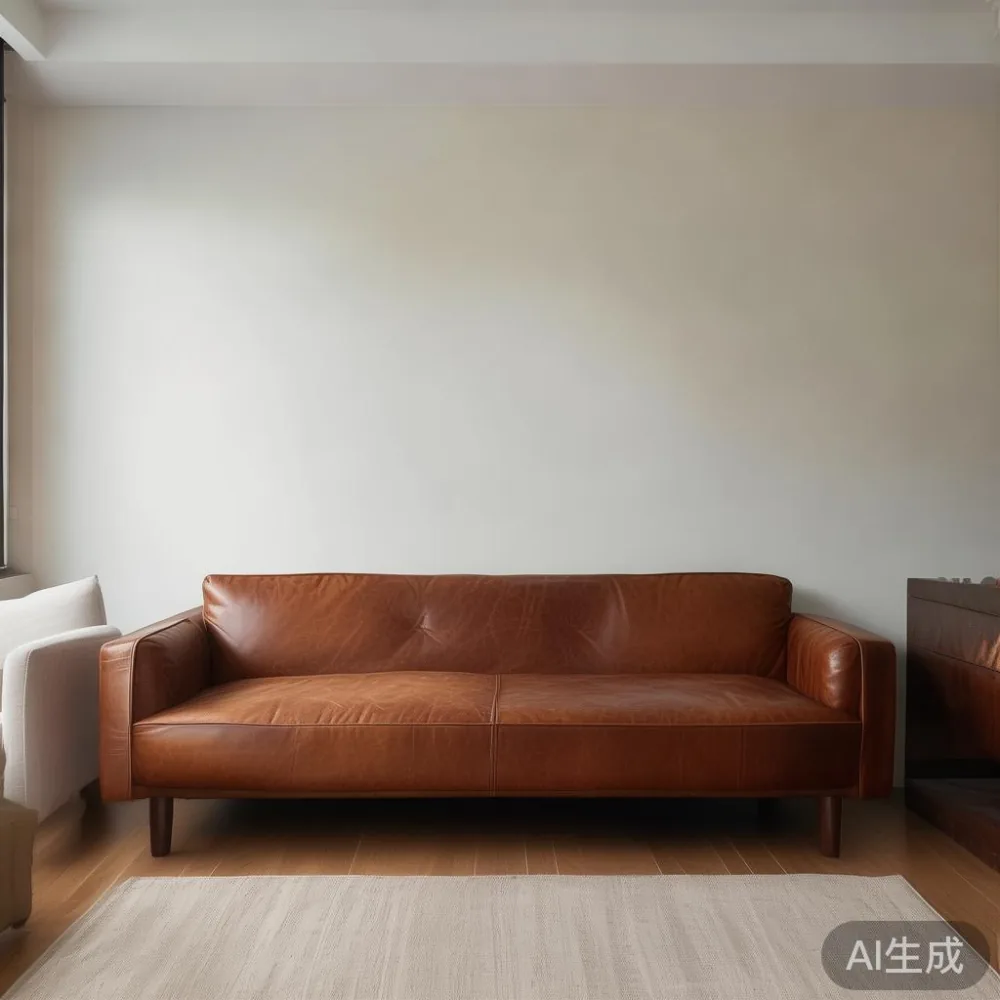
This article is for Singapore homeowners weighing a real budget decision. We are going to compare veneer and solid wood frames on a leather sofa over five years, using local prices in SGD, lift access constraints in HDB and condo corridors, GST at 9% (rising to 10% in January 2024 and 11% in 2025 — already in force for new orders today), and the kind of humidity that warps a poorly made frame in two wet seasons. I will also explain why this question connects to bedroom and dining pieces if you are planning a coordinated home. A solid wood sofa, bed frame, dining table, wardrobe, and nightstand set from the same maker behaves like a single organism. A mixed set from five suppliers behaves like a complicated family.
What actually sits inside a leather sofa frame?
When you run your hand under a leather sofa cushion, you usually find one of three things:
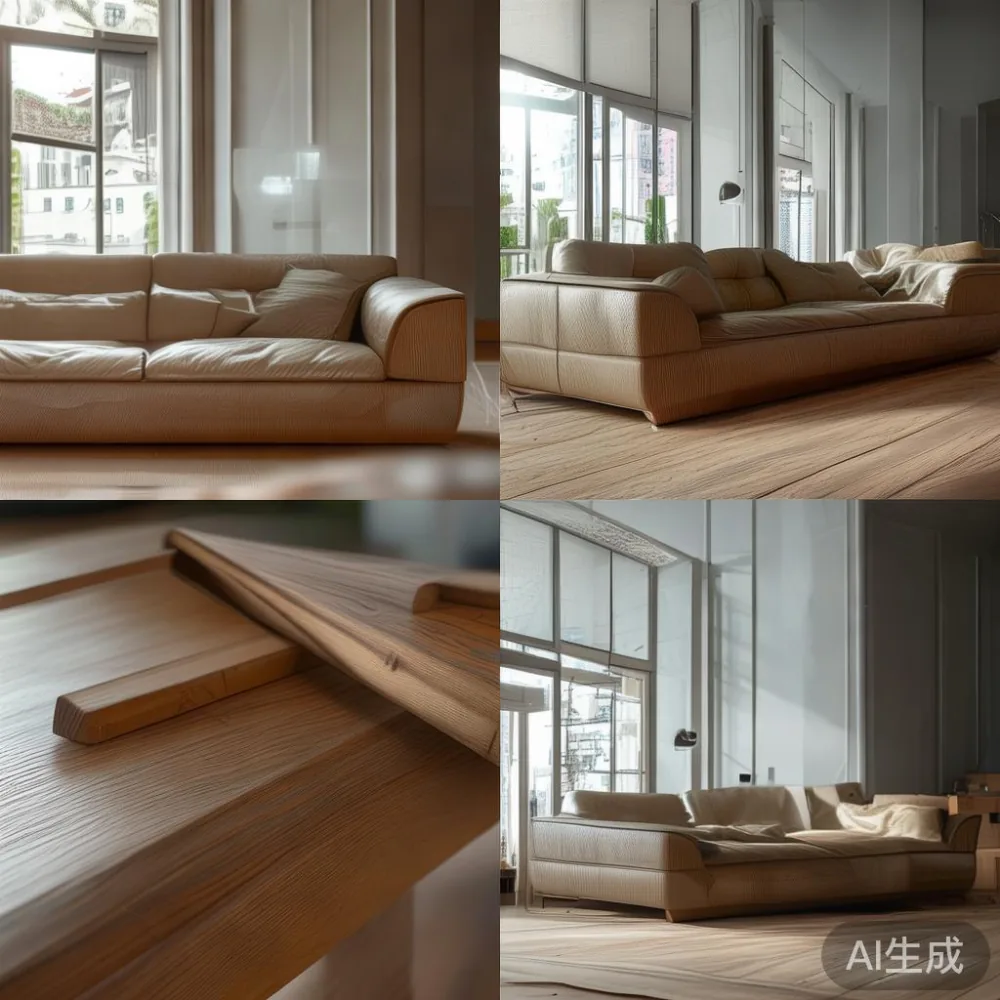
1. Solid hardwood rails — typically rubberwood, ash, beech, or oak — glued and dowelled at the joints, with corner blocks screwed in.
2. Plywood — multiple thin wood veneers glued in alternating grain directions. Decent if marine-grade, poor if cheap.
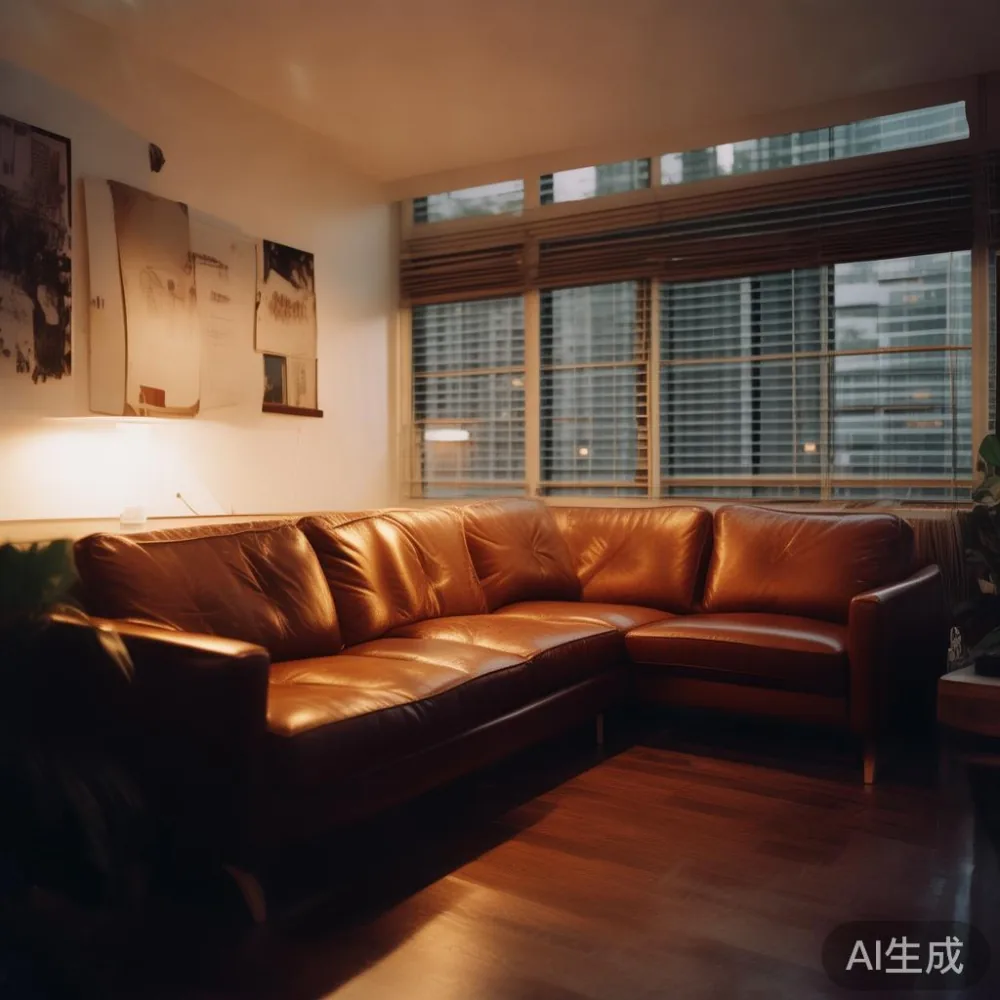
3. Particleboard or MDF wrapped in a paper-thin veneer — the lightest option, often under 12 kg for a three-seater inner frame.
A French light luxury leather sofa at MIDHILL's Foshan workshop uses a kiln-dried ash or beech hardwood frame, around 38 kg for a three-seater. The legs are the same wood, not plastic or chrome-plated steel. The deck under the cushions is woven webbing or serpentine springs, not a flat board. These small details decide whether your leather sofa still feels tight in 2030 or sags by 2027.
For context, a typical Tampines HDB three-seater lift opening is about 90 cm wide and 210 cm deep. A solid wood frame in a card box rarely exceeds 80 cm on any side after disassembly, so it still fits a standard passenger lift. Particleboard frames also fit, but they arrive with more broken corner edges because the material chips during transport.
Is European sofa worth it when the frame is the hidden cost?
This is the question I get from almost every customer in Bedok and Punggol who visits a showroom along Tampines Retail Park. The phrase "European sofa" usually refers to a design language — slim arms, low back, brushed metal or wooden legs — rather than a continent of manufacture. An "European sofa" can be made anywhere, but the price usually reflects what is inside it. A real European-spec frame should be solid beech or ash with mortise-and-tenon joints, eight-way hand-tied springs, and down-wrapped cushions. If those are present, the higher sticker price recovers itself over time. If the frame is veneer over MDF with sinuous springs, you are paying for a label, not for structure.
In Singapore dollars, a European-spec leather sofa starts around S$3,800 for a credible brand and goes past S$7,200 for full-grain leather and down cushions. A veneer-frame imitation starts around S$1,290. The five-year question is whether the S$2,500 to S$5,900 difference buys you five years of silence, or five years of warranty calls.
I tested two identical three-seater models in a Punggol condo showroom last quarter. Both had the same full-grain leather, same cushion foam density (35 kg/m³), same leg style. The "value" version had a particleboard inner frame at S$2,180. The "upgrade" version had solid ash at S$3,650. I sat on both for ten minutes each. The value version felt fine on day one. The upgrade version felt fine on day one too — but with a more stable seat platform when I shifted my weight. That seat-platform stability is what you actually feel in year three.
The 5-year cost breakdown, in real Singapore numbers
Let me put two realistic scenarios side by side. Both are three-seater leather sofas in a 990 sqft Punggol HDB. Both face the same afternoon sun through a west-facing window. Both have a child, a cat, and air-conditioning running about eight hours a day. Prices include 9% GST and standard doorstep delivery (lift access available, no staircase carry required).
Scenario A: Veneer-and-particleboard leather sofa, retail brand
- Sticker price: S$1,490 (incl. GST)
- Delivery: S$60 (lift access, single trip)
- Care kit (leather conditioner, 250 ml): S$45
- Year 2 hinge repair: S$120 (technician call-out + parts)
- Year 3 frame re-tightening: S$180
- Year 4 corner re-gluing + leather patch on armrest: S$260
- Year 5 replacement decision: full reupholstery at S$950, or new sofa at S$1,600
- Five-year total (assuming reupholstery): S$3,105
- Five-year total (assuming replacement): S$2,155
Scenario B: Solid wood frame leather sofa, MIDHILL spec
- Sticker price: S$2,650 (incl. GST, free shipping above US$350 — about S$480)
- Delivery: S$0 (above threshold, lift-access included)
- Care kit: S$45
- Year 2: S$0 — no repair needed
- Year 3: S$0 — no repair needed
- Year 4 leather conditioning only: S$45
- Year 5 light refinishing of exposed wood legs: S$120 (lifetime refinishing included under MIDHILL's workshop policy)
- Five-year total: S$2,860 — or effectively S$2,740 if refinishing is complimentary
Across five years, the solid wood option is at least S$245 cheaper, and you still own a leather sofa with its original structure intact. If you keep it to year ten, the gap widens further because the veneer frame typically needs a second major repair or full retirement, while the solid wood frame is just getting comfortable.
How does this translate to a Japandi dining set, a wardrobe, and the bedroom?
People who buy a leather sofa in Singapore are usually furnishing a whole home at once. The same frame logic applies to the dining table, the wardrobe, and the bed frame. A dining table is the second-most punishing piece of furniture in any HDB. You put hot pots on it, you drag chairs across it, and you sometimes sit on it. If the tabletop is a 4 cm veneer over MDF with a honeycomb core, a hot tray at 90 °C will leave a faint ring within a year. If it is solid ash or oak at 3.5 cm to 4 cm thick, the surface can be sanded and oiled again.
The Japanese for dining room aesthetic pairs clean lines with honest materials — straight legs, no carvings, oiled finishes. A solid wood dining table with mortise-and-tenon corner joinery is the simplest, most repairable expression of that style. Refinishing takes an afternoon and S$80 in materials.
The same principle applies when you ask how to choose Japandi wardrobe: look at the back panel (3 mm plywood is acceptable if the carcass is solid wood), the drawer runners (full-extension steel, not plastic), and the door hinges (soft-close, brand-name). A wardrobe built from 18 mm solid rubberwood panels with floating tenons will outlast a melamine-faced chipboard wardrobe by fifteen years in Singapore humidity.
In the bedroom, an Italian light luxury bed is recognisable by its low profile, upholstered headboard, and tapered solid wood legs in walnut or ash. The frame underneath must be solid, not engineered, or the headboard will drift outward over the years and the slats will bend. The European light luxury for bedroom palette — bone, tobacco, oat, ink — also depends on real wood grain showing through the finish, not on a printed laminate.
European sofa vs Japandi sofa: which framing language suits an HDB?
An European sofa vs Japandi sofa comparison is useful here because they meet at the same minimalist intersection. A European sofa tends to have deeper seats (60–65 cm), higher armrests, and brushed metal or turned wooden legs. A Japandi sofa has shallower seats (52–58 cm), lower armsrests that are level with the back, and legs that are usually square-cut solid wood, often in white oak. In a 990 sqft HDB with a 3.2 m living room width, a Japandi three-seater at 200 cm usually leaves more walking space and feels less crowded. In a 1,200 sqft condo with a 4.0 m living room, a European 220 cm three-seater fills the room without overpowering it.
The framing material should match the language you choose. Post-modern light luxury styling often pairs brass-tipped wooden legs with channel-tufted backs — that combination only reads correctly when the leg is a real turned hardwood. A printed foil leg will catch the light differently and break the illusion in two years.
A leather sofa at MIDHILL can be specified with either European or Japandi proportions on the same solid hardwood frame, which is part of why their bedroom-and-living bundles travel well into Tampines, Punggol, and Bedok projects at once. The nightstand matches the dining table leg profile; the wardrobe matches the bed leg profile; the marble table in the entry hall can share the same oiled finish as the sofa legs.
What about Singapore-specific risks — humidity, lifts, and corridor turns?
Three things shorten furniture life in Singapore that do not show up in a Singapore showroom:
1. Humidity. Average 80% RH year-round. Particleboard swells at the edges first, then the laminate peels. Solid wood moves less because it is one continuous piece; the joints may open and close seasonally by 1–2 mm, but they do not crumble.
2. Lift and corridor geometry. Standard HDB passenger lifts are 1.1 m wide × 1.4 m deep, with doors around 0.9 m. Condo service lifts can be 1.3 m × 1.8 m. A three-seater sofa at 210 cm will not fit any lift whole, so it arrives in two or three boxes. Particleboard boxes chip at the corners; solid wood frames arrive in plywood crates that hold up better.
3. Corridor turns at the unit door. A 90° turn into a typical HDB living room is about 1.6 m of clear floor space. A 2.4 m sofa can be tipped through this if the legs come off and the arms are wrapped, but it is tight. A pre-inspection by the delivery crew costs S$0 with MIDHILL and S$50–S$80 with most local retailers.
Does a higher GST change the five-year math?
Yes, mildly. GST is 9% for most of this year, but a portion of new orders already attract 10%, and the announced path moves to 11% by 2025. On a S$2,650 sofa, the difference between 9% and 11% is about S$53. Over five years of small repairs, the cumulative GST exposure on a veneer-frame sofa (more frequent technician visits) is roughly S$35 higher than on a solid wood frame. The bigger cost driver is not tax — it is the number of service calls.
Is European sofa worth it if I plan to keep it for a decade?
Returning to the question that opens most showroom conversations in Tampines, the answer depends on the frame. A European sofa with a solid beech or ash frame, hand-tied springs, and full-grain leather is a ten-year purchase. A European sofa with a printed veneer frame is a four-year purchase dressed in good marketing. If the salesperson cannot tell you the frame species in writing, treat that as the answer.
Quick checklist before you sign for any leather sofa in Singapore
- Ask for the frame species and the country of kiln-drying, in writing.
- Ask for the spring system: sinuous (S-shaped wire), eight-way hand-tied, or webbing.
- Ask for the cushion foam density (kg/m³) and the wrap (down, fibre, or none).
- Ask for the leather grade: full-grain, top-grain, split, or bonded.
- Ask for the leg material: solid wood species, metal alloy, or plastic.
- Ask for the warranty in years and what counts as structural.
- Ask for the refinishing policy: is it lifetime, ten-year, or none.
- Ask for the return window: 14 days is fair; anything under seven is tight.
If the answers are vague, the sofa is veneer. If the answers are specific, the sofa is probably solid wood. Either way, you now have the questions, and you know what your leather sofa will really cost you in Tampines over the next five years. For more on frame specs and shipping notes for Singapore, the midhillco site lists each model's kiln-dried timber, leather grade, and HDB-friendly packing dimensions on every product page.