How Southeast Asian Humidity Affects Solid Wood Furniture and Leather Sofas
Singapore’s tropical climate can change wood faster than many owners expect. In an HDB flat in Tampines, a dining table near an open balcony may encounter 3 hours of direct morning sun, 65–85% relative humidity and daily temperature swings of 5–8°C. A leather sofa in a Bedok condo can face the same moisture load in a less obvious form: air-conditioning lowers the humidity, then the building cools rapidly after sunset. Over 12 months, repeated swelling, drying and condensation can loosen joints, haze veneer finishes and leave leather cushions feeling sticky or stiff.
This guide explains how humidity affects solid wood furniture, how to read the risks in a Singapore home, and what practical care protects a leather sofa, bed frame, dining table, wardrobe, nightstand or marble table. It also covers delivery and installation decisions for HDB flats and condos in Punggol, Bedok and Tampines, including corridor widths, lift limits and GST.
Solid wood is not a guarantee against environmental movement. It reacts to moisture by expanding across the grain and contracting along it. Good furniture design accommodates that movement; poor sealing or careless placement magnifies it. MIDHILL has exported solid wood furniture to more than 15 countries since 2008, with a 10-year structural warranty and lifetime refinishing service that supports long-term ownership rather than short-term replacement.
What Singapore humidity actually does to solid wood
Singapore’s annual rainfall is about 2,340 mm, and coastal humidity regularly reaches 80–90%. Inside a flat, the more useful range is usually 50–70% relative humidity. A sudden change of 10 percentage points in a day can be more demanding than a slow, steady change because the wood and its finish are repeatedly stressed.
Solid wood expands across the grain when it absorbs moisture. A 180 cm dining tabletop might move by roughly 1–3 mm across its width under moderate seasonal variation. That tiny movement matters where the table is tightly enclosed by chairs, a fitted wall or a narrow cabinet run. It can cause rubbing, clicking or a slight bow if the design gives the timber nowhere to go.
The movement is also directional. A long solid wood bed frame expands mainly across its width, while a wardrobe panel can move around its edges. A nightstand with a single drawer may develop a small gap where the drawer meets the case. These changes are not automatically defects; they often indicate that the local environment, installation clearances or moisture control needs attention.
Finishes affect the rate of change. A well-applied hardwax oil or lacquer slows moisture exchange, but it does not make wood moisture-proof. A wax-rich surface feels lovely on a bed frame or dining table, yet it requires more frequent care in humid conditions. Customers comparing the best Minimalist sofa for 2026 should also ask how the timber frame and leather cushions are protected inside the upholstered structure.
How to style European sofa in apartment without inviting dampness
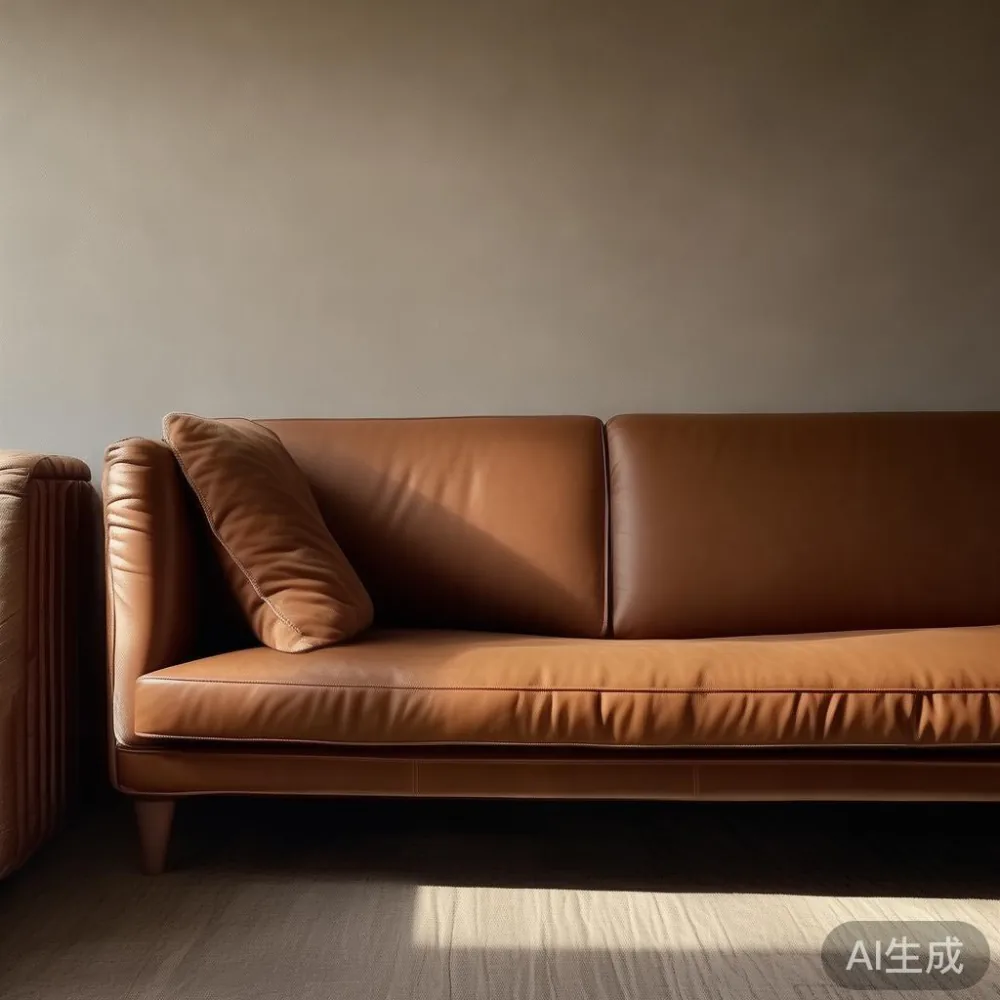
When comparing how to style European sofa in apartment layouts, position matters more than decoration alone. Keep a leather sofa at least 30 cm away from balcony doors, bathroom-adjacent walls and persistent sun. In a compact HDB living room, a 160–190 cm sofa may suit a 3.5–4.5 m wall more comfortably than a 220 cm model. In a newer Punggol condo with a broad living area, a 200–240 cm three-seat design can work if the main walkway remains at least 80 cm wide.
European-inspired proportions often pair a leather sofa with solid wood legs, a low bed frame or a rectangular dining table. That combination suits French light luxury, provided the room is not overloaded with dark, heavy pieces. For a 9–12 m² HDB living room, use one visually substantial leather sofa, slim side tables and a light rug rather than several large objects competing for space.
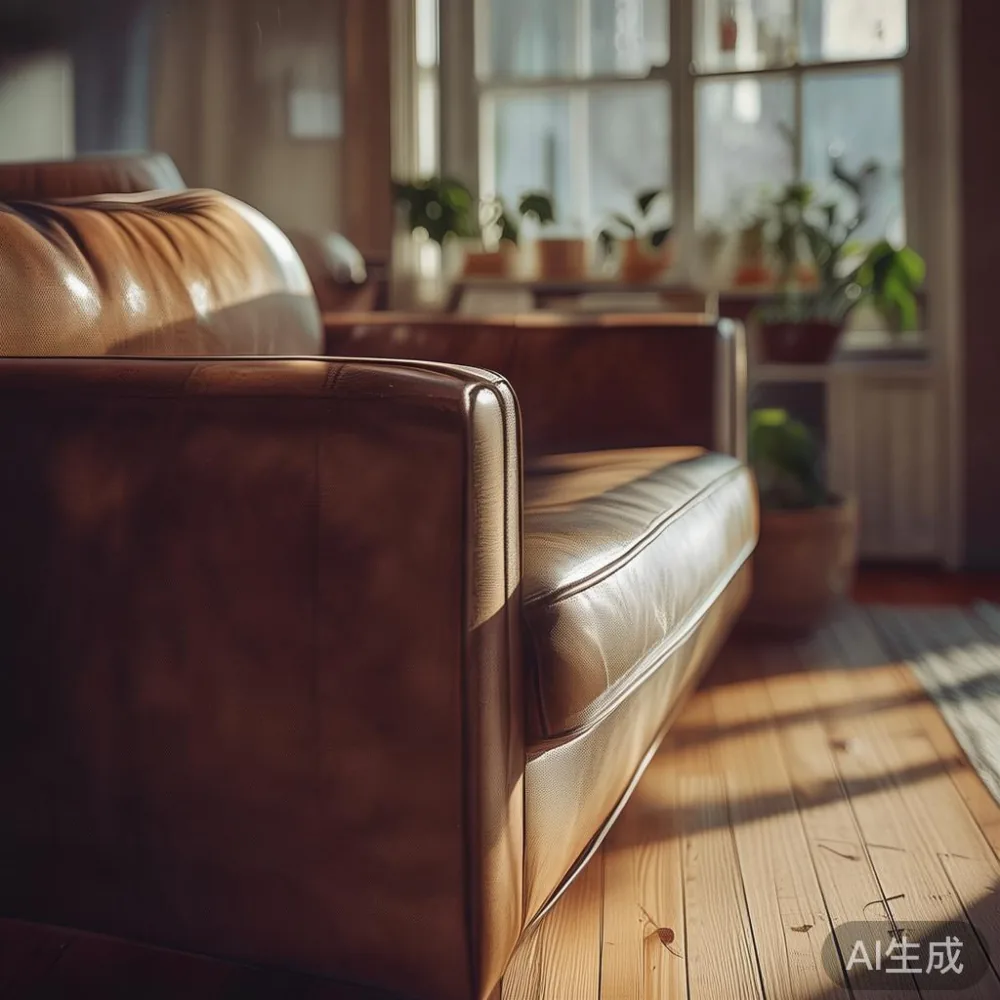
Humidity also interacts with floor choice. A leather sofa raised on 12–16 cm legs allows air to circulate beneath it, which is useful near an HDB corridor where the floor may collect moisture during the monsoon. Keep it away from floor-level storage boxes and air-conditioner drip zones. Use a hygrometer in the living room; readings above 70% call for more ventilation, while readings below 45% may suggest excessively dry air after prolonged air-conditioning.
For homeowners searching for French for small living room ideas, the useful approach is proportion control: a low-profile leather sofa, a pale solid wood dining table if space permits, compact nightstands and wall-mounted storage. Curtains should move freely and should not trap damp fabric against the sofa. In a Tampines flat without balcony drying space, a dehumidifier rated for approximately 20–30 m² can help maintain a stable indoor environment.
Leather sofa: humidity, mould and maintenance
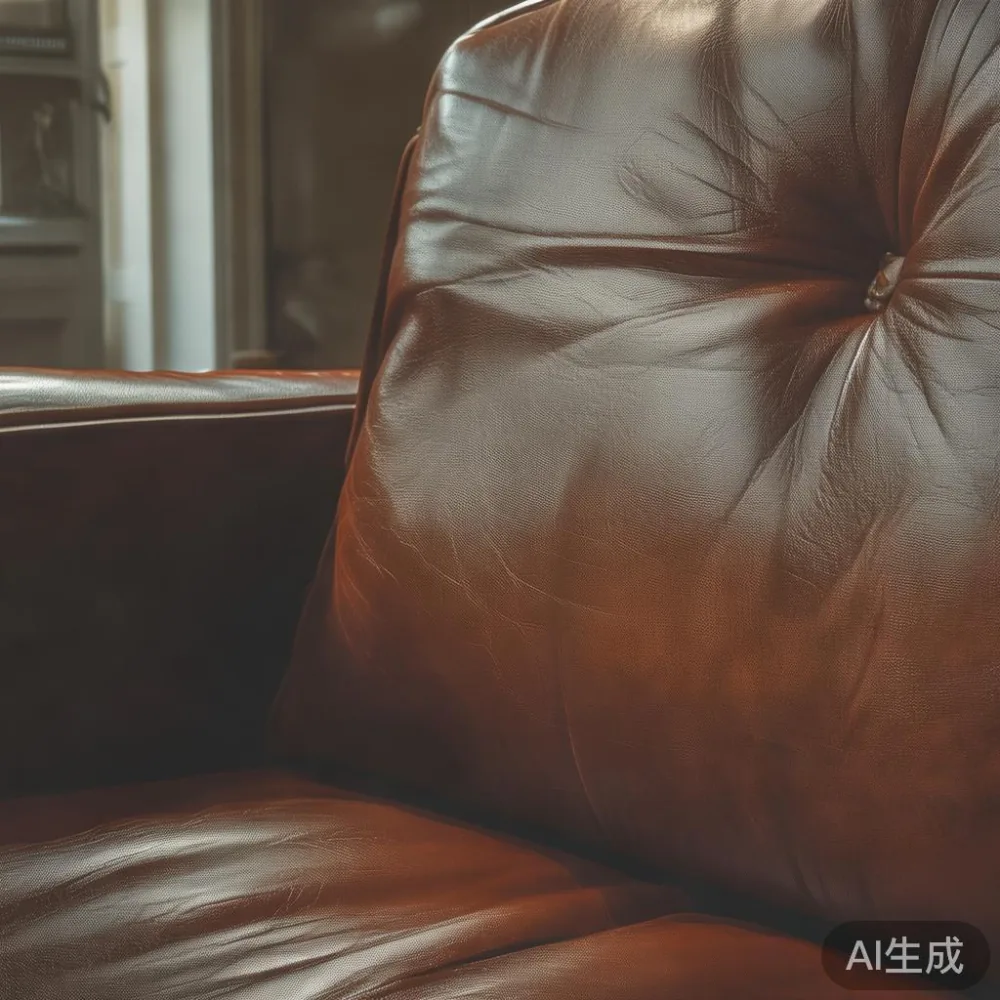
A full-grain or top-grain leather sofa can remain attractive in Singapore when its timber frame is ventilated and the leather is conditioned appropriately. However, genuine leather is hygroscopic: it absorbs small amounts of moisture and releases them later. In high humidity, cushions can feel tacky; after a dry air-conditioned period, the same leather may develop light surface marks or become less supple.
For a 200 cm three-seat leather sofa, wipe the cushions every 2–4 weeks with a lightly damp cloth and dry them with a clean cotton cloth. Avoid soaking the seams. Apply a pH-neutral leather conditioner every 6–9 months, after testing an inconspicuous area. This interval may become 4–6 months in an air-conditioned Bedok condo or a humid ground-floor unit.
Keep at least 20–30 cm between the sofa and external walls, and 15–20 cm from the back of the sofa to the wall for routine cleaning. If condensation appears on a nearby pane, move the sofa rather than repeatedly wiping the mould spot. Persistent black spotting, musty odours or damp insulation require professional cleaning and inspection; moisture trapped beneath the leather will not disappear with surface polish.
For solid wood elements beneath a leather sofa, check the legs and underside every 3 months. Look for a lifting finish, fine checking or a loose fastener. American light luxury often uses clean profiles and pale timber, so small surface changes are more visible. Post-modern light luxury can conceal movement through layered forms, yet the joints still require the same care.
The leather sofa should also be considered during delivery. A boxed three-seater may weigh 70–110 kg and arrive in 2–4 cartons. In an HDB lift with a 1.1 m door and a 1.4 m turning depth, the boxed sofa may fit, but the carton corners and lift wall clearance need checking. In a Punggol condo, confirm the loading bay and service lift dimensions with building management before the delivery team arrives.
Does humidity damage a dining table, bed frame or wardrobe?
Yes, but the visible result depends on the timber, joint, finish and placement. A solid wood dining table near a Bedok kitchen window may develop fine surface checking as fast as 6–12 months if coatings are worn. A bed frame positioned along a cool exterior wall can show movement around the headboard fixings. A wardrobe near a bathroom or balcony door may experience swollen runners, distorted doors or a gap at the toe-kick.
Allow ventilation around fitted furniture. Keep a wardrobe 10–15 cm from a side wall where practical, and avoid placing it directly against a bathroom wall in a HDB flat. If the layout is tight, use moisture-resistant storage rather than trapping damp cloths against the cabinet. For drawer runners and hinges, inspect them every 6 months and tighten or adjust them as timber movement changes the alignment.
Marble table tops require a different moisture strategy. Marble is less prone to absorbing humidity than wood, but it is vulnerable to acidic liquids and impact. A 120 cm round marble table with a 20 mm top may weigh 45–70 kg, so its base needs level support and a stable lift route. Wipe acidic condensation and spills promptly; do not place a chilled drink directly on a dark stone surface.
Oak, ash, teak and other solid hardwoods each respond differently to humidity. Teak’s oily structure makes it naturally moisture-resistant, while oak’s open grain can show changes more clearly. The key specification is not simply “solid wood”; it should identify the species, finish, joint construction and expected environmental tolerance.
What should I do before a sofa or dining table is delivered?
Measure the entire route rather than only the room. Record the sofa carton dimensions, door width, corridor width, lift door, lift depth, turning radius and the longest carrying distance. Common HDB access points include 850–900 mm doors, but building-specific conditions vary. A 220 cm sofa may measure 125 × 65 × 58 cm in its carton, and one corner can determine whether it will turn inside a lift.
Protect the route with cardboard sheets where permitted, and reserve the lift for at least 30–60 minutes. Confirm whether the building requires a booking or protective floor covering. A delivery fee from S$49 to S$149 may apply depending on distance, stairs and item size; lift protection may be quoted separately. Orders above US$350 qualify for free international shipping under MIDHILL’s stated policy, but local Singapore delivery, GST and building access charges should be confirmed separately.
Singapore GST is currently 9%. A S$2,800 dining table would therefore have GST of S$252 and a total of S$3,052 before delivery or installation charges. For a S$3,600 wardrobe, GST is S$324, making S$3,924 before access fees. Keeping these figures separate helps customers compare options without confusing tax with delivery.
On arrival, let a solid wood dining table or bed frame acclimatise for 24–72 hours before tightening every fixing. Avoid placing new furniture directly against a cold wall or in a damp balcony. For a leather sofa, open the packaging promptly so trapped cardboard moisture does not remain against the upholstery, and check the frame, feet and cushions before the delivery team leaves.
Can one protect a leather sofa and wood furniture with the same routine?
The routine shares a purpose—stable indoor conditions—but the products need different products and intervals. Use a hygrometer near the leather sofa and another near a bed frame or wardrobe if the rooms vary. Aim for approximately 50–70% relative humidity and avoid rapid changes. Run air-conditioning or dehumidification consistently rather than switching between damp outdoor air and very dry indoor air several times a day.
For wood, dust weekly with a soft cloth, clean spills immediately and renew hardwax oil or wax according to the finish and traffic level. Avoid silicone-heavy furniture sprays, which can interfere with future refinishing. For a dining table, use coasters and trivets; for a nightstand, keep drinks in lidded containers; for a wardrobe, wipe the top edge and base when wiping dust.
Condition leather every 4–6 months in humid conditions and inspect seams monthly during the first year. Check beneath loose cushions for dampness. If the sofa sits beside a window, use UV-filtering curtains but preserve ventilation. These measures support the 10-year structural warranty offered on MIDHILL products, while the lifetime refinishing service applies to eligible solid wood surfaces according to its service terms.
Customers considering is Japandi wardrobe worth it for a compact flat should focus on depth, ventilation and sliding or adjustable internal fittings. A 120–150 cm wide wardrobe may fit an HDB bedroom wall while leaving 60 cm for circulation. The best Japandi wardrobe for 2026 should also offer drawers or rails that can be adjusted as humid-season movement changes alignment. Likewise, the best French wardrobe for 2026 should pair visual restraint with durable runners, ventilated panels and repairable solid wood components.
How can owners tell whether a movement problem is serious?
Small changes that appear and disappear with humidity are usually manageable. A dining table edge that lifts by less than 1 mm, a drawer that needs a slight adjustment or a wardrobe door with a 2–3 mm gap may reflect seasonal movement. Clean the contacting surfaces, check that the piece is level and allow the room to stabilise for 7–14 days.
Persistent bowing greater than 5 mm across a dining table, splitting through a joint, mould under upholstery or a repeatedly opening wardrobe door needs closer attention. Photograph the affected area with a ruler beside it, note the room’s humidity and contact the maker. Do not apply thick oil to a damp surface, because that can seal moisture inside while making the finish uneven.
One first-person test made the difference clear. Last month, my colleague and I checked a solid wood dining table in a Tampines HDB flat that stood beside a frequently opened balcony door. Its top had fine checking and one leg sat about 1.5 mm lower than the others. We moved the table 40 cm away from the opening, wiped it dry and kept the room between 58–64% humidity. After 14 days, the low leg’s movement reduced to under 0.5 mm, and the finish was sanded and refinished under the applicable service process.
The practical lesson is to correct the environment before blaming the furniture. A leather sofa in the same flat remained stable after it was moved 25 cm from the balcony wall and its cushions were conditioned. The important numbers were not decorative claims but measured conditions: 58–64% relative humidity, a 40 cm relocation and a 14-day observation period.
Humidity will always shape wood furniture in Southeast Asia. The answer is controlled placement, ventilation, accurate measurements and timely care. A solid wood sofa frame, bed frame, dining table, wardrobe, nightstand, marble table or leather sofa can last for decades when its natural movement is allowed and moisture is managed rather than ignored.