What to Check Before Buying a Leather Sofa You Cannot Sit On
Buying a sofa you cannot sit on sounds like an unusual problem, yet it is a familiar issue for shoppers in Singapore. A show-room sofa may look balanced because the floor is flat, the walls are wide and the viewing distance is generous. Move that same piece into a Tampines HDB flat, a Bedok condo or a Punggol apartment, and small errors become obvious: the sofa may block the walkway, catch the corridor wall or arrive with a delivery route the supplier never checked.

This guide explains how to assess a leather sofa before purchase, especially when you cannot test it in your own home. The emphasis is not simply on appearance or price. It is on access, dimensions, comfort, construction and the service agreement that follows the sale. MIDHILL is a Foshan solid wood furniture maker established in 2008, exporting to more than 15 countries. Its practical commitments include a 10-year structural warranty, lifetime refinishing, delivery free above US$350 and a 14-day return window. Prices below are expressed in SGD, while product dimensions use cm.
Why can a beautiful leather sofa still fail in a Singapore apartment?
The main problem is scale. A sofa may suit a furniture catalogue but still fail the route between the loading bay and your living room. The lift door, corridor turns, staircase, front door and final seating position all impose limits. A leather sofa that looks generous in a showroom can also feel crowded against a TV console, dining table or balcony door.
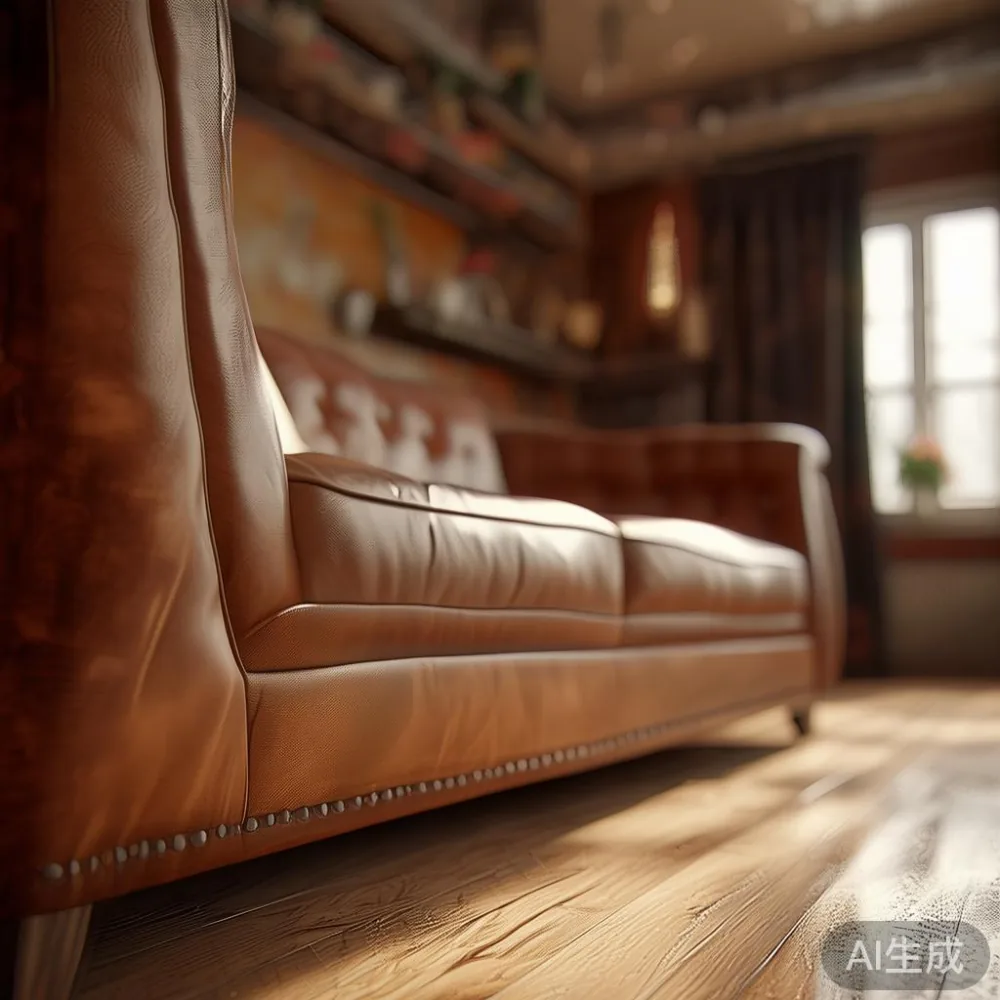
Singaporean apartments add another layer of consideration. HDB layouts often connect the living room to the dining area, so a sofa that projects too far into the room can interrupt circulation. Condo living rooms may have wider windows but narrower access points, particularly in developments completed between 2015 and 2025. Before ordering, measure the narrowest point rather than estimating from the unit floor plan.
I still remember visiting a client’s Punggol condo last month with a three-seat leather sofa the client had seen in a showroom. The sofa was 236 cm wide, and the lift door was 210 cm. The supplier had promised a vertical lift, but the sofa’s packed carton was 228 cm tall and could not turn through the 190 cm lobby recess. We did not buy that configuration. A modular seat was selected instead, and the final delivery was completed in 9 days after the revised order.

Light luxury is useful here as a design position, not as a substitute for measurement. French light luxury might suggest a deep chaise and rounded upholstery, while American light luxury often uses broader proportions, clean profiles and generous cushions. Post-modern light luxury can accommodate asymmetry and sculptural forms, but unusual shapes may consume more circulation space. For a local apartment, light luxury for apartment living should begin with the available footprint.
What dimensions should you check before ordering a leather sofa?
Record the sofa’s width, depth, height, seat height and armrest width. For a typical three-seat leather sofa, useful starting ranges are 190–240 cm wide, 90–105 cm deep and 78–90 cm high. Compact two-seat versions may be 150–185 cm wide. These are planning ranges, not guarantees; a modular design can add several centimetres around each section.
Measure the intended wall space with a tape measure, not a ruler. Add 60–90 cm of clear circulation beside a main access route and keep at least 45 cm between a sofa arm and a nearby dining table or console. If a person must pass behind the sofa with a tray, place a television or laundry basket there, leave 75–90 cm. These figures help prevent the furniture from looking technically correct but behaving badly in daily use.
Check whether the sofa includes fixed legs. A low-profile frame may require only 8–15 cm of clearance beneath the sofa, while a high-legged European light luxury nightstand nearby could visually expose dirt and make cleaning harder. Conversely, an open underframe can improve airflow in a humid Singapore home. Confirm the floor clearance, foot height and whether the rear back panel has fabric dust protection.
For reclining or adjustable models, obtain the fully extended depth and the clearance needed to operate it. A recliner may extend by 45–80 cm. Ask whether the mechanism can be used near a balcony door and whether the extended position obstructs a light switch. These small checks are more meaningful than a fabric swatch alone.
Can the sofa reach your door, lift and final room?
Ask the retailer for a delivery-access checklist. You need the entrance width, door width and height, lift car width, lift car depth, lift door width, maximum door opening angle, corridor width and any tight corners. Photograph every turning point and send the images with your address details. A building manager may also require a moving-in slot, protective floor covering or a certificate of insurance.
For a typical Singapore apartment, the lift door might be 80–110 cm, the lift car 110–180 cm deep and the corridor 120–180 cm wide. A large sofa may pass the lift but fail a 90-degree turn in the corridor. Diagonal measurement matters: the relevant comparison is the sofa’s diagonal and turning envelope, not simply its width.
For sofas that cannot be disassembled, the retailer should explain the delivery method in writing. Ask whether delivery is curbside, room-of-choice or placement-and-packaging removal. Some services stop at the lobby, while others carry the sofa into the living room and unwrap it. Confirm the expected delivery window, normally 7–14 business days after production, and ask what happens if the access route fails. A responsible seller should offer an agreed amendment or cancellation point before dispatch.
Delivery charges and GST should appear separately on the quotation. A Singapore quotation normally includes 9% GST. A leather sofa priced around SGD 2,590 before GST would be SGD 2,823.10 after GST. For an imported order, request the freight charge, lift surcharge, assembly fee, removal fee and any permit cost. Do not assume that free shipping over US$350 settles the final landing cost in Singapore.
How do you assess comfort without sitting on the sofa?
Sit on it, but only if sitting is physically and ethically permitted. Some display pieces are not intended for use, while others are. Ask whether the sofa is a floor model and whether testing is allowed. If it is not possible, a short supervised trial should be arranged. For a sofa intended for normal use, declining all sitting makes comfort harder to judge than selecting a colour online.
When you can sit, test the seat for at least 10 minutes. Check the cushion return after standing, the depth for your thighs and the back angle for your posture. A seat depth of 55–62 cm suits many adults, but deeper seats may support taller users better and shallower seats may suit shorter users. The compressed seat height is more useful than the unloaded height; look for approximately 40–48 cm in a standard sofa, subject to personal preference.
Press the cushions and inspect the foam. High-density foam often ranges from 35–45 kg/m³, while softer conventional foam can be below 30 kg/m³. The exact construction should be stated rather than inferred from a showroom bounce. Check whether the leather is genuine leather or synthetic, whether the panels are split leather and how the material will age. Grain variation, minor colour changes and creasing can be normal, but unexplained inconsistencies are not.
Compare the European light luxury sofa vs Modern sofa question with your room and routine. A tightly upholstered European-style form may feel formal and visually substantial, while a lower Modern sofa with slimmer arms may preserve space. A nordic light luxury sofa often uses pale colours, restrained profiles and tactile textiles, although a leather version will have a different character. The right choice depends on climate, maintenance habits, household use and the room’s proportions.
What should a leather sofa specification sheet actually include?
A clear specification should identify the frame material, suspension, foam density, cover, stitching, hardware and warranty. For a solid wood sofa, the supplier should distinguish kiln-dried hardwood from plywood, and specify any metal supports. Ask about the load rating, joining method and whether the frame is dowelled, screwed or corner-blocked. A 10-year structural warranty is meaningful only if the document defines which components and defects it covers.
For genuine leather, ask for the hide type and thickness. Finished leather may measure roughly 1.0–1.6 mm, although coating and splitting can alter the result. Request samples of both the finished surface and the underside. Check pilling, colour transfer, edge wear and cleaning instructions under the supplier’s care policy. Leather should be dusted regularly and kept away from direct heat; conditioned according to the maker’s guidance, with no aggressive household chemicals.
The wider furniture finish should also coordinate. A solid wood dining table, bed frame, wardrobe or marble table may have a specific sheen, so compare the sofa’s wood feet or exposed frame under the same lighting. The European light luxury nightstand can become a useful reference piece, but a marble table should not be judged from a tiny showroom sample. Request finish samples and, where possible, view them beside the leather.
Ask whether the leather sofa is made to order and what happens if its colour differs slightly from the sample. Photograph the approved sample in daylight, record its reference number and attach it to the order. The terms should also cover repair timelines, replacement cushions, frame defects, transit damage and returns. MIDHILL’s lifetime refinishing offer is one example of a long-term care commitment, though the customer should confirm whether it applies to leather upholstery, solid wood components or both.
Are there hidden Singapore costs and policies to check?
The sticker price is only one part of the decision. GST at 9%, delivery, lift access, assembly, removal, protection and care products can add SGD 80–400 to a sofa order. Obtain a written total that states what is included. A 14-day return policy is useful, but check whether it applies after the item has been installed, whether the original packaging is required, and who pays the return freight. For a made-to-order leather sofa, the production lead time may affect when the return period begins.
Measure doorways in the unit as well as the common corridor. An HDB flat may have a 90 cm front door while the condominium entrance has a larger 120 cm pivot door. The narrowest point governs. Leave the sofa in its delivery orientation if the route includes a turn, and remove doors only when the building and supplier permit it. If a wall or skirting board must be altered, that cost belongs in the planning discussion before payment.
Consider the room’s climate and light. Leather can feel warm in direct afternoon sun, so place it away from west-facing windows where possible. Maintain 10–15 cm of ventilation behind a fully upholstered back when the wall allows it. Use blinds and rotate cushions rather than applying harsh cleaners. For households with children, pets or frequent meals, inspect the stitch lines, removable covers and surface finish before the sofa enters the room.
What should you do on the day of delivery?
Inspect the leather sofa before the delivery team leaves. Compare the upholstery colour and pattern with the approved sample, look for cuts, scratches, loose seams and crushed corners, and check that the frame, cushions and protective materials are intact. Photograph the sofa in the room. Record any damage on the delivery note and agree on a written resolution and date for follow-up.
Do not sign a clean acceptance note if visible damage exists. Keep the packaging for several days in case a return or transport claim is permitted. Check the care label and warranty document, and confirm that any included cushions, legs or tools match the quotation. This final review takes 15 minutes and catches issues that a brief showroom glance would miss.
The central lesson is simple: a sofa that cannot be sat on in your home must be evaluated as a physical object moving through a real building, then as a long-term household purchase. Measure twice, test the access route, read the specifications and preserve the written commitments. For additional product and project guidance, visit www.midhill.co before confirming dimensions, finish and delivery terms.