How to Style a Small Singapore Apartment Around a Leather Sofa (Without Making It Feel Crowded)
I live in a 678 sq ft three-room HDB in Punggol, and last month I finally replaced my twelve-year-old fabric two-seater with a compact leather sofa, a 1.6 m long mid-century frame in tan pigmented leather. The swap took 14 days from order to delivery, and the corridor access on the 12th storey was the part I worried about most. The carton measured 168 cm long and 38 cm wide, and the courier confirmed by WhatsApp that our lift car (1.10 m deep x 1.40 m wide, door 0.80 m) could take it upright. It did, on a diagonal. That single decision is what triggered the rest of the room, so this is the walkthrough I now share with anyone in a 60–80 sq m flat in Tampines, Bedok, or Punggol who keeps asking me how to make a small space feel pulled together without stuffing it.
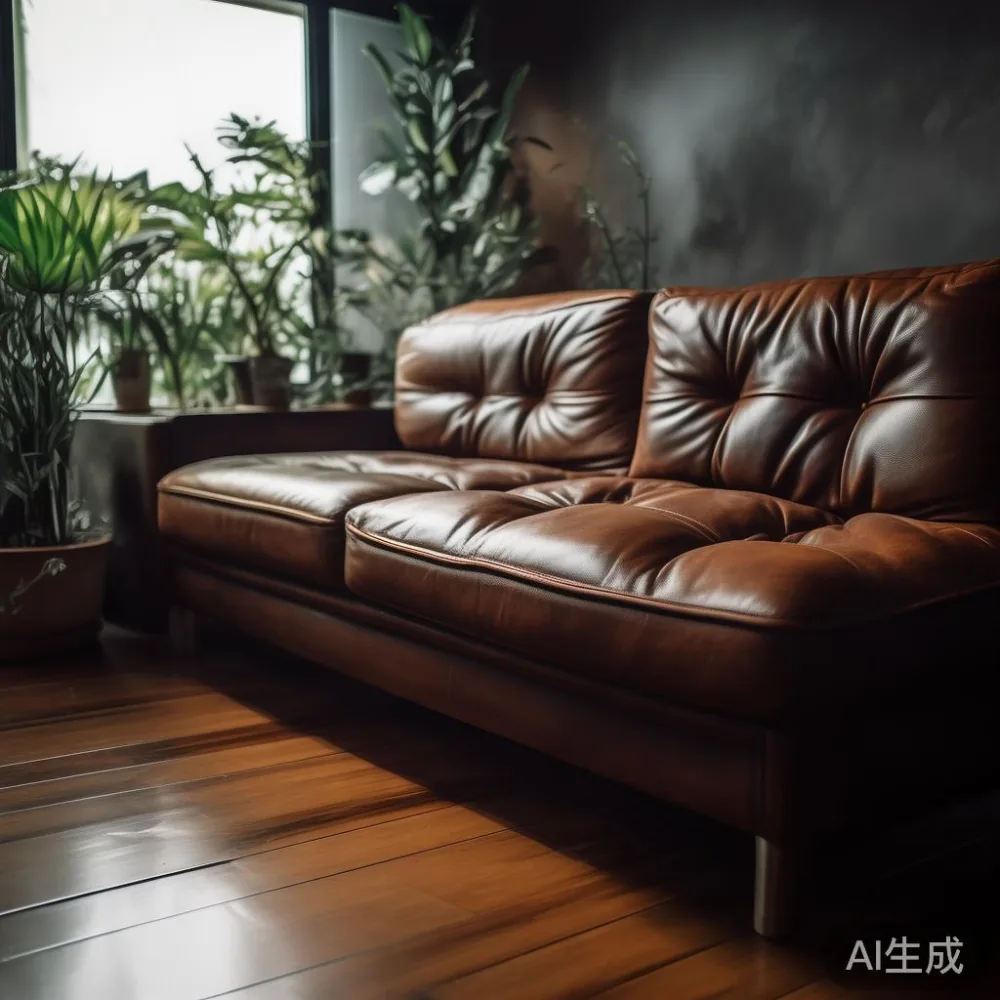
Singapore flats are honest about their limits. Ceilings in newer BTOs sit at 2.8 m, corridor widths in most blocks run 1.2 m to 1.5 m, and the lift cars I have measured range from 1.0 m to 1.4 m on the short side. Every piece of furniture you bring in has to clear those numbers. The good news is that Scandinavian solid wood small space design works on exactly this logic: shorter profiles, raised legs, lighter visual weight. When you anchor the room with a leather sofa of 1.6 m or less and pair it with a slim solid wood coffee table, a low-profile bed frame, and one real wood dining table for four, the floor stays readable and the eye can travel. A MIDHILL showroom consultant in Foshan walked me through this approach on a video call, and the same logic shows up in their 2-piece and 3-piece leather sofa sets built for export to compact Asian apartments.
Start with the leather sofa, not the walls
It is tempting to paint first, tile first, or buy the rug first. In a small flat, the leather sofa sets the room's dimensions, so measure for it before anything else. For a living room of 3.0 m x 3.5 m (typical HDB layout after the kitchen wall is taken out), a 1.5 m to 1.7 m two-seater is the right zone. Anything deeper than 95 cm will eat into your walk path, and anything longer than 1.8 m will block the corridor swing of the main door. A three-seater at 2.0 m is realistic only if you commit to a 2.5 m wall behind it and accept that your TV console shrinks to 120 cm.
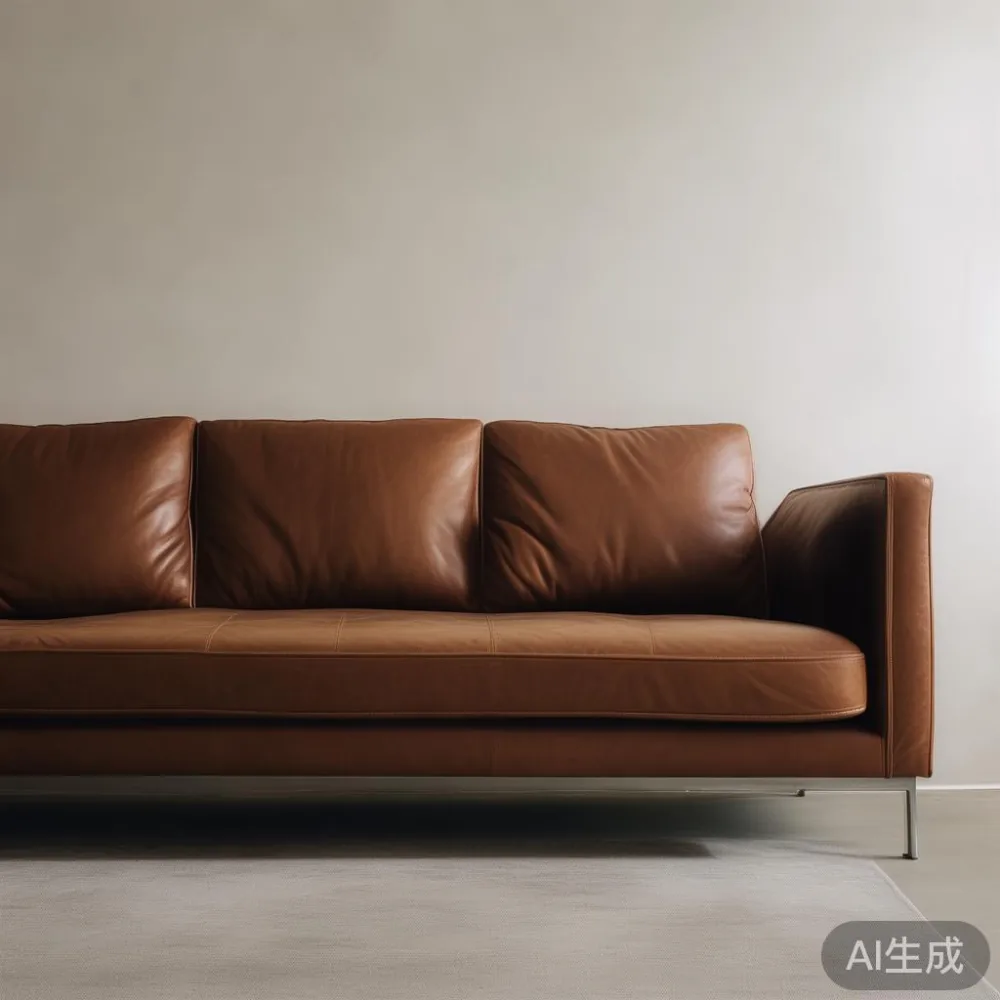
Top-grain and full-grain leather both behave well in Singapore humidity, but the foam core matters more. Eight-way hand-tied springs with a 3.5 cm high-resilience foam wrap will hold shape for 8 to 10 years; cheaper sinuous wire with 1.8 cm foam will sag in three. Ask the seller for the frame material too. A solid wood sofa frame in kiln-dried oak or ash adds 18 to 22 kg versus a plywood frame, but it is the difference between a sofa you reupholster once and a sofa you throw out. When I visited a friend's condo in Bedok last week, her five-year-old MIDHILL three-seater had been re-tanned twice and still looked new, which is a quiet kind of value.
What furniture actually fits through a HDB lift and corridor?
Before you fall in love with a marble table top, do the math. HDB lift doors are typically 0.80 m wide, and the car interior in most blocks I have measured is 1.10 m deep by 1.40 m wide, with a diagonal clearance around 1.78 m. A 1.4 m dining table will not fit assembled. A 1.2 m table will, if you remove the legs. Sofa cartons need 5 to 8 cm of breathing room on each side. Wardrobes over 1.8 m tall are usually delivered unassembled for this reason, and a flat-pack bed frame in solid wood will arrive in two boxes of around 35 kg each rather than one 70 kg monster.
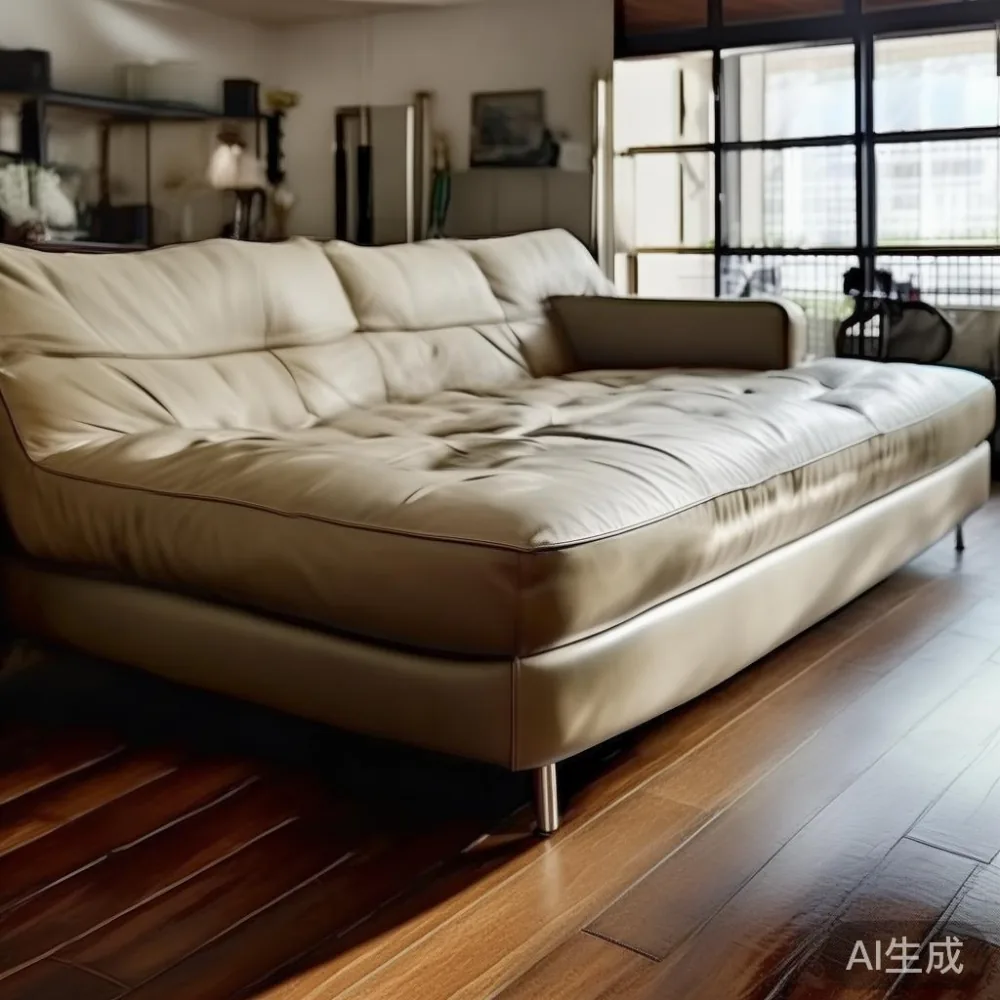
Here is the working rule I now use: any single piece longer than 1.6 m, taller than 1.8 m, or heavier than 45 kg should be planned for two-person carry and possible disassembly. A solid wood dining table in 1.4 m x 0.8 m form, with legs that bolt on, is the friendliest shape. Anything in a marble table finish will add 30 to 40 kg per square metre and almost always needs a hoist for upper floors, which in Singapore costs S$120 to S$280 per move on top of delivery.
How do I choose a assembly difficulty for a entryway?
Choose a low-to-medium assembly difficulty for any entryway piece, meaning a flat-pack with fewer than 12 parts, cam-lock joints rather than glue, and a fully illustrated manual with a QR code to a video. In a Singapore HDB, your entryway has to survive shoe traffic, wet umbrellas, and the occasional GrabFood collision, so a solid wood entryway bench or console that bolts together in 20 to 40 minutes with an Allen key is the right call. Anything that needs two days, a second pair of hands, or a drill is going to live in its box for a month.
For a typical 1.0 m to 1.2 m entryway console in solid wood, expect 4 to 6 cam locks, 2 to 4 wooden dowels, and one shelf pin per side. Total assembly time is usually 25 to 45 minutes for one person, or 15 to 20 with two. Heavy items like a 1.5 m marble-top console are a different category and usually require on-site installation, which adds S$80 to S$150 to your delivery bill in Singapore.
Light luxury, light footprint: how the styles differ on a small floor plan
Three light-luxury directions work in a compact Singapore flat, and each one pairs differently with leather.
French light luxury leans into curved arms, soft chenille throws, and brass accents. The risk in a small flat is that the curves eat floor space. Keep the silhouette simple: a Chesterfield-inspired leather sofa with shallow tufting, a slim marble table, and one bouclé accent chair in a corner. Limit the gilt to a single mirror frame or a pair of sconces.
American light luxury is wider, lower, and built around a single oversized piece. In a 70 sq m flat, that means a 2.2 m leather sofa against a 3.0 m wall, a chunky solid wood coffee table at 1.2 m x 0.7 m, and a leather ottoman that doubles as seating. Colours run cognac, oxblood, and tobacco. The visual weight is high, so the surrounding pieces need to recede: a flat-front wardrobe in pale oak, a low bed frame, and one statement rug.
Post-modern light luxury mixes materials in a way that suits new launches in Punggol and Tengah. Think a tan leather sofa paired with a black powder-coated steel frame bed frame, a travertine marble table, and a smoked-oak wardrobe. The shapes are geometric, the palette is tight, and there is usually one sculptural object (a floor lamp, a vase) doing the work of a wall of art. This is the direction I see most often in the showrooms that ship to Singapore, including the MIDHILL studio space in Foshan, where I spent a few hours last quarter looking at how the same sofa can be styled three different ways in three different 60 sq m mock rooms.
Building out the rest of the room without crowding it
Once the leather sofa is in, every other piece has to earn its 30 to 40 cm of floor space. Here is the order I follow.
Coffee table: 1.0 m to 1.2 m long, 50 to 60 cm deep, 38 to 42 cm tall. Anything taller than 45 cm will fight the sofa seat height. A solid wood top in ash or white oak with a slim metal base reads lighter than a marble table of the same footprint, and saves 15 to 20 kg, which matters when you rearrange.
TV console: 1.2 m to 1.5 m wide, 35 to 40 cm deep, with legs that lift it 12 to 15 cm off the floor. Wall-mount the TV if you can, and let the console hold only the soundbar, the router, and one row of books. In a 3.0 m wall, a 1.5 m console gives you 75 cm of empty wall on each side, which is the secret to a small room feeling composed.
Bed frame: For a master bedroom of 3.2 m x 3.6 m, a queen at 1.52 m x 1.91 m works if the side clearance is 60 cm and the foot clearance is 70 cm. A solid wood platform bed frame at 25 to 30 cm tall will visually lower the room and make the ceiling feel higher. Skip the headboard taller than 90 cm if your bed sits under a window.
Wardrobe: Sliding doors win every time in a small flat. A 1.8 m to 2.0 m wide wardrobe with two sliding panels and an internal layout of one long hang zone (90 cm), one shelf stack (60 cm), and three drawers will hold a two-person wardrobe. A swing-door wardrobe of the same capacity needs 60 cm of clearance to open, which is floor space you cannot afford.
Nightstand: 45 cm to 50 cm wide, 40 cm deep, with one drawer and an open shelf below. A solid wood nightstand in the same species as the bed frame reads as a matched set without buying a set. A round version softens a square room, and a floating one frees up the floor for a laundry basket or a small chair.
Dining table: A 1.2 m to 1.4 m solid wood dining table seats four comfortably and fits a 2.8 m x 2.8 m dining corner. Round tables look lighter but lose 15 to 20 cm of usable edge, so they only work in a square zone. Marble table tops are stunning but cold under Singapore's air-con, and they need a felt pad under every plate to avoid the clink.
Real numbers for a real Singapore budget
Here is what a complete light-luxury setup for a 70 sq m HDB looks like in late 2025 Singapore dollars, including the 9% GST and standard delivery.
Leather sofa, two-seater, top-grain, solid wood frame: S$1,850 to S$2,800. Add S$120 to S$200 for a higher-tier leather or a deeper seat. A three-seater runs S$2,600 to S$4,200. The price spread is mostly the leather grade and the spring system, not the style.
Coffee table in solid ash or oak, 1.1 m x 0.55 m: S$380 to S$650. Marble table in the same size, sintered stone top: S$750 to S$1,400. The marble option is heavier and usually needs two-person delivery, which adds S$60 to S$120 to your invoice.
TV console, 1.5 m, solid wood with sliding doors: S$520 to S$880.
Queen bed frame in solid wood, platform style: S$780 to S$1,400. Add S$180 to S$320 for a hydraulic lift base, which is worth it in a small flat for under-bed storage.
Wardrobe, 1.8 m wide, sliding doors, internal fit-out: S$1,200 to S$2,200 depending on the internal configuration. Expect S$1.50 to S$2.20 per cm of internal width for a custom layout, and S$80 to S$150 for on-site assembly.
Two nightstands, solid wood: S$220 to S$420 each. Buying in a pair usually knocks 8% to 12% off the single price.
Dining table for four, 1.3 m, solid wood top: S$620 to S$1,100. Marble table version, same size: S$1,400 to S$2,400.
Dining chairs, four pieces, leather or fabric seat: S$120 to S$260 each. A matched set is usually 10% cheaper than four singles.
Delivery for a full living-and-dining set in Singapore: S$80 to S$180 per trip. Most brands deliver for free above S$1,500, but a few still charge a handling fee of S$40 to S$60 for upper floors above the eighth. Lift-access only, no stairs.
Total realistic budget for the above: S$6,500 to S$11,500, before any rugs, lighting, or art. That range lines up with what a small two-bedroom in Punggol or a one-bedroom condo in Bedok typically costs to furnish from scratch when you want leather, solid wood, and one or two marble accents.
Colour, light, and the one rule that holds the room together
In a small Singapore flat, light is a piece of furniture. Most HDB windows face one of three directions, and many BTOs have only one full window wall in the living room. Pick your leather sofa colour after you have lived in the flat for a week at three different times of day. A tan leather sofa will read warm under a north-facing window and almost orange under a south-facing one. A charcoal or black leather sofa will hold its colour across the day and visually recede, which is what you want when the room is tight.
The one rule I keep coming back to is the 60-30-10 split: 60% dominant colour (walls, large furniture, the leather sofa), 30% secondary (rug, curtains, bed frame, dining table), 10% accent (art, cushions, the marble table or a single brass lamp). When everything in a small room is the same weight, the room looks messy. When the weights are clear, the room looks bigger than it is.
A colleague of mine in Tampines followed this rule almost by accident. She chose a graphite leather sofa (60%), an off-white solid wood dining table and bed frame (30%), and a single olive-green marble side table (10%). Her 65 sq m flat, which used to feel like a furniture showroom, now feels like one composed room. She did not move the walls. She just gave each piece a rank.
What to check before you click buy
Five small questions save a small fortune in a small flat.
First, ask for the carton dimensions in centimetres and the gross weight in kilograms, and measure your lift and corridor against those numbers before paying the deposit. A piece that does not fit the lift is a piece that does not enter the flat.
Second, ask what the frame is made of. A solid wood sofa frame in oak, ash, or rubberwood is repairable. A plywood or MDF frame is not, and it will start to creak within five years in Singapore humidity.
Third, ask about the warranty in writing. A 10-year structural warranty on the frame and a lifetime refinishing offer on the leather is a meaningful sign that the maker expects the piece to last. Anything less than five years on the frame is a red flag.
Fourth, ask about returns in Singapore specifically. The 14-day return window only matters if the brand arranges the pickup, and only if the piece is still in its original packaging. Re-stocking fees of 10% to 20% are common, so read the small print.
Fifth, ask for a fabric or leather swatch before you commit. A tan leather that looks one way on a phone screen will look different in your living room. Most direct-from-factory brands, including the MIDHILL Foshan studio I visited, will ship a S$0 to S$15 swatch within three to five days, and that small cost is the cheapest insurance you can buy.
Styling a small apartment is not about owning less. It is about owning the right pieces, in the right sizes, in the right colours, with the right numbers attached. Once the leather sofa, the solid wood bed frame, the slim dining table, the sliding wardrobe, and the marble accent are chosen with the lift door and the floor plan in mind, the flat stops feeling crowded and starts feeling intentional. That, more than any single style label, is what light luxury actually means in a 70 square metre home.