Solid Wood Furniture: Price Factors in Singapore
Solid wood furniture can look deceptively similar across showrooms while differing by hundreds or even thousands of Singapore dollars. The visible grain is only one part of the price. Timber species, moisture control, joinery, hardware, finishes, dimensions, delivery access, and after-sales support all affect the final invoice.

For Singapore homeowners furnishing HDB flats and condos in Tampines, Bedok, and Punggol, those practical factors matter as much as style. A dining table may need to turn through a 90 cm doorway, a wardrobe may have to cross a narrow corridor, and a lift may impose a tighter weight limit than expected. Understanding the cost drivers helps buyers compare quotations properly rather than judging by appearance alone.
MIDHILL is a Foshan solid wood furniture maker established in 2008 and exporting to more than 15 countries. Its 10-year structural warranty and lifetime refinishing service show how long-term support belongs in the price calculation. The figures below are practical reference points in SGD, not universal retail prices.
Is solid wood automatically more expensive than engineered wood?
Often, but not always. Solid timber is priced according to the species, grade, thickness, length, defect level, drying standard, and machining involved. A 180 cm dining table made from kiln-dried oak with a 25–30 cm top can cost more than a similarly sized product made with a veneer over engineered board. The latter may use less visible timber, but it can still provide convincing surfaces at a lower price point.
The key distinction is structural honesty. In a good solid wood dining table, the top, apron, and legs are designed to work as one structure. Veneered tables can also be well made, so “solid wood” should not be treated as a quality shortcut. Ask whether the timber is solid throughout the listed component and whether the product uses concealed fasteners, dowels, mortise-and-tenon joints, or acceptable mechanical fixings for its construction.

Singapore’s humid climate makes stability especially important. Responsible suppliers control moisture content before machining, commonly targeting a range around 8–12% depending on the wood and local acclimatisation method. Poorly controlled timber can expand, split, or twist after delivery. This invisible work can add cost, yet it reduces movement within a 12-month period.
What does timber species contribute to a solid wood furniture price?
Timber accounts for a large share of material cost, but popularity and yield also matter. Long, straight-grain boards with few knots are easier to cut into consistent components than irregular logs. A species with scarce suitable dimensions may therefore cost more per finished piece.
Oak is widely used for tables, bed frames, and storage furniture because of its visible grain and structural performance. Teak, walnut, ash, and rubberwood appear in different market segments, each carrying different pricing. A 160 cm oak dining table may sit around SGD 1,600–3,200 depending on construction and finish, while a decorative walnut version with carved details may reach SGD 3,500–6,500.
Thickness changes the arithmetic quickly. Raising a tabletop from 20 mm to 30 mm can add roughly SGD 180–500 before finishing, depending on the board dimensions and species. Turning a 6 cm square leg into an 8 cm square leg adds material and machining time; it may raise a bed frame by about SGD 150–350. These are useful comparisons when two quotations look similar at first glance.
Grade matters as well. Select-grade timber with continuous grain and minimal knots takes more sorting than character-grade timber, where knots, sapwood, and colour variation remain visible. Character can be attractive, but it should be disclosed. Buyers should receive photographs rather than depend on the words “select grade” or “rustic grade.”
How much do joinery, hardware, and labour really add?
Joinery determines how long a piece remains rigid under load. A 160 cm bed frame may be expected to carry 250–350 kg when properly assembled. Its rails, slats, centre supports, and leg connections should be sized for that duty. Hand-cut mortises and tenons take more time than basic screw assemblies, while hidden steel brackets, dowels, and hardwood pegs affect both cost and appearance.
Hardware is another visible and invisible driver. A premium soft-close drawer runner may add SGD 25–80 per drawer. A lift-up wardrobe mechanism can add SGD 350–1,200. Brass or metal handles can range from SGD 20 to SGD 180 per set. A 3-door wardrobe with premium drawer runners and a fitted internal organiser can therefore vary by more than SGD 700 without changing the exterior timber.
Labour is tied to tolerances. Machine sanding, hand-finishing edges, filling small surface voids, stain matching, and assembling complex components all require time. Straight production may take 7–12 days for a standard nightstand or dining table after material approval, while a marble table or highly detailed wardrobe may need 18–30 days. A rushed order does not become proportionally cheaper if the drying and curing stages are compressed.
Why do finishes and surface treatments change the price so much?
Finish is not merely a colour added on the final day. Preparation can include sanding to 120, 180, and 220 grit, pore filling, stain application, drying, sealing, and several coats of protective coating. The number of coats and the hardness of the final layer influence price, as do sheen level and the need to match adjoining pieces.
A clear matte coating on a dining table may add SGD 150–350. A multi-layer stain and protective finish can add SGD 300–700, while hand-oiled or fumed treatments may add SGD 250–600. White and very dark stains often require additional passes because they are less forgiving than natural oil.
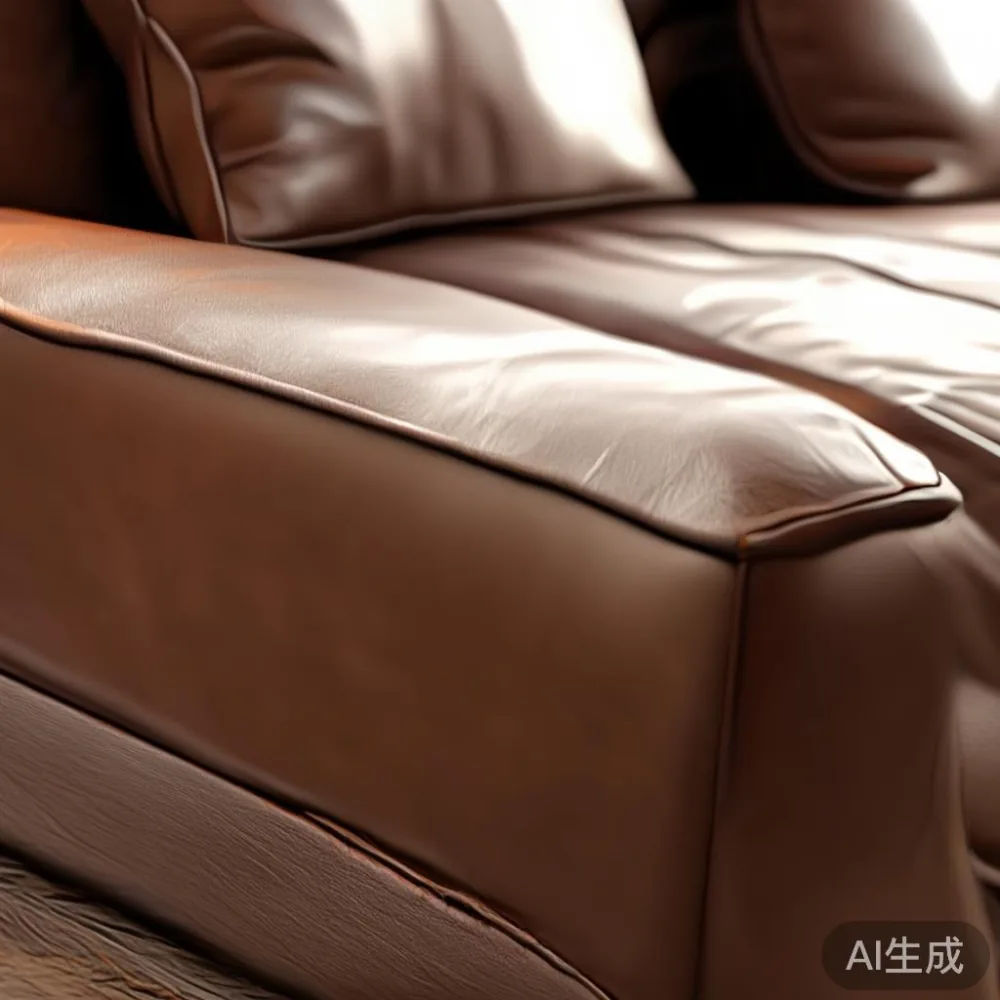
For a leather sofa, the frame remains solid wood, but upholstery introduces separate material decisions. Full-grain leather, corrected-grain leather, and split leather have different durability and cost structures. A 210–240 cm three-seat leather sofa may range from about SGD 2,400 to SGD 7,500 depending on leather type, cushion construction, frame engineering, and detailing. The customer should receive a clear breakdown of leather coverage, foam density, and suspension rather than a vague “genuine leather” label.
Surface care also affects lifetime value. A dining table should normally be protected from standing moisture; wipe spills within 15–30 minutes and use coasters or trivets. A nightstand near a humid balcony benefits from coasters and stable indoor placement. MIDHILL’s lifetime refinishing service addresses wear over years, although sensible use still determines how often refinishing is needed.
How should style and design complexity affect what you pay?
Style changes price through geometry, detailing, and production planning. Scandinavian-inspired pieces often use clean lines and repeatable components, which can make them efficient to manufacture. French light luxury adds profiles, mouldings, softened edges, and decorative coordination. American light luxury often combines generous proportions, wood-heavy construction, and comfortable upholstery. Post-modern light luxury may use asymmetrical details, mixed materials, and more complex edge profiles.
Design keywords can also be marketing shorthand without reliable specifications. A search for Nordic for guest room might surface a compact 90 cm bed frame for a spare room, but the actual dimensions, slat spacing, and materials matter more. Likewise, European light luxury bed vs Modern bed comparisons become more useful when the buyer checks headboard construction, platform clearance, and warranty terms.
For dining rooms, Mid-century modern for dining room can mean tapered legs, a slim apron, and restrained curves. Such a 180 cm table may cost SGD 1,500–3,800, while an Italian light luxury for dining room treatment with carved or inlaid details may cost SGD 3,200–7,000. The material grade and fabrication time explain much of the gap.
A marble table introduces another price driver. Marble selection, slab cutting, edge treatment, reinforcement, and crack-risk control can add substantial cost. A 120–140 cm marble table may range from SGD 2,600 to SGD 8,000. The stone should be inspected for movement, and natural variations need to be accepted. Metal or stone bases must be engineered around weight rather than attached after the heaviest load is known.
What hidden costs should Singapore buyers include?
Delivery is one of the largest hidden categories. A bed frame may weigh 45–90 kg, a dining table 55–110 kg, and a large wardrobe 120–220 kg. In HDB flats, narrow corridors, turning corners, and older lifts can require extra labour or a hoisting plan. Professional delivery to a Singapore home may cost SGD 80–250 for a standard item and SGD 250–700 for a large or difficult-access order.
Before purchase, measure the lift door, lift car, corridor turns, staircase width, and entrance. Leave at least 5–10 cm of working clearance where possible. Protective packaging, installation, and placement should be stated in writing. Insurance for a high-value dining table or wardrobe may add around 1–3% of the order value.
Assembly can add SGD 60–200 for a bed frame and SGD 120–350 for a wardrobe. Old-item disposal or stair-carrying fees may add another SGD 50–250 per trip. Floor protection, anchoring, and wall fixing should also be checked; wardrobes may need an anti-tip restraint.
Singapore GST is 9%. A quoted SGD 2,000 item becomes SGD 2,180 when GST applies, so comparisons should use the same tax basis. Payment terms, order deposits, and currency-conversion differences can shift the final amount by 2–5%.
How do warranty and after-sales support affect value?
A warranty is useful only when its scope, process, and exclusions are clear. A 10-year structural warranty can protect against defects in qualifying frame or structural components, but it may not cover ordinary surface wear, accidental damage, or every moving part. Ask whether the warranty covers bed frame joints, dining table stability, wardrobe rails, and replacement parts.
Service capacity has value because furniture is rarely discarded after 12 months. A lifetime refinishing policy can extend the usable life of a solid wood bed frame, dining table, or wardrobe by 5–15 years when maintained properly. Refinishing may still involve transport, assessment, and recoating charges for severe wear. Buyers should confirm whether collection is included and how many refinishing services are permitted.
Last month, I visited a Singapore distributor’s display warehouse and compared two oak dining tables that appeared nearly identical. One had 25 mm solid wood tops, conventional apron rails, and standard screw-fixed legs. The other had a 30 mm top, dowelled corner joints, reinforced under-table supports, and hand-sanded edges. The second cost SGD 620 more, yet its rail spacing and corner reinforcement addressed the loads created by chairs being moved around. That inspection made the price difference easier to judge than the finish samples alone.
Wholesale Modern light luxury furniture purchasing can look inexpensive until freight, packaging, installation, and defects become visible. MIDHILL’s export experience to more than 15 countries is relevant to the consistency of packaging and documentation, while a 10-year structural warranty provides a useful baseline for long-term ownership.
What should a clear quotation contain?
A useful quotation should identify at least 12 points: product dimensions; timber species; solid wood components; veneer or engineered board locations; moisture treatment; joinery; finish type; hardware brand or specification; weight; assembly; delivery terms; and warranty coverage. For a leather sofa, add leather type, cushion foam specification, suspension, stitching, and frame construction.
Buyers can request a finish sample before confirming a large order. Allow 7–14 days for a physical sample, and compare it under the room’s daylight rather than only under showroom lighting. For timber, check whether the grain direction and colour variation are expected. For stone, request photographs of the exact slab where possible.
Compare return terms and production timelines. MIDHILL offers 14-day returns and free shipping over US$350 for qualifying orders, though the applicable terms should be checked against the Singapore quotation. Typical manufacturing can take 20–45 days, followed by roughly 7–21 days for international dispatch and local delivery. Larger made-to-order pieces may require 8–12 weeks.
How can you spend well without overspending on the wrong feature?
Begin with the function and fit. Measure the dining area, ensure at least 90 cm of circulation space around a table where practical, and check whether the bedroom can accommodate the bed frame’s full dimensions. Then prioritise structural components, finish durability, and delivery access over decorative details that may rarely be noticed.
For a 4-door wardrobe in a Punggol or Tampines flat, spend on solid rails, adjustable shelving, soft-close runners, secure anti-tip fittings, and installation. A less ornate handle saves perhaps SGD 40 per set; the same budget is more meaningful when applied to drawer movement or internal support. For a dining table, prioritise top thickness, stable joinery, and a protective finish. For a nightstand, drawer action and useful internal space usually deliver more daily value than elaborate carving.
A useful benchmark is the total ownership cost over 10 years. A SGD 2,000 table that survives with one refinishing may be more economical than a SGD 1,300 table that needs replacement after 4 years. Likewise, a leather sofa with a well-documented frame, replaceable cushions, and suitable leather may remain useful for 10–15 years, provided it is kept away from direct heat and prolonged sunlight.
The honest answer is that solid wood furniture is priced by the complete package: material, precision, finish, design, handling, and support. The visible style tells you how a piece looks, but the specification sheet tells you what the price is buying. Compare those details in SGD, factor in 9% GST and local access, and choose the construction that suits your home for at least a decade rather than a single showroom visit.