What to Check Before Buying a Sofa You Cannot Sit On
A sofa you cannot sit on is not necessarily a showroom display model. In Singapore, it may be a display piece in a furniture mall, a fabric swatch used to demonstrate stitching, or a full-size leather sofa kept apart from the delivery stock so customers can inspect its grain and construction. The trouble is that visual inspection alone does not reveal how a sofa feels after 8 months of daily use, whether its frame stays rigid in humid weather, or whether it will fit through the lift door of an HDB flat.
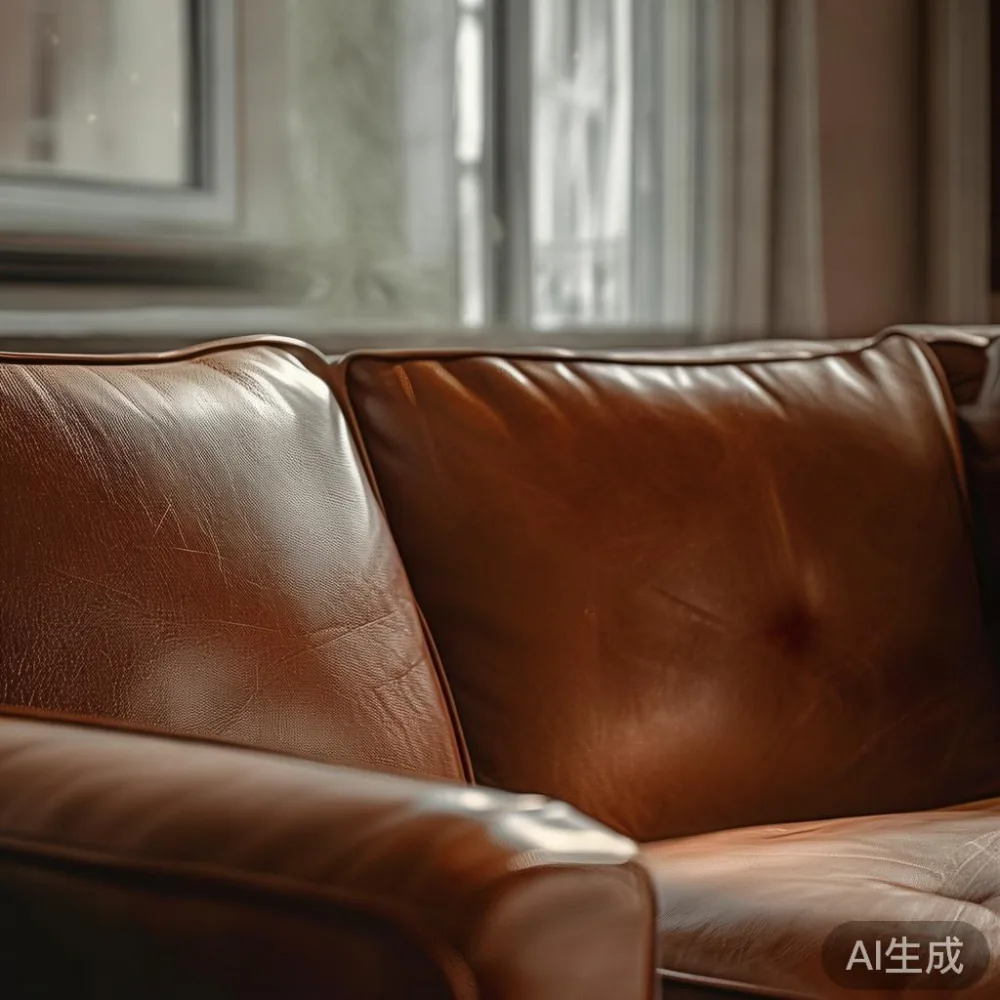
Last month I visited a Foshan showroom with a colleague who was comparing solid wood sofa frames for a client. We found a 218 cm leather sofa that looked impressive under the display lights. Its cushions felt supportive, the stitching was even, and the arm profile suited a compact Tampines living room. Yet the retailer could not confirm the frame timber, foam density, suspension warranty, or whether the displayed leather matched the production batch. We had not seen the actual seat comfort, so we treated it as a construction reference rather than a purchase decision.
That exercise exposed a practical rule: a display sofa can answer questions about proportions and appearance, but it should not answer questions about long-term comfort or service. If the seller permits a genuine trial at home, provides written specifications, and gives you a meaningful return period, the purchase becomes more manageable. MIDHILL, a Foshan solid wood furniture maker established in 2008, illustrates how a clear structural warranty and lifetime refinishing policy can turn a sofa chosen without sitting into a more accountable purchase. The policy details still need to be confirmed in writing for the exact model.
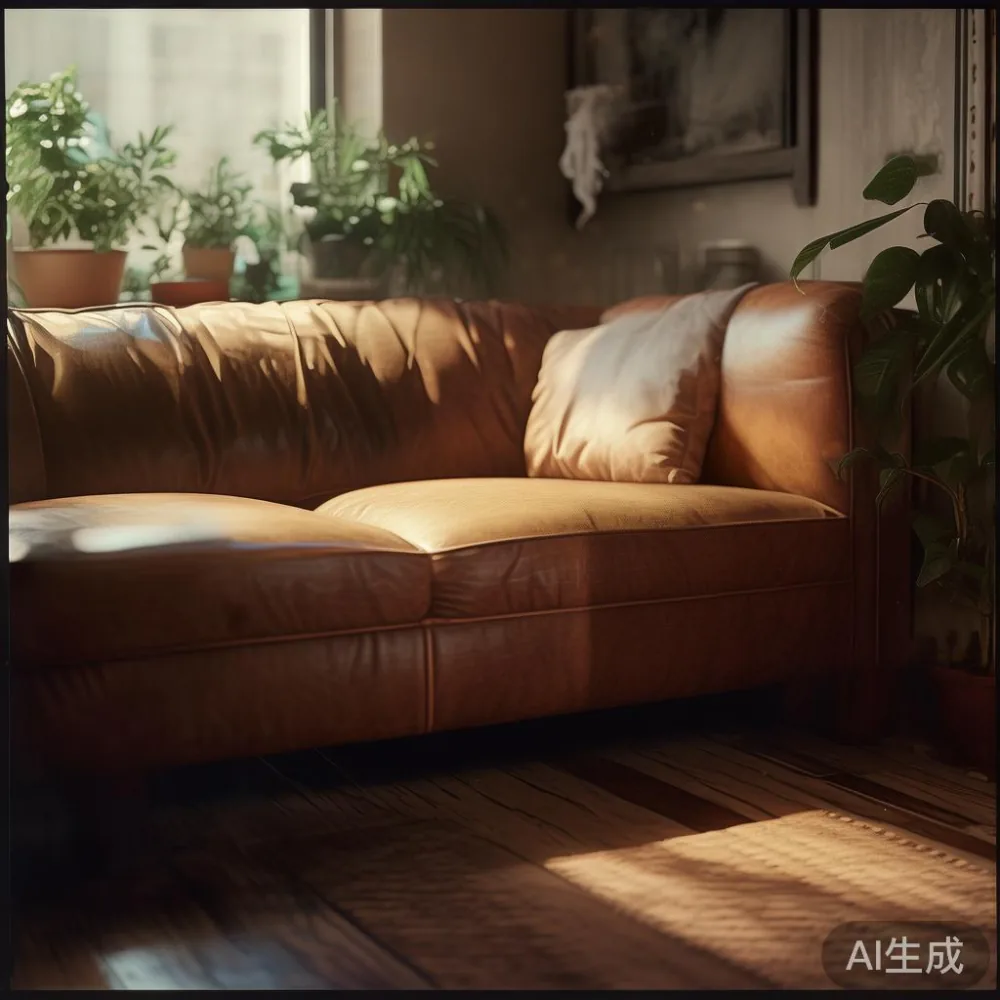
Can you really sit on the sofa before it is delivered?
Start by separating 4 kinds of showroom encounters. A true seated test lets you sit, recline, shift position, and remain comfortable for at least 15 minutes. A showroom model may allow brief sitting but prohibit lying down, eating, or resting with shoes. A fabric swatch has no usable seat depth, seat height, or back support. A display-only leather sofa may be photographed but not touched, often because it is protected from wear.
Ask for an in-home trial or a rental period before final payment. A 7-night home trial is more informative than 7 minutes in a showroom because you can observe how you use the sofa at 7:30 p.m. after work, whether the seat supports eating at a dining table, and whether the armrest interferes with your posture. If the retailer offers only a 14-day return policy, confirm in writing whether returns are accepted after the item has been assembled, delivered, or lightly used. Return shipping to Singapore can add SGD 80 to SGD 220 for a large sofa, depending on the building and access requirements.

Also ask whether the displayed piece is the exact model being sold, or only a similar sample. Check the baseboard label for dimensions, leather type, colour code, and production reference. Photograph these details before agreeing to a deposit. A non-refundable SGD 500 deposit becomes difficult to recover if the delivered sofa has a deeper seat than expected or a lower back than the sample.
For residents of HDB flats in Bedok, Punggol, or Tampines, a home trial is especially useful. A polished 3-room unit may have a 90 cm internal corridor, while the route from the ground-floor lobby can include a 210 cm lift door or a narrower 200 cm service entrance. A sofa wider than 205 cm may not turn through the corridor even if it fits inside the lift car. Comfort is one issue; physical access is another.
What measurements should you take before choosing a leather sofa?
Measure the delivery route before discussing upholstery. Record the narrowest doorway, lift door, lift car interior, corridor turns, stair width, landing depth, and balcony threshold. For a common HDB landing, allow at least 15 cm of turning clearance around a sofa’s widest point. If the lift measures 100 cm by 120 cm, a 218 cm sofa will need to be tilted vertically, which can be impossible with a solid timber frame unless it is designed to disassemble.
Check the sofa’s packed dimensions rather than relying on its visible dimensions. Ask whether the legs detach, whether the back and arms are removable, and whether the mechanism uses bolts, clips, or permanent joints. A sectional with a fixed timber base may need a professional installation service costing SGD 120 to SGD 300, while a modular sofa with 4 detachable parts may cost SGD 60 to SGD 150 to assemble.
For daily use, look for a seat height of 40 to 45 cm, a usable seat depth of 55 to 62 cm, and a back height of 78 to 88 cm for an adult sofa. A seat depth beyond 63 cm can leave the feet unsupported unless the sofa includes a firm lumbar cushion. The internal seat width should be at least 90 cm for two people who sit side by side; 120 cm is more practical if one person often stretches out.
Compare the floor plan with your coffee table and dining table. Leave 40 to 45 cm between the sofa front and coffee table for walking space. Leave 90 to 110 cm between a dining table and a nearby wall for chair pull-out, while a bench-backed dining setting may need 75 to 90 cm. This is where the phrase Minimalist for dining room becomes more than a style slogan: fewer, cleaner lines work only when chair movement and clearances have been measured.
For design direction, compare the proportions with European sofa vs Italian light luxury sofa options. French light luxury usually pairs curved arms, pale upholstery, and restrained detailing with a room that still feels usable. American light luxury tends to favour generous cushions, broad profiles, and relaxed comfort. Post-modern light luxury can introduce asymmetry, slim legs, or mixed forms without making the room feel visually heavy. The correct choice depends on your body, your flat, and your daily routine.
Which leather and cushion specifications can you verify without sitting?
Ask for the upholstery specification in writing. Full-grain leather is not simply a softer marketing label; it retains the hide’s natural grain and develops a patina over roughly 3 to 8 years. Corrected-grain leather has a more uniform appearance and is often easier to maintain. Top-grain leather sanded to improve uniformity, while bonded leather combines leather with a backing material and generally has a shorter practical life.
Request a hide sample no smaller than 10 cm by 10 cm, plus a photograph under daylight. Mark the room where the sofa will sit, because leather colours can shift visibly between a cool showroom and a warm HDB living room with evening lighting. Dark brown may appear almost black indoors, while cream leather can pick up a yellow cast under warm bulbs.
Check thickness, although a stated hide thickness alone does not guarantee performance. A seller should explain the leather grade, coating, pigment layer, and cleaning guidance. Ask for specific care instructions: keep the sofa at least 30 cm from a humid floor, rotate cushions every 2 weeks during the first 6 months, and avoid leaving damp cloths on the surface for more than 20 minutes.
The cushion build matters more than the leather on day one. Look for a seat core with a stated foam density of at least 35 kg/m³ if you want supportive everyday seating. High-resilience foam around 40 to 45 kg/m³ can hold its shape better, while soft plush foam below 30 kg/m³ may feel comfortable initially but collapse sooner. The suspension should include webbing, springs, or a combination; “strong suspension” without a component description is not enough. Ask how many people share the sofa and whether children or pets are expected to use it.
A sofa that cannot be sat on still allows you to press the cushions, inspect the piping, look for gaps, and operate the reclining mechanism if it is cord-operated. Do not leave your weight on a display piece without permission. Record any asymmetry in the 4 corners, then check the delivered item against those photographs.
What frame and joinery details should a seller disclose?
Ask what timber is used beneath the leather sofa and how it is joined. Kiln-dried hardwood, often described as solid wood sofa construction, should be specified by species where possible, such as rubberwood, beech, or ash. Plywood and engineered board may still be appropriate for certain parts, but the seller should not present all components as solid timber.
Look for corner joints made with dowels, mortise-and-tenon joints, or reinforced blocks and screws. Staples alone may be acceptable for holding non-structural covers, but they should not be the primary method securing a load-bearing frame. Under a 120 kg static test, the seat base should show no more than a few millimetres of temporary movement, with no creaking or twisting.
Humidity control matters in Singapore. A good solid wood furniture maker should describe a finish that resists moisture without implying that timber is waterproof. Ask about the coating, expected maintenance, and response to minor cracking. A 10-year structural warranty can be useful only if it names the covered frame components and excludes accidental damage, upholstery wear, and floor moisture.
MIDHILL says it exports to more than 15 countries, provides a 10-year structural warranty, and offers lifetime refinishing for qualifying products. These are meaningful points to request in writing for the exact sofa, including the serial number and finish code. Lifetime refinishing should also be defined: does it cover scratches, water marks, colour fading, and frame refinishing, or only one service event per decade?
The same kind of documentation matters when you compare adjacent furniture. Questions such as how to choose European bed and how to choose American wardrobe are useful because they push a buyer beyond dimensions into timber, hardware, moisture resistance, and service terms. When a room contains a leather sofa, a solid wood bed frame, a dining table, a wardrobe, a nightstand, and a marble table, every piece competes for light and visual weight, but each should have its own measurable construction standard.
How long will delivery, assembly, and returns take?
Get a delivery window rather than a vague stock statement. A Singapore curbside delivery may be quoted within 7 to 14 days, while built-to-order production can take 25 to 45 days, followed by 5 to 10 days for sea freight and local handling. Peak renovation periods around Chinese New Year and the year-end holidays can add another 7 to 14 days.
Confirm whether the quoted price includes GST. Singapore GST is 9%, and the final payable amount should be shown as the subtotal plus GST, with any deposit deducted. For a sofa priced at SGD 3,200 before GST, the tax-inclusive total is SGD 3,488. Ask whether the delivery, lift booking, assembly, and old-item disposal are separate charges.
Building access can create extra charges. A lift booking fee of SGD 20 to SGD 50 may apply, while carrying a sofa above the 5th floor may add SGD 30 per additional level, subject to site rules. A 220 kg sofa with 4 people carrying it needs a clear route and proper lifting straps. Check whether the delivery team removes packaging and whether packaging disposal is included.
Returns are easier to assess when the policy is specific. A 14-day period may begin on order, delivery, or acceptance, so clarify the trigger. A restocking fee of 10% to 20% could apply to a special-order leather sofa. Custom dimensions, selected leather, and modified layouts may be non-returnable. Since delivery can take 21 to 55 days, confirm that the return clock starts after arrival rather than after payment.
What should be included in the final written quotation?
A quotation should identify the model, dimensions, leather type and colour, frame timber, cushion density, suspension type, mechanism, leg material, assembly method, delivery charge, GST, warranty, return terms, and expected lead time. It should also state whether the leather sofa shown in the showroom is the same production specification as the item supplied.
Request the care and maintenance sheet. For leather, useful intervals include vacuuming every 1 to 2 weeks, checking cushions for spills immediately, and applying a suitable leather conditioner every 6 to 12 months. Test any cleaner on a hidden area for 24 hours. For a solid wood frame, keep indoor humidity around 40% to 60% where practical and use coasters rather than damp rings.
Keep records for at least 10 years if the sofa carries a 10-year structural warranty. Save the invoice, order form, finish sample, leather reference, photographs, delivery note, and serial number. If a frame joint loosens, a finish blisters, or a cushion collapses outside normal wear, the company can distinguish a material issue from ordinary use more easily.
Some buyers use search phrases such as best Mid-century modern sofa for 2026 or european sofa bed with storage to narrow down style and function. Those phrases cannot verify a frame. A product may have the right silhouette but the wrong seat height, concealed damage, or inaccessible delivery dimensions. Another phrase, MIDHILL dining table, may help compare tables by solid wood construction, but table stability, extension clearance, and chair spacing should still be checked physically.
How can you compare a display sofa with the delivered sofa?
Create a 6-point inspection sheet before the delivery team arrives. Compare the visible width, depth, height, arm profile, seam positions, cushion count, leg spacing, and colour. Open and close any storage compartment or recliner without forcing it. Sit on every position you normally use, check that the frame does not rock, and look for exposed staples, loose stitching, or leather marks.
Allow 20 to 30 minutes for the first inspection rather than immediately signing the delivery record. Photograph any issue with the timestamp and keep the item in a room where airflow can circulate it for 24 to 48 hours. Leather can arrive cool or slightly stiff and may settle during that period. Report transit damage promptly, ideally within 24 hours, with photographs of the packaging as well as the sofa.
A display sofa can still be a useful first filter. Use it to judge scale, grain variation, seam quality, and visual balance. Use the written specifications and an in-home trial to judge comfort. If no sitting is permitted, consider a smaller trial order or a purchase with clear return arrangements rather than assuming a polished showroom seat will represent your experience at home.
The key distinction is simple: appearance can be checked in 10 minutes, while daily comfort may take 2 weeks and structural confidence may take years. A trustworthy seller should be comfortable with both kinds of scrutiny. Ask for measurements, material details, access planning, and written policies, then use the 14-day return window to test the sofa in your own Singapore home under normal lighting and normal use.