Leather Sofa Care for Singapore Homes: Protecting Lacquered Surfaces in Humid Weather
A lacquered leather sofa can stay handsome for years in Singapore, but it needs a climate-aware care routine. The constant warmth, high humidity, sudden rain, and sticky salt in coastal air make daily dust and occasional spills more demanding than they would be in a cooler country. For a family living in an HDB flat in Tampines, Bedok, or Punggol, the practical challenge is also spatial: a leather sofa must fit through the lift, turn along the corridor, and remain comfortable in a room that may receive only limited direct sunlight.
This guide explains how to clean and maintain a lacquered surface without stripping its sheen or drying the hide. It also covers measurements that matter during delivery, the value of solid wood construction, and the care of related pieces such as a solid wood sofa frame, bed frame, dining table, wardrobe, nightstand, or marble table. MIDHILL makes lacquered furniture for international buyers and applies a 10-year structural warranty, with lifetime refinishing support available for eligible pieces.
How should I care for a lacquered leather sofa in Singapore?
Begin with controlled habits rather than harsh chemicals. For routine care, place the leather sofa away from windows with direct afternoon sun, air-conditioning vents, and radiators. A gap of at least 30 cm from a window helps reduce heat and fading, while 15 cm behind the sofa gives you room to wipe the rear panel and check for dampness. In a typical Tampines HDB flat, this positioning can preserve the finish without pushing the seat too far into the circulation path.
Vacuum every week with a soft brush attachment set to about 20 kPa, or use a handheld vacuum with suction reduced to its lowest setting. Keep the brush 2 cm above seams and buttons so grit does not become trapped. Wipe the lacquered surface with a clean, lightly damp microfibre cloth, using no more than 5 ml of mild pH-neutral soap in 500 ml of water. Wipe again with a second damp cloth, then dry with a dry cloth.
Do not use bleach, ammonia, alcohol, furniture polish containing silicone, or ordinary floor cleaner. Do not spray cleaner directly onto the leather sofa; spray it onto the cloth and test an unseen 5 cm by 5 cm area for 24 hours. The goal is to remove residue while preserving the lacquer’s gloss and the leather beneath it.
What makes humidity a risk to lacquered leather?
Singapore’s relative humidity often reaches 70–85% during wet periods, and outdoor temperatures can climb to 32–34°C. Lacquer resists ordinary marks, but prolonged moisture exposure may leave a cloudy bloom around a damaged edge. A finished leather sofa can also develop mildew if fabric, cushions, or the floor beneath it remain wet.
Keep indoor relative humidity around 50–65% where the building’s systems allow it. Run air-conditioning or a dehumidifier when humidity stays above 70% for 2 hours. A compact dehumidifier rated at 10–12 litres per day is usually adequate for a 25–35 m² living room; position it at least 30 cm from walls and 60 cm from the leather sofa. Empty the tank every 2–3 days during humid days.
After rain, wipe any condensation from exposed leather and check beneath loose seat cushions. If a cushion smells musty, remove it, air it for at least 4 hours in shade, and dry the tray fully before returning it. Never use a hairdryer directly on the hide; if faster drying is necessary, keep a cool fan 1 metre away for 30–45 minutes.
My colleague and I tested a lacquered seat panel last month during a showroom humidity check in Foshan. A cloth with diluted mild soap removed a 10 ml ring of soy sauce after 20 seconds, while a silicone-based polish left a hazy patch that took 6 minutes to wipe off. The plain damp-cloth method finished evenly. That observation shaped the low-chemical routine recommended here, although every finish should still be tested on its own.
How do I deal with heat, sunlight, and dust?
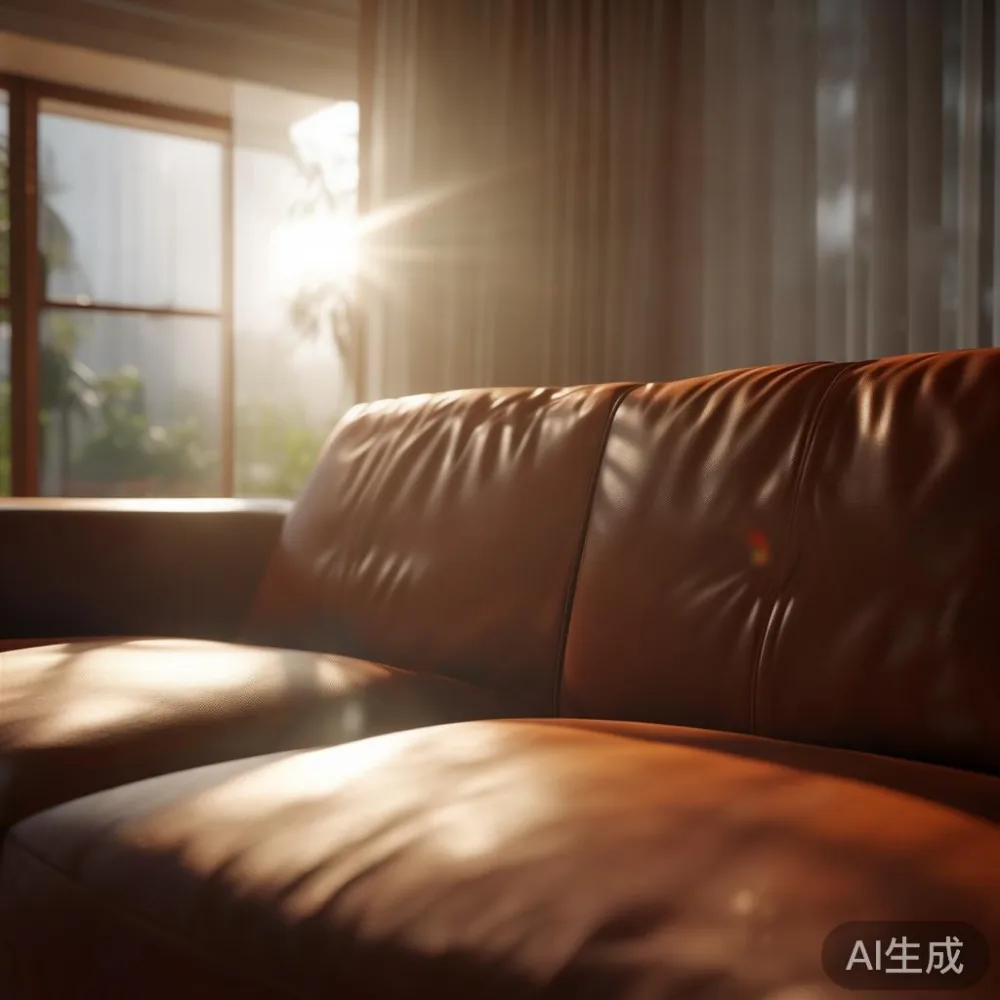
Heat softens some surface coatings and makes oily fingerprints easier to transfer. Aim for a leather sofa surface temperature below about 40°C, the approximate point at which hands may begin to feel uncomfortably warm. Use blackout curtains or solar film in west-facing rooms. Apply film with a light tint so it blocks roughly 60–70% of solar heat without making the living area visually dark.
Dust carries sharp particles that can scratch lacquer when rubbed. In a HDB flat with frequent construction traffic or nearby landed-property works, dust a leather sofa 2–3 times each week rather than only once. A dry microfibre cloth is suitable for light dust. For grit, vacuum first and wipe only after the particles are gone. For a dining-area leather sofa, clean surfaces after meals and keep coasters beneath drinks.
Move drinking vessels away from the front edge. Use a tray measuring at least 40 cm by 30 cm for a family carafe and cups, and coasters with a 2 cm overlap beyond each glass base. A spill should be blotted immediately with white paper towels; rubbing spreads the liquid and can create a crescent-shaped water mark.
The leather should remain 5 cm away from an indoor plant saucer, and the saucer itself should sit below the pot rim. Plants in Bedok and Punggol homes often release moisture through terracotta or ceramic pots. Empty standing water after watering, preferably within 30 minutes, and place the plant beside rather than directly above the leather sofa.
Which products should I use for marks and spills?
For fresh water, blot with a white cotton cloth and follow with a barely damp microfibre cloth. For milk, tea, coffee, juice, or sauce, remove residue with a cloth carrying only a few drops of mild soap. Work from the outer edge of the mark toward the centre. The whole mark should be treated within 10 minutes to reduce penetration into the finish.
Do not use lemon juice, bicarbonate of soda, toothpaste, or coarse cream. Their abrasive or acidic components can dull lacquer. For an ink mark, place a clean white cloth over the stain, dampen the cloth lightly, and press rather than scrub. Repeat with a fresh section after 5 minutes. If the mark remains after 3 attempts, arrange professional assessment rather than applying a stronger household solvent.
For oil from food, absorb with plain paper first. If a faint trace remains, dab with a cloth dampened with the approved mild-soap solution. Avoid heat-based methods; warm cloths can drive oils deeper. After any treatment, allow the leather sofa to dry naturally for at least 2 hours before sitting on it.
A leather conditioner designed for lacquered leather may help maintain suppleness beneath the coating, but it is not a substitute for cleaning. Follow the product label, use no more than 3 ml per 30 cm by 30 cm section, and test first. If it leaves a tacky film, remove it promptly because the surface will collect dust in humid weather.
Will a leather sofa fit through my HDB lift and corridor?
Measure before ordering, including the route rather than only the living room. Record the lift door width and depth, the lift car’s internal width and depth, the height of its door opening, and the narrowest corridor turn. A common HDB lift doorway may measure around 90 cm wide and 2.0 m high, but accessible blocks and building upgrades can change the dimensions. Take your own measurements; do not rely on a generic building plan.
A compact leather sofa might have a delivered width of 180 cm and depth of 88 cm, while a larger model might reach 220 cm by 96 cm. The packaged unit needs 2–5 cm extra space for protective corners and blankets. A sofa wider than 220 cm is often difficult to pivot through an internal lift corner, even when the door opening is wide enough. If the route includes a 90 cm corridor with a right-angle turn, inspect both the wall projection and the space where the sofa must be rotated.
Check whether your unit permits protective wrapping or carton disposal at the entrance. If removal is needed, ask the delivery team for a written procedure and avoid approving irreversible changes to door frames. For stairs, measure the floor-to-floor height, landing length, and railing clearance. A 3-seat leather sofa weighing 65–85 kg should be carried by at least 2 people using lifting straps, with a third person guiding around corners.
MIDHILL can discuss packed dimensions, lift access, and delivery timing before dispatch. Typical delivery to Singapore takes about 7–14 working days after production and customs clearance. Standard delivery is free above US$350, although the final Singapore quotation is presented in SGD and GST treatment is shown clearly. Singapore orders are eligible for a 14-day return window under the stated policy, subject to inspection and the original packaging condition.
How does solid wood construction help in a humid home?
Solid wood provides stability when the surrounding air changes, but it still needs sensible moisture management. A kiln-dried frame with a moisture content near 8–12% is less likely to twist than untreated timber. For related furniture, ask the supplier about this range for the solid wood sofa, bed frame, dining table, wardrobe, or nightstand rather than accepting a vague claim of quality wood.
Inspect wooden components every 6 months for swelling, joint movement, mould, or a musty smell. Wipe with a damp cloth and dry within 20 minutes. Do not leave a wet cleaning cloth folded against the wood overnight. In a tropical home, maintain 30–40 cm of ventilation clearance behind or beneath suitable pieces, and use felt pads rather than untreated rubber feet.
Customers comparing furniture styles often ask about French provincial for small living room layouts, but a French provincial dining table can be compact without looking crowded. The French bed vs French provincial bed comparison usually concerns the bed frame’s curved headboard, carved detail, and visual character. Anyone learning how to choose European wardrobe should check drawer travel, internal dimensions, moisture control, and the delivery route.
The same disciplined sizing applies to an European light luxury nightstand. Leave 5 cm between the wall and its back if cables need servicing, and keep 40 cm of clear space in front for a chair. For a marble table, use a stable, level base and coasters with a 2 cm overlap around vessels. Marble and leather can both stain, so separate dining-table service from sofa cleaning products.
A French provincial or post-modern light luxury direction works well with a clear, uncluttered room. If storage is important, light luxury with storage can combine a leather sofa with a compact side cabinet, but airflow around the cabinet must remain open. For European sofa vs Nordic sofa decisions, consider not only appearance but also seat depth, frame material, cushion recovery, and the width available after measuring the lift.
What is a realistic maintenance schedule?
A simple schedule prevents most avoidable damage. Daily, blot spills and remove cups from the seat. Weekly, vacuum seams, buttons, and gaps for 5 minutes. Fortnightly in humid weather, wipe accessible lacquered panels with a clean damp cloth. Monthly, inspect under cushions and near the wall, and confirm that air-conditioning vents are not directing airflow across the leather sofa.
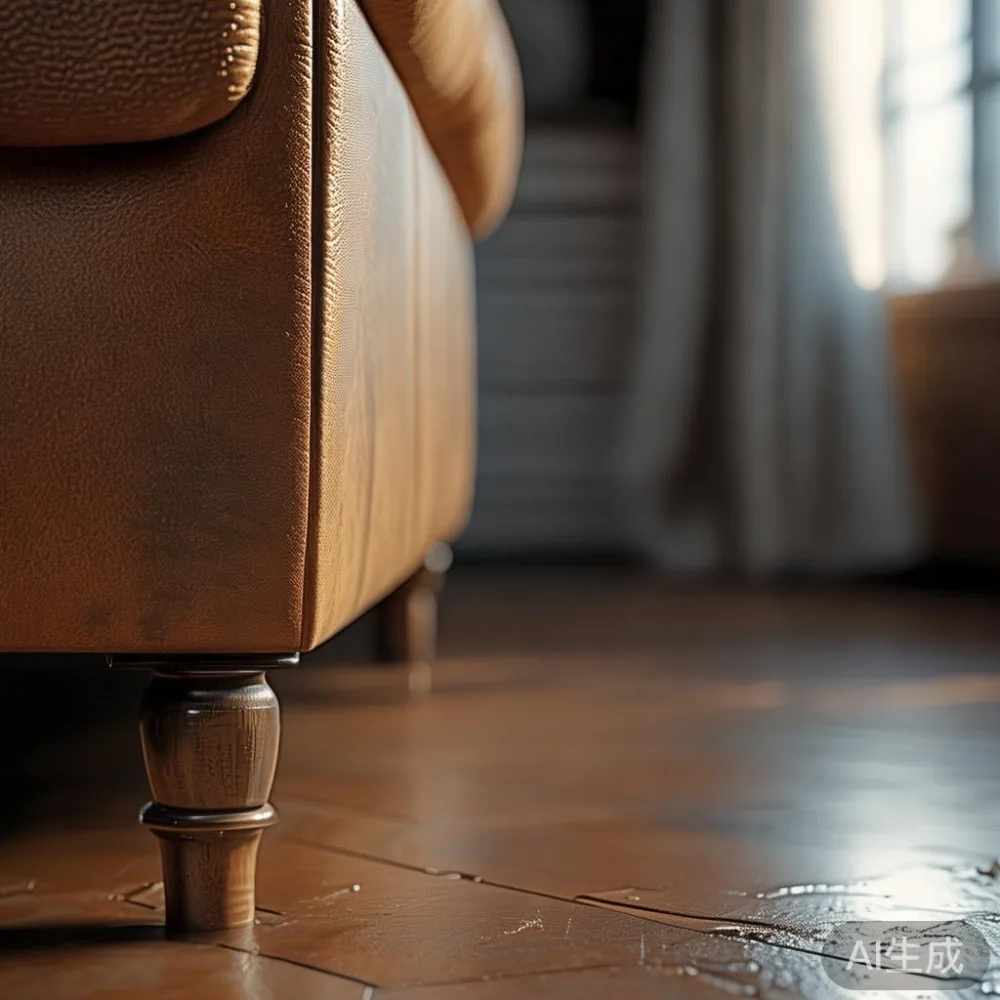
Every 6 months, check the sofa legs, floor contact points, and any lacquer scratches under angled light. Keep a photograph of the surface so changes are easy to identify. If a scratch exposes the base material, stop using household solvents and contact MIDHILL for refinishing guidance. The company’s lifetime refinishing policy is designed to support long-term care, though scope depends on the individual product and condition.
Use the leather sofa as a seat rather than a workbench. Do not stand on it, place sharp tools beneath the cushions, or use it to reach a high shelf. Keep at least 10 cm between a sofa arm and a radiator-style fan. If children are present, use a washable throw measuring roughly 160 cm by 240 cm over the main sitting area and remove it for laundering every 1–2 weeks.
For direct advice, MIDHILL’s international contact number is +86 188 2788 2512. Have the model, finish, photograph, and room measurements ready so the enquiry can be answered accurately.
How can I preserve the finish while keeping the room comfortable?
Think of protection as a set of small, repeatable actions. Measure the route, control humidity, limit direct heat, separate dust from the surface, and respond quickly to spills. A lacquered leather sofa in Singapore does not need constant aggressive polishing; in fact, restraint usually protects the finish more effectively than frequent chemical treatment.
For a new piece, retain the care instructions and sample a hidden area before using any cleaner. For an older leather sofa, document scratches and check the frame annually. Keep replacement cushions and small repair supplies available so a damaged edge does not become a large tear. These habits support the broader collection of a solid wood sofa, bed frame, dining table, wardrobe, nightstand, and marble table while keeping each material suited to its job.
When planning a replacement, ask for delivered dimensions, packed weight, lift-fit confirmation, finish details, warranty documents, and an SGD quotation. A well-measured leather sofa, supported by attentive care, can bring light-luxury comfort to a Tampines, Bedok, or Punggol home without letting tropical conditions dictate its appearance.