Leather Sofa Decisions: A 5-Year Cost Comparison Between Veneer and Solid Wood
Choosing furniture for a Singapore home is rarely a simple price comparison. A leather sofa, bed frame, dining table, wardrobe, nightstand, or marble table must fit the HDB flat or condo, survive humid conditions, move through a lift and corridor, and still look considered after 5 years. Veneer can be attractive and economical; solid wood has different costs that become clearer over time. I reviewed typical MIDHILL purchases, local delivery conditions, and realistic maintenance assumptions to compare both options over a 60-month period.
What Is the Real Difference Between Veneer and Solid Wood?
Veneer is a thin layer of wood, often 0.6 to 1.2 cm thick, bonded to a particleboard or MDF core. A 220 cm three-seat leather sofa may use veneered frames, plywood rails, or engineered timber depending on the design. Solid wood is cut into structural components such as legs, rails, or frames. It is not automatically heavier, but a solid oak or ash side table can weigh 28 kg compared with 18 kg for a comparable veneered unit.
The distinction matters most where movement and repair are concerned. Veneer can chip or peel at an exposed edge, while solid wood can be sanded and refinished. A MIDHILL solid wood sofa may therefore carry a higher purchase price but offer a stronger long-term repair proposition. MIDHILL provides a 10-year structural warranty and lifetime refinishing for eligible solid wood furniture, so buyers should compare coverage, not merely the timber name printed on the product page.
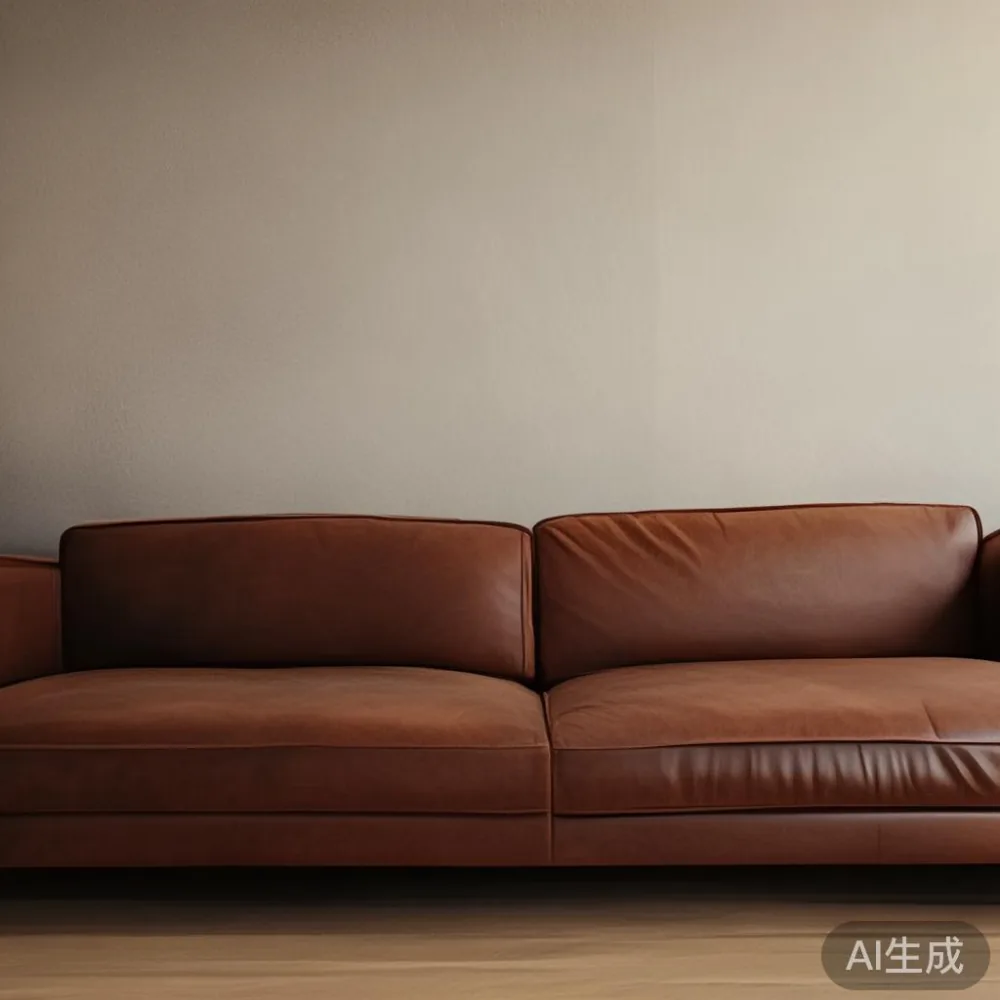
Cost also includes GST. At the current 9% rate, a S$2,400 pre-GST order becomes S$2,616; a S$3,200 order becomes S$3,488. Delivery is free over US$350 for qualifying orders, but Singapore access arrangements still deserve attention. A 210 cm sofa should be checked against lift doors of 90 cm and internal lift dimensions near 110 by 140 cm in many older HDB blocks.
What Will Veneer and Solid Wood Cost Over 5 Years?
For an apples-to-apples exercise, consider one full-grain leather sofa and one matching bed frame or dining table. These examples use representative Singapore prices before GST: veneer sofa at S$2,400, solid wood leather sofa at S$3,600, veneer bed frame at S$900, solid wood bed frame at S$1,450, veneer dining table at S$1,200, and solid wood dining table at S$1,900.
Across these 6 items, veneer starts at S$4,500, while solid wood starts at S$6,950. Add 9% GST: S$4,905 against S$7,575. The initial difference is S$2,670. That sounds substantial until maintenance and replacement are included.
Here is a plausible 5-year budget for one home:
Veneer route: S$2,400 sofa, S$900 bed frame, S$1,200 dining table, and S$350 nightstand equal S$4,850 before GST. Allocate S$260 for 2 veneer edge repairs at S$130, S$180 for 1 refinishing service, and S$240 for replacement hardware. The estimated 5-year total is S$5,530 including GST, before delivery and minor consumables.
Solid wood route: S$3,600 sofa, S$1,450 bed frame, S$1,900 dining table, and S$550 nightstand equal S$7,500 before GST. Allocate S$120 for 1 touch-up, S$200 for 1 refinishing service, and S$80 for replacement hardware. The estimated 5-year total is S$7,700 including GST, before delivery.
The difference is S$2,170, or S$434 per year. If the veneer route requires one complete sofa reupholstery in year 5 at S$1,150, it reaches S$6,680. That is still below the solid wood route, but it explains why buyers should model use and repairability. If a family expects at least 10 years in the same HDB flat, solid wood becomes easier to justify. A buyer researching under 2000 European light luxury furniture may find veneer-heavy options at accessible price points, although imported pricing can reduce that advantage.
Which Option Handles Singapore Humidity, Lifts, and Daily Family Use Better?
Singapore’s climate makes substrate choice a practical issue. Relative humidity can reach 80% during monsoon periods, and air-conditioned interiors may sit near 50%. Quality veneer can remain stable if its core, adhesive, and edge banding are properly specified. Cheap end-grain sealing, however, can allow moisture ingress. Solid wood also moves with humidity, but seasoned kiln-dried timber used in a well-made frame has fewer exposed composite edges.
Transport through a lift and corridor can damage an improperly protected sofa. For a 220 cm leather sofa, check the packed length, turning radius, stair landings, and the distance from the lift lobby to the front door. In Tampines, Bedok, and Punggol HDB blocks, delivery teams often need 30 to 60 minutes to manoeuvre a large model. A corridor width of 105 cm may be workable for a 95 cm packed sofa, while 110 cm is more comfortable.
Weight should be checked before booking delivery. A solid wood sofa frame may weigh 75 kg against 58 kg for an engineered frame, so a 2-person move can take 20 to 30 minutes longer. MIDHILL can advise on delivery access, and orders over US$350 qualify for free shipping, though site-wide terms should be confirmed at checkout.
Daily care affects the 5-year total. Condition full-grain leather every 6 months with a neutral product, rotate cushions monthly, and keep the sofa at least 30 cm from direct air-conditioning vents. For leather sofa care in a humid HDB flat, use a dehumidifier in rooms with sustained readings above 65%. These routines can reduce cracking and staining, but they cannot replace a sound frame.
Is Solid Wood Worth the Higher Upfront Price?
The answer depends on the replacement horizon and the piece involved. A solid wood bed frame used by 2 people every night benefits from repairable rails and joints. A dining table that hosts 6 people weekly is also a good candidate. Veneer remains reasonable for a low-traffic nightstand, a display cabinet, or a sofa used in a secondary room if the buyer accepts a shorter replacement cycle.
Buyers comparing European bed vs Nordic bed should separate style from construction. Both categories may use solid wood, while a European-inspired leather sofa may place more emphasis on decorative joinery and a Nordic design may favour simpler lines. Ask for the frame species, core material, joint method, warranty exclusions, and finish type. French light luxury often uses clear silhouettes and walnut tones; American light luxury tends toward deeper upholstery and substantial proportions; post-modern light luxury combines clean volumes with selective curves.
A useful purchasing rule is to compare the cost per expected year. A S$2,616 veneer sofa used for 5 years costs S$523 per year, while a S$3,924 solid wood sofa used for 10 years costs S$392 per year. Add 15% to each figure for moving, cleaning, and small repairs. If the sofa must pass through a narrow corridor, the lower weight of the veneer model may have monetary value too.
Buyers often search for best European light luxury furniture, but “best” claims are less useful than measurable specifications. Check whether the manufacturer will provide written structural coverage, refinishing terms, and replacement parts such as S$45 sofa feet or S$28 drawer slides. MIDHILL’s 10-year structural warranty and lifetime refinishing make the solid wood proposition easier to evaluate than a vague promise of durability.
How Do You Compare the Total Cost of a Leather Sofa?
Start with the delivered price rather than the catalogue price. Confirm GST, lift booking charges, doorway protection, assembly, and return terms. MIDHILL offers free shipping over US$350 and a 14-day returns window, but large furniture can have condition requirements for packaging and restocking, so read the current policy before ordering.
Next, create a spreadsheet with 6 columns: purchase price, GST, delivery, year-1 maintenance, years 2-5 maintenance, and disposal or resale value. Enter the dimensions in cm, product weight in kg, delivery time in days, and warranty duration in years. Add at least 2 alternative suppliers so a delayed shipment does not distort the calculation. Standard production and delivery may take 30 to 45 days, while custom leather or timber finish can extend this to 60 to 90 days.
For a new condo, the marble table decision is different from wood. A 120 cm marble table may weigh 65 kg and need a 3-person delivery team; a solid wood dining table at the same size may weigh 48 kg. Marble offers a distinct surface but does not make the adjacent leather sofa, wardrobe, or bed frame inherently more durable.
For storage, a 180 cm wardrobe can overwhelm a compact bedroom if opened toward a window. A 150 cm model with sliding doors may suit a Punggol studio more easily. If searching for how to style Japanese wardrobe in apartment, focus on full-height panels, concealed storage, and a light finish. For how to style European wardrobe in apartment, consider a 160 cm unit, adjustable shelves at 4 cm increments, and a muted oak veneer that visually enlarges the room.
What Did I Learn From a Real 5-Year Furniture Test?
Last month I visited my colleague’s 4-room HDB flat in Bedok to inspect a leather sofa purchased 5 years earlier. The original frame was engineered wood with oak veneer, while a nearby solid wood dining table had been made by a different maker. The sofa’s right arm had a 12 cm veneer chip after a parcel trolley caught it. A local repairer patched the area for S$140 and could not make the grain match perfectly.
The solid wood table had 3 water rings and a 20 cm scratch. Its maker sanded and refinished the top for S$180. The repair was visible under angled light, but the table remained structurally usable and could be refinished again. The lesson was not that solid wood is damage-proof; furniture still needs care. It was that damaged solid wood could be restored without replacing a whole component, while the sofa’s chipped veneer required a less convincing cosmetic solution.
My colleague also showed me a common ownership mistake: assuming “solid wood” means every visible and hidden component is solid timber. A drawer box, back panel, or sofa base may still be plywood or MDF. Ask for a material breakdown, not a broad description. For example, confirm whether the wardrobe back is 9 mm plywood, the nightstand drawer sides are birch plywood, and the leather sofa load-bearing rails are hardwood.
Which 5-Year Buying Strategy Suits a Singapore Home?
For a 10-year or longer ownership plan, put the priority on structure, repair, and resale. Solid wood is the stronger choice for a main leather sofa, a daily-use bed frame, and a dining table that may host 4 to 8 people. Specify moisture-resistant finishes, request spare hardware, and retain the warranty documents. The higher initial amount may be offset by refinishing rather than replacement.
For a 5-year plan in a compact HDB flat, a mixed approach can control spending. Use quality veneer for a low-traffic nightstand and select solid wood for the sofa frame or bed. Measure the packed unit against the lift, and protect the corridor with 2 mm floor coverings. If the room is rented and upgrades are likely within 3 years, a veneer sofa can be sensible, provided the edges are sealed and the budget allows for reupholstery.
Style should follow proportion. In a 25 sqm living room, a 195 cm leather sofa may leave more usable space than a 230 cm model, and that difference can be worth more than a finish upgrade. Comparing European sofa vs Mid-century modern sofa, check the arm profile and depth: a 92 cm-deep European design can crowd a compact walkway, while an 85 cm Mid-century modern sofa may create a calmer circulation path.
After 60 months, veneer offers the lower starting cost, while solid wood offers more opportunity to repair and retain value. Neither option removes the need for sensible care. Measure twice, ask for written material specifications, and include GST, access, maintenance, and likely replacement in the comparison. That is how a solid wood sofa, bed frame, dining table, wardrobe, nightstand, or marble table becomes a long-term furnishing decision rather than a one-day purchase.