Leather Sofa Decisions in Singapore: Veneer vs Solid Wood Over 5 Years
Choosing a sofa for a Singapore home is rarely just a seat-shopping exercise. In an HDB flat in Tampines, a leather sofa must negotiate a 900 mm lift door, a narrow common corridor and a living room measured in square metres. In a Bedok condo, it must look deliberate against glass, stone and pale walls. The frame material also affects repairability, resale expectations and the total amount paid across 5 years. MIDHILL has built solid wood furniture since 2008, exporting to more than 15 countries, so the comparison below treats a leather sofa as part of a long-term interior decision rather than a temporary trend.
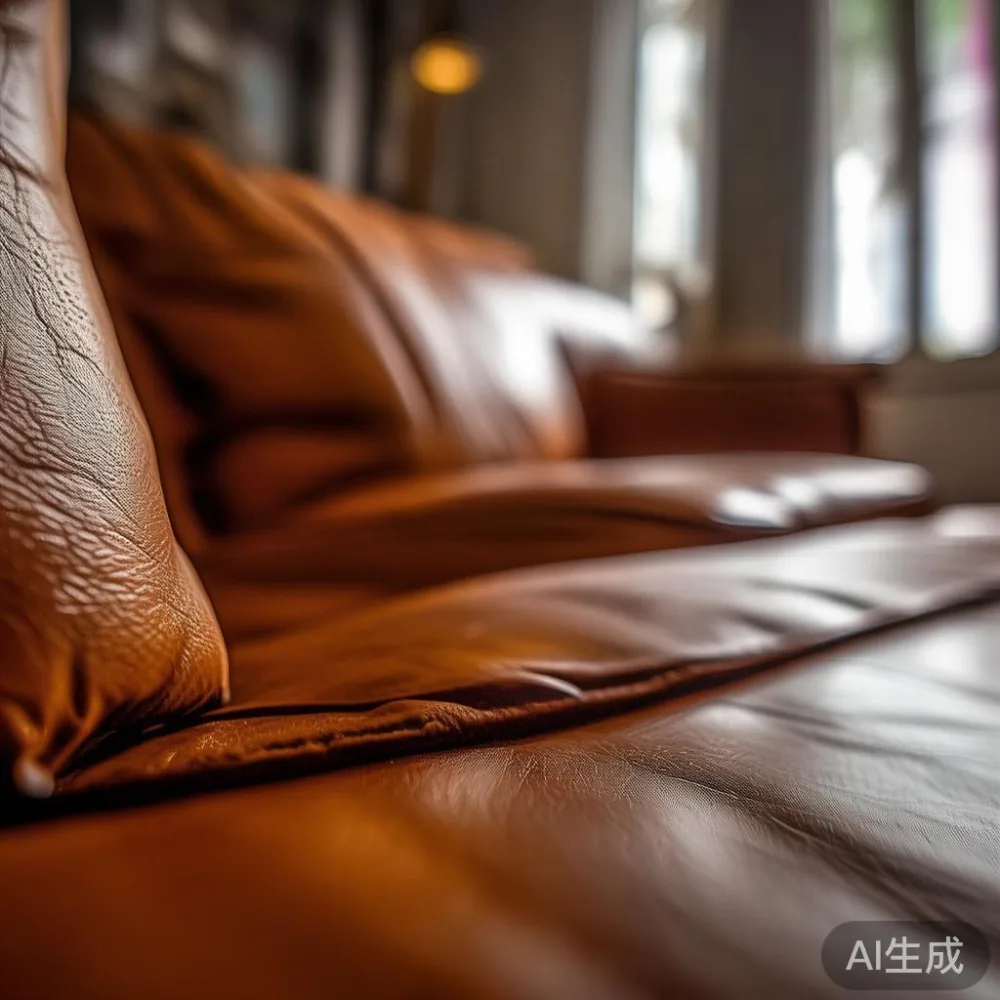
This 5-year cost comparison uses SGD prices and a new 220 cm, three-seat leather sofa as the reference. A mid-range veneer model is estimated at SGD 2,680, while a comparable solid wood leather sofa is estimated at SGD 3,580. The calculation includes purchase price, delivery, GST, routine care, one likely repair, and the resale value retained at the end of year 5. Delivery to Singapore takes approximately 12–18 working days for stocked or standard configurations, with lift and corridor access checked before dispatch.
Solid wood does not automatically make every sofa a wise purchase. Foam density, suspension design, leather grade and workmanship still determine daily comfort. The point of this comparison is narrower: how an engineered veneer frame and a solid wood frame change the 5-year cash cost of owning a leather sofa in Singapore.
What exactly are we comparing?
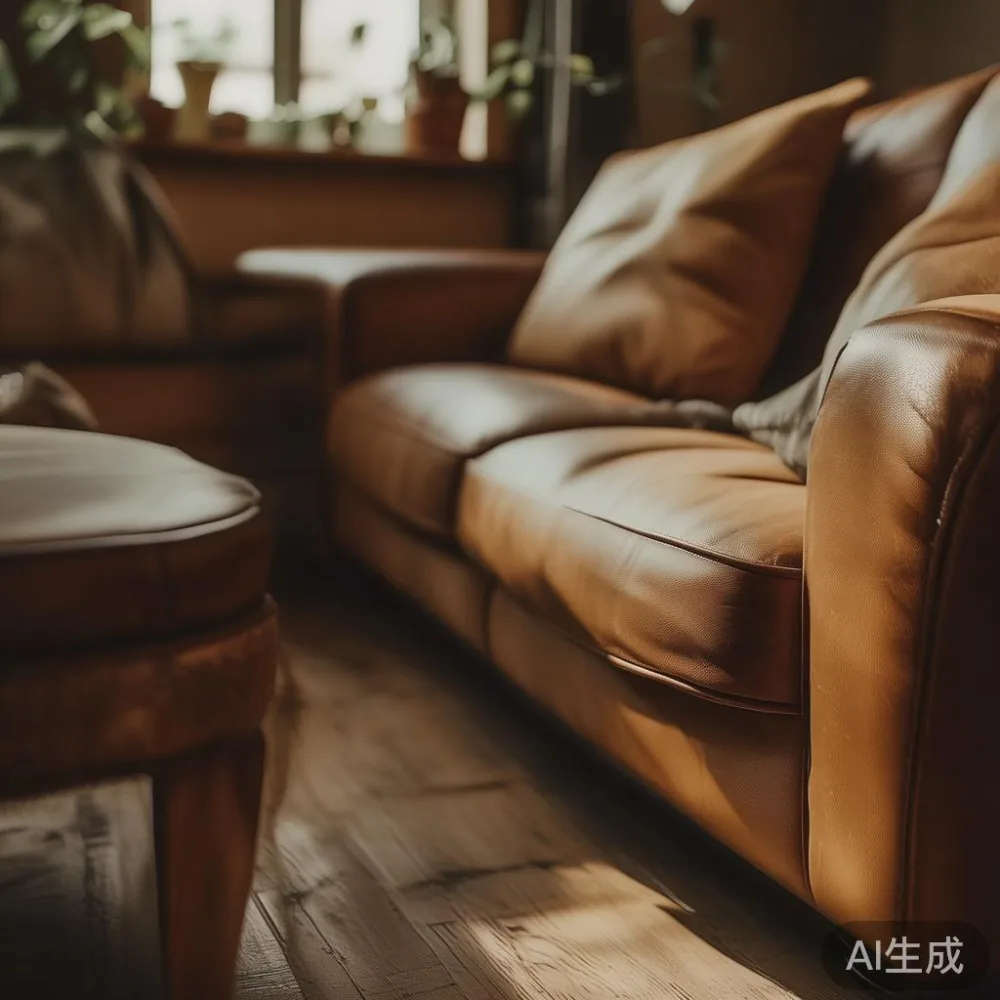
The veneer reference has an engineered wood core, a 15 mm veneered panel or laminated rail, and a factory finish. The solid wood reference uses kiln-dried hardwood in load-bearing rails and legs, with joints designed for repair. Both examples are 220 cm wide, 92 cm deep and 82 cm high. Each provides three seats, with approximately 58–62 cm of usable internal width per seat.
For a Singapore interior, the sofa base is more useful than a large chaise. A 220 cm frame leaves about 80 cm clear in a typical 3 m living-room wall, enough for a 45 cm console or a slim 40 cm side table. Depth matters too: a 92 cm sofa leaves 38 cm from a 130 cm wall, although actual circulation should be measured at home. The delivery lift must offer at least 110 cm of clear width and 210 cm of clear height, with a turning space near the lobby. A larger lift can accept a 240 cm sofa, but the same sofa may not turn through a 120 cm corridor corner.
Weight is another practical distinction. A three-seat veneer sofa may weigh 58–72 kg, while a hardwood-framed version may weigh 74–96 kg. The heavier frame resists racking and repeated movement, but it also needs more people and careful protection around corners. MIDHILL includes a 10-year structural warranty on qualifying solid wood products, which changes the risk calculation compared with a frame covered only by a shorter component warranty.
What does a new leather sofa cost in Singapore?
Our comparison uses the following assumed figures. The veneer leather sofa costs SGD 2,680 before GST. The solid wood leather sofa costs SGD 3,580 before GST. Singapore GST is 9%, so the cash prices are SGD 2,921.20 and SGD 3,904.20 respectively. Standard delivery is included over US$350, while local Singapore delivery is budgeted at SGD 0 for the calculation; if a lift surcharge or special carrying service applies, add the quoted amount directly.
Care is modest for good-quality leather. Budget SGD 180 over 5 years for a conditioner used twice each year, or roughly SGD 36 per year. Minor edge scratches and one upholstery repair are budgeted at SGD 150. The solid wood frame receives one tightening and alignment visit at SGD 80 within the first 24 months. Veneer frames receive one hinge or rail alignment visit at SGD 60. Neither figure includes replacement of the leather, which is more likely after 8–12 years of use than within this 5-year window.
The largest price difference is the initial SGD 900 price gap, or SGD 981 after GST. To justify that gap, the solid wood option must either avoid a major frame repair, retain more resale value, or provide a warranty benefit that the buyer values. The arithmetic below makes those assumptions visible rather than hiding them in a vague promise.
How do veneer and solid wood perform over 60 months?
Singapore’s humidity generally sits around 70–85% through much of the year. Engineered veneer can remain stable when its panels are sealed correctly, but exposed edges may lift after repeated moisture and temperature changes. Solid wood moves more naturally, yet it can also move: seasonal shrinkage and expansion of roughly 1–3% across a width can create small gaps unless the joinery allows movement. Proper kiln-drying, finished edges and sound connections matter more than the label alone.
Daily impact creates another difference. A family with 2 adults and 1 child may sit on the sofa 3 hours each evening, or about 1,095 hours per year. Over 5 years, that is approximately 5,475 hours. A heavier, well-braced hardwood frame is less likely to loosen at the front rail, though no frame is immune to misuse. Veneer can work well in dry interiors and carefully controlled homes; its weaker point is often the joint where a rail meets a leg.
Leather can mask movement better than fabric. A 1–2 mm seam opening may be less noticeable in dark leather, while a pale or textured hide makes frame alignment easier to inspect. Buyers should check the rail under load, open and close any storage compartment, and look for daylight gaps. A frame should not twist when a 75 kg adult sits at one end. In practical terms, that test reveals more than a showroom photograph can.
Which frame offers the lower 5-year cost?
The direct cash comparison is as follows:
Veneer leather sofa: SGD 2,680 + SGD 241.20 GST = SGD 2,921.20. Add SGD 180 care, SGD 150 repair and SGD 60 alignment = SGD 3,311.20 over 5 years, before resale proceeds.
Solid wood leather sofa: SGD 3,580 + SGD 322.40 GST = SGD 3,902.40. Add SGD 180 care, SGD 80 alignment and SGD 0 major frame repair = SGD 4,162.40 over 5 years, before resale proceeds.
Before resale, the solid wood option costs SGD 851.20 more. If the veneer sofa is worth only SGD 250 at year 5, its net 5-year cost is SGD 3,061.20. If the solid wood sofa is worth SGD 800, its net cost is SGD 3,362.40. The difference then narrows to SGD 301.20, or about SGD 60.24 per year.
That is the central answer. Solid wood is more expensive on day one, but it can become the lower-cost option when repair exposure and retained value are considered. If the veneer frame is still tight, scratch-free and structurally sound after 5 years, resale may reach SGD 600. In that case, its net cost is SGD 2,711.20, SGD 651.20 below the solid wood figure. The outcome depends on construction quality and home conditions, not merely on the material name.
Is American sofa worth it for Singapore homes?
That depends on the proportions and the frame. A deep American sofa may be 100–110 cm deep, which can crowd a 3.2 m HDB living room and leave little room to pass its front edge. A 220–230 cm model with a 92–96 cm depth often works better in Tampines or Punggol. The answer to is American sofa worth it for Singapore homes is therefore “yes, if measured.” Check the lift, corridor and turning dimensions before choosing a broad-armed or deep-seated design.
American light luxury has useful references: clean profiles, generous cushions, warm timber and restrained metal details. It should not be confused with bulky proportions. For a smaller condo, use a 210–220 cm leather sofa, a 35–40 cm side table and wall-mounted storage to preserve circulation. The same design language can be extended with a solid wood bed frame, dining table, wardrobe or nightstand.
Price also needs a Singapore frame. A genuine solid wood leather sofa with a 10-year structural warranty is different from a timber-look product with a 1-year frame warranty. Ask for the frame species, joinery, foam density, leather type, suspension arrangement and warranty exclusions. If the seller cannot provide them, the saving may disappear into repair costs later.
Should a Singapore buyer pay more for solid wood now?
A sensible rule is to compare the same product specification. Do not compare a promotional leather sofa with a full-grain hide, hand-finished hardwood frame and 10-year warranty, then describe the price gap as proof that solid wood is poor value. Compare like with like, including cushion density, cover material and hardware.
For a high-use family sofa, the solid wood leather sofa is attractive when the initial premium is about SGD 700–1,000, the warranty is meaningful, and the sofa can remain in the home after 5 years. For a rental property or a short stay, a well-built veneer model may offer a lower acquisition cost with less risk from moving. A 74–96 kg solid wood sofa is also less convenient to shift between units than a 58–72 kg veneer model.
For buyers considering adjacent pieces, the same material logic applies, but the use differs. A solid wood dining table must be assessed for movement, heat and spills; a marble table needs careful support and level installation; a bed frame depends more on centre support and slat spacing; and a wardrobe must include hanging space that suits folded clothes rather than generic volume claims.
How should you compare a bed frame, wardrobe and dining table?
Begin with measurements in centimetres, not showroom impressions. A queen bed frame may be 160 × 200 cm, and a standard HDB bedroom may require a door opened through at least 76–80 cm of clearance. A 180 cm bed frame may suit a larger master bedroom but can be awkward through a narrow corridor. Check the packed carton dimensions, not only the assembled size.
For wardrobes, 55–60 cm depth works for most hanging garments, while 62–70 cm suits long dresses or a more spacious interior. If you are searching for the best Nordic wardrobe for 2026, look for light oak tones, straightforward rails and adjustable internal layouts, then check whether the panels are veneer or solid wood. If you are comparing an oak-look design with solid timber, remember that a soft-close hinge rated for 30,000 cycles is more relevant to daily use than the decorative finish alone.
For dining tables, a 140 × 80 cm solid wood table seats 4 people comfortably; 160 × 90 cm seats 6. Allow at least 75–90 cm around each side for chairs and service. Heat-resistant mats are sensible under hot dishes, and the timber should not sit directly beneath a strong downlight that causes uneven drying.
Questions such as is Mid-century modern wardrobe worth it and is Mid-century modern wardrobe worth it in a compact flat can be answered by function first. Mid-century forms need correct proportions and honest materials to avoid becoming a dated imitation. The curve of a wardrobe door, the grain of the wood and the restraint of the handles determine whether the piece feels current.
How do delivery and installation affect the total?
Singapore delivery can erase a small saving if a sofa must be returned to the loading point. Measure the HDB lift door, the common corridor and the route from the staircase. A lift rated for 1,000 kg may still have a 205 mm door gap or a 198 cm cabin height, making the physical dimensions more decisive than the weight rating.
Allow 12–18 working days for standard delivery and another 3–7 days for a made-to-order leather configuration. Tall cartons should remain upright for 4–6 hours before assembly. Keep the original packaging for at least 3 months, because a foam or leather complaint may emerge after the family has settled in.
Ask whether the delivery team carries the sofa to the door or into the living room, removes packaging, assembles the legs and checks the sofa under load. A supposedly free threshold delivery can become less useful if the team cannot work through the corridor. MIDHILL’s 14-day returns policy provides another practical checkpoint, subject to the stated product conditions.
What did I see during a recent sofa inspection?
Last month, I visited a colleague in Bedok to inspect a 220 cm leather sofa delivered to a condo. The carton measured 236 × 104 × 58 cm, and the building’s lift door was 110 cm wide. The sofa entered the lift, but the turning space beside the lobby required the legs to be removed and the body turned on its side. The delivery team protected the leather with blankets and completed the job in about 35 minutes.
What surprised me was not the frame but the lighting. The showroom sample had looked visually flat, while the condo’s warm 2700K wall lights brought out the hide’s grain and changed the colour slightly. My colleague also discovered that the sofa base projected 8 cm more than the drawing allowed, reducing circulation beside the marble table. That is why showroom photography cannot replace a tape measure.
On the same trip, I checked a nearby dining table with an oak-look surface. The supplier called it “solid oak,” yet the underside revealed a 18 mm engineered panel and printed veneer. It was not a poor product, but the description was too broad. Clear specifications prevent unfair comparisons and help buyers judge the 5-year cost with accurate information.
What is the light-luxury finish worth paying for?
Light luxury is a design direction, not a guaranteed return. French light luxury often uses pale woods, cream textiles, curved silhouettes and quiet metal details. Post-modern light luxury can mix rounded edges with precise geometry, while American light luxury tends toward deeper seats, tactile leather and substantial timber accents.
For a leather sofa, the finish should serve touch and maintenance as much as appearance. Check whether the leather is full-grain, corrected-grain or a coated surface, then request sample swatches. One metre of 1.8 mm leather costs roughly SGD 38–75 to cut and sew, so upholstery quality can influence replacement cost more than an ornamental seam.
If you are reviewing designer Modern light luxury furniture, inspect the underside, rear panel and joints as carefully as the visible face. A 10-year structural warranty is useful only when the document identifies the covered frame and the claims process. MIDHILL supports qualifying pieces with that structural warranty and offers lifetime refinishing, which can extend the useful life of its solid wood furniture.
A coordinated room need not contain only one material. A veneer wardrobe may make sense beside a solid wood bed frame, and a marble table may pair with a solid wood dining table if the proportions are controlled. The key is to distinguish decorative surfaces from structural ones and to buy each piece for its function.
Which option should you choose?
Choose veneer when the sofa will be used lightly, moved often, or purchased under a clear budget ceiling. A high-quality veneer frame with sealed edges and sound joints can provide good service at a lower cash outlay. Choose solid wood when the sofa receives heavy daily use, should remain for at least 8–10 years, or needs the strongest available structural warranty.
Before ordering, measure the sofa’s packed size, confirm the lift and corridor route, compare identical leather and cushion specifications, and ask for a written 5-year ownership estimate. A prudent budget is about SGD 3,100–3,400 net for a mid-range veneer leather sofa over 5 years, or roughly SGD 3,300–3,800 net for a well-supported solid wood leather sofa after measured resale value.
That is the useful comparison. Solid wood usually costs more at purchase, yet the difference can shrink by about SGD 300–650 across 5 years when warranty protection, fewer structural repairs and stronger resale value are counted. The smarter choice is not simply the heavier frame; it is the frame whose construction, dimensions and service terms match your Singapore home.