Leather Sofa or Solid Wood? A 5-Year Cost Comparison for Singapore Homes
Choosing furniture for a Singapore home is rarely a question of appearance alone. A leather sofa in a Tampines HDB flat must fit through a 90 cm corridor or lift opening, while a solid wood dining table needs to survive humidity, daily use and the practical reality of compact storage. Price also matters, especially after adding 9% GST and delivery charges.
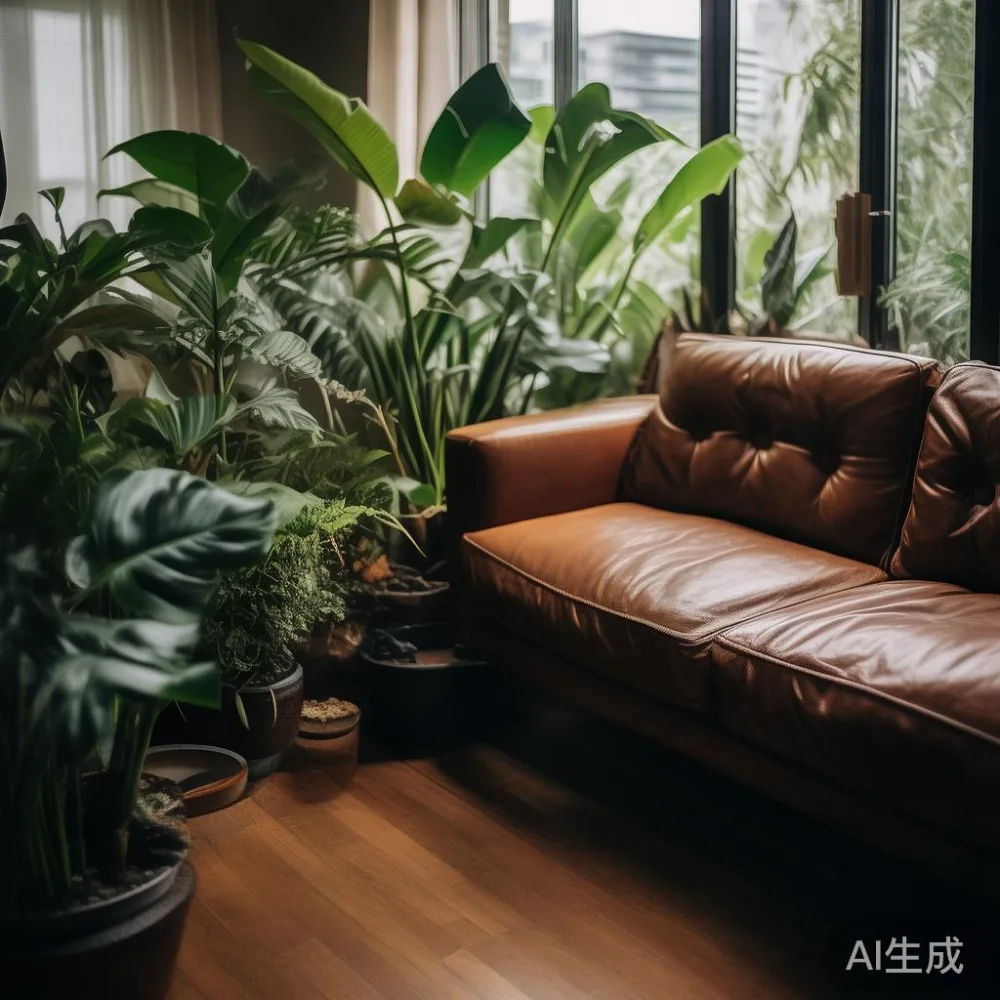
This comparison follows the journey of two typical purchases over 60 months: a 220 cm leather sofa and a 160 cm solid wood dining table. We compare an engineered veneer set with solid wood equivalents, including purchase price, maintenance, repair risk, delivery and eventual resale. The aim is to show what a lower initial payment can mean across 5 years, not to judge whether one material is suitable in every home.
What is the real 5-year difference between veneer and solid wood?
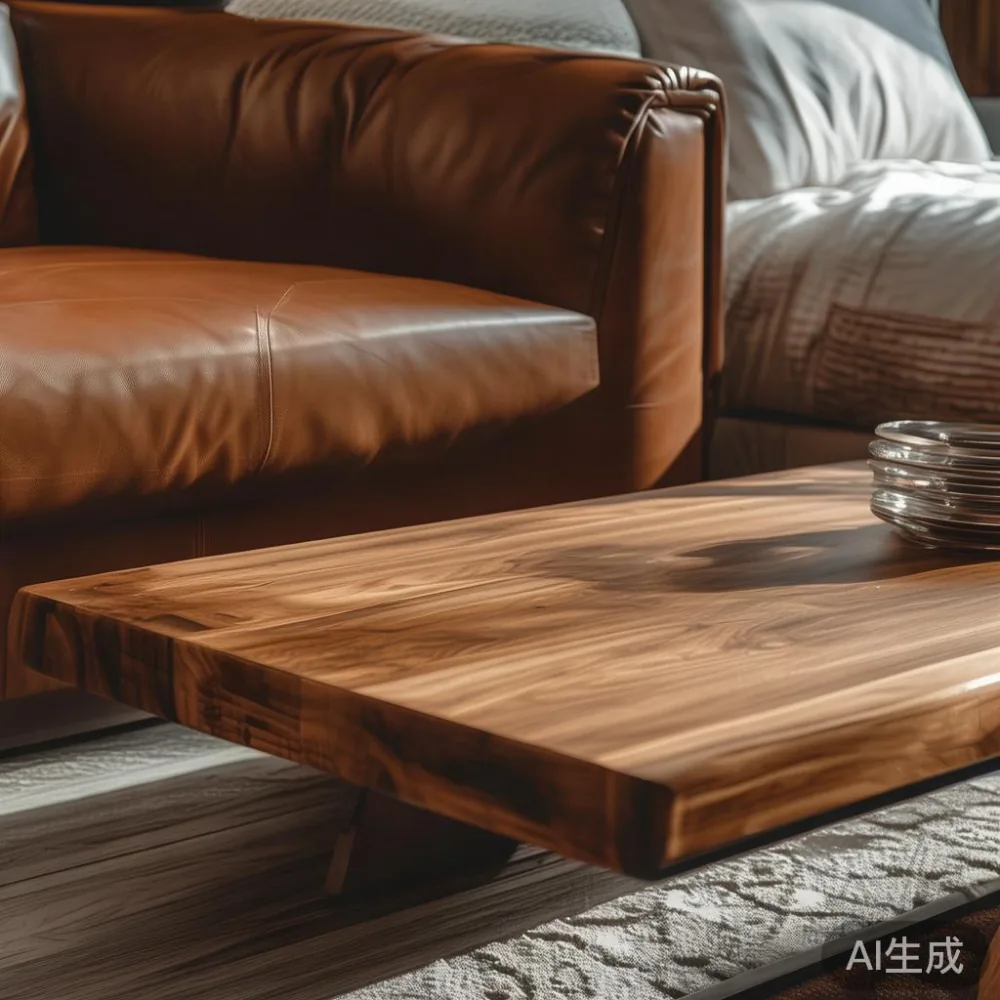
Veneer uses a thin layer of timber, often 0.6 mm to 1.2 mm, bonded to particleboard or plywood. A 160 cm dining table may contain a veneered top above a manufactured core, while a solid wood table uses timber through its visible top, commonly 20 mm to 40 mm thick. Veneer can reproduce attractive grain patterns at a lower cost, but its long-term behaviour depends heavily on the core, edge banding and protective finish.
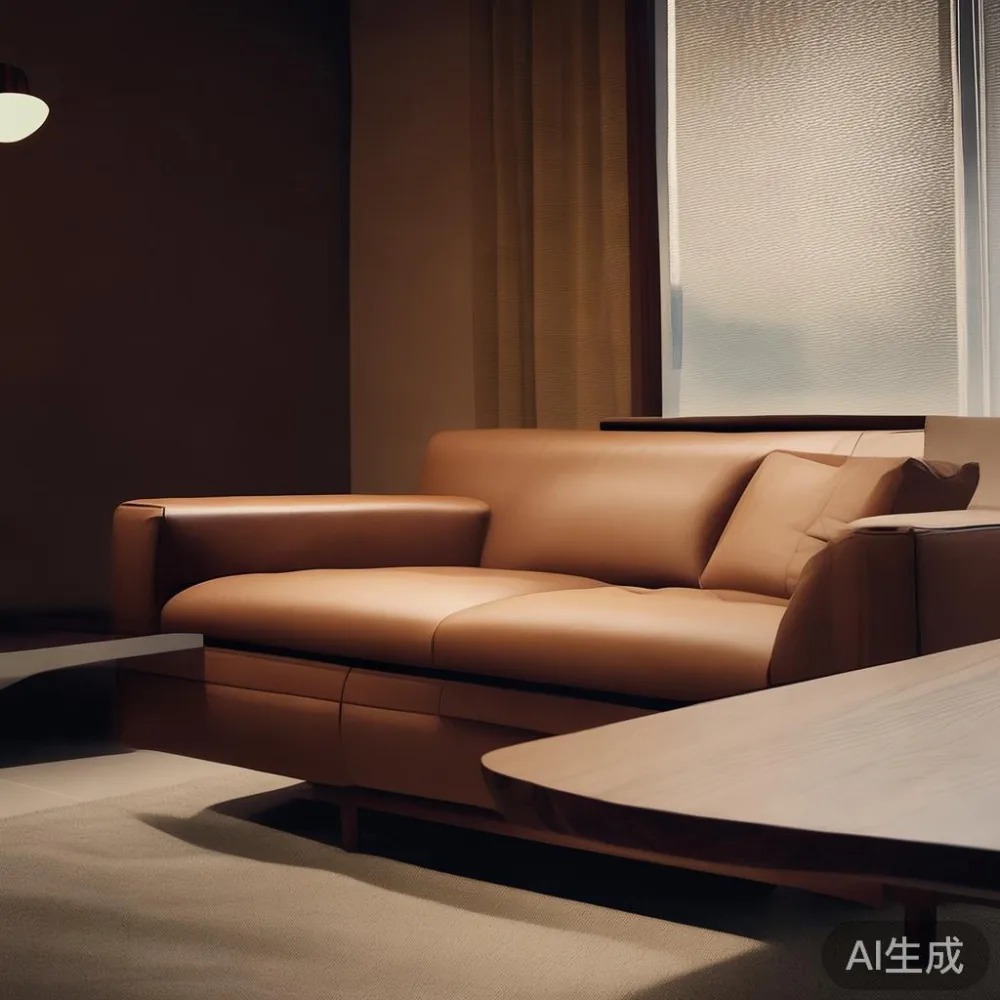
Solid wood is not automatically maintenance-free. It can move as humidity changes, develop small marks and require careful cleaning. Veneer can chip, peel or swell at exposed edges if moisture reaches the core. Both outcomes are avoidable with sensible products and care, which is why the 5-year calculation includes realistic maintenance rather than assuming zero upkeep.
Our example uses SGD figures before 9% GST unless stated otherwise. A veneered leather sofa is valued at SGD 1,580, and the solid wood sofa at SGD 2,480. The corresponding dining tables are SGD 890 and SGD 1,580. Delivery is estimated at SGD 80 for the sofa and SGD 60 for the table in Singapore. For residents collecting items from a workshop, van hire could reach SGD 120 to SGD 180 per trip once fuel, parking and loading time are counted.
The comparison also allows SGD 250 for restoration in Year 3. That is not a prediction that every item will fail; it is a planning allowance for an edge touch, a loose joint, a repaired frame or one damaged finish panel. Keeping a receipt matters because a repaired sofa or table has a different second-hand value from one with hidden damage.
How do I calculate the true cost of a leather sofa over 5 years?
Start with the payment, then add delivery, GST, consumables, repair and the value remaining after 60 months. For the sofa, the veneered example costs SGD 1,580 plus SGD 80 delivery and SGD 142.20 GST, giving SGD 1,802.20 before maintenance. The solid wood version costs SGD 2,480 plus SGD 80 and SGD 223.20 GST, giving SGD 2,783.20.
Allow SGD 180 over 5 years for leather conditioning and quarterly cleaning, plus SGD 250 for repair. The veneered sofa therefore reaches SGD 2,232.20 in used cost. The solid wood sofa reaches SGD 3,213.20. Add an estimated resale credit of SGD 420 for the veneer example and SGD 680 for the solid wood example. The net 5-year cost becomes SGD 1,812.20 and SGD 2,533.20 respectively.
That produces a difference of SGD 721 over 5 years, or about SGD 144.20 per year. It does not mean the lower-priced leather sofa always gives more value. If it is used by children, pets or frequent guests, its surface will need attention earlier. If the sofa is treated carefully and kept for 8 to 10 years, the difference can narrow.
The 220 cm sofa width deserves attention in Singapore. Some HDB corridors are about 90 cm wide, and older lift doors can measure only 80 cm to 85 cm across. A 220 cm sofa cannot turn through a 90 cm corridor without angling, and it must usually be brought in upright or partly dismantled. Measure the lift door, the lift car, landing turns and the flat entrance before ordering. A solid wood frame may be heavier than an engineered frame by 35 kg to 55 kg, so two people and a proper lifting strap can be necessary.
Can a veneer dining table cost less over 60 months?
For the 160 cm dining table, the veneered option costs SGD 890 plus SGD 60 delivery and SGD 80.10 GST, making SGD 1,030.10. The solid wood table costs SGD 1,580 plus SGD 60 and SGD 142.20, making SGD 1,782.20.
We allow SGD 160 for veneer treatment and edge care over 5 years, against SGD 220 for solid wood sanding and re-oiling. A SGD 250 restoration allowance applies to both examples because one chip can affect either product. The veneered table reaches SGD 1,440.10 in gross cost, while the solid wood table reaches SGD 2,252.20. After estimated resale credits of SGD 220 and SGD 470, the net figures are SGD 1,220.10 and SGD 1,782.20.
The solid wood table therefore costs about SGD 562 more over 5 years, or SGD 112.40 per year. The table is easier to move because of its shape, but a 160 cm top still needs clear door access. In a Punggol condo, lift reservations and protected corridor flooring should be checked before delivery. Allow 7 to 14 delivery days for a made-to-order solid wood dining table, compared with 3 to 7 days for a stocked veneer table.
One caution: “solid wood” should be verified rather than inferred from a photograph. Ask whether the tabletop is solid timber and whether the rails are hardwood, plywood or another engineered material. A table can have a solid top with mixed structural components. That is not necessarily poor design, but it should be reflected in the price and warranty.
What maintenance actually changes after 5 years?
Humidity is the main local issue. Singapore’s outdoor relative humidity commonly ranges from about 65% to 85%, with indoor conditions changing through the day. Solid wood may expand 2 mm to 5 mm across a 160 cm width during strong seasonal changes. Veneer mainly performs well if its edges and underside remain sealed; moisture exposure can cause swelling, bubbling or delamination that cannot be corrected with surface wax alone.
For a leather sofa, clean with a damp cloth and use a pH-neutral leather cleaner suitable for the finish. Test it on a concealed 10 cm by 10 cm area first. Keep the sofa at least 30 cm from a window or heat source. Condition the leather every 6 to 8 months rather than applying heavy product every month. The grain of a full-grain leather hide may show natural variation, while corrected-grain leather can be more uniform but may require more surface renewal.
For a solid wood dining table, wipe spills immediately, use coasters and felt pads, and avoid standing water. Place it away from air-conditioning vents that swing directly onto the surface. Inspect the underside twice each year for movement at the joints. Small marks can often be treated with a matching touch-up product; deeper splits may need filling and sanding.
Veneer needs careful edge inspection too. Lift the tablecloth and look for lifting along the banded edge. A dry surface can be cleaned, but a cracked band exposing brown particleboard is a stronger sign that replacement or professional recovery may be needed. Solid wood generally allows a damaged section to be filled and refinished more readily.
Which material makes more sense for a Bedok or Tampines home?
The answer depends on location, family routine and replacement expectations. In a rented Bedok flat with a narrow 85 cm lift and likely frequent turnover, a lighter veneer dining table may be practical. It is easier for one person to carry in sections and generally leaves more money available for a move. The trade-off is greater sensitivity to edge damage and heat.
In a Tampines HDB home used as a long-term residence, solid wood can suit buyers who value repairability and stable appearance. It also fits an American light luxury approach: substantial timber lines, restrained ornament and a warm finish. French light luxury tends to use curved profiles, shaped arms and more decorative details. A leather sofa with a solid timber base can support either style without making the room feel heavy.
For a Punggol or Tampines condo, the storage location matters. A full solid wood dining table may need a 170 cm by 90 cm storage recess, while a bed frame may require an upright 210 cm turning area. Do not plan around the showroom dimension alone. The delivered package should fit through the lift, corridors and bedroom door. Wardrobes should be checked in flat-pack form, and a nightstand needs only about 50 cm by 40 cm of floor space.
For style planning, compare a light luxury bed vs Japandi bed by structure rather than label. A solid wood platform bed may weigh 45 kg to 70 kg, while a slatted engineered bed may weigh 30 kg to 50 kg. The Japanese bed vs French provincial bed comparison is more about visual language than durability: Japandi usually uses clean planes and pale tones, while French provincial styling may add carved details that need careful humidity management.
A French provincial wardrobe can also benefit from an honest construction check. In this article, the required phrase MIDHILL French provincial wardrobe refers to that design context rather than a separate wardrobe purchase in the cost model. If considering one for a bedroom, verify drawer boxes, hanging rails, hinge movement and the moisture finish on the side panels.
Is a 5-year saving worth a lower resale value?
Not always. Our estimates assume the sofa is sold after 60 months with SGD 420 or SGD 680 of remaining value. A leather sofa with transferable protection may hold more interest than a damaged veneer example, but the leather condition, smell, frame and included cushions will affect the result. Solid wood does not guarantee a premium; an old, poorly maintained table can still be difficult to sell.
Buyers searching under 2000 European light luxury furniture should include delivery, GST and access in the comparison. A SGD 1,400 dining table delivered at SGD 200 is not the same offer as a SGD 1,400 table collected from a workshop. For a leather sofa, test the seat depth, back angle and arm height before buying. A 220 cm three-seat sofa may be too deep for a compact living room, where a 190 cm to 200 cm width can be more comfortable.
Last month I visited a customer’s Bedok flat to inspect a dining table that had been exposed to a damp windowsill. The top had a 6 mm veneer bubble near one corner. The customer assumed a light touch-up would solve it, but the edge band had already opened slightly. My colleague and I removed a loose section, dried the core for 48 hours and confirmed that professional repair would cost less than replacing the table. The experience reinforced why edge sealing and placement matter more than the number of coats described on a care label.
MIDHILL’s 10-year structural warranty gives buyers a defined point of reference for frames and joinery. It should not be confused with a promise that wood will never move or leather will never crease. The lifetime refinishing service is more relevant to a solid wood bed frame, dining table, wardrobe or nightstand than to a leather surface, because leather is a separate material with its own maintenance cycle.
How should I choose between the two options?
Choose veneer when the budget is limited, the item may move within 5 years, the environment is controlled and the buyer accepts a lower repair tolerance. Choose solid wood when the furniture is expected to remain in one home for 8 to 12 years, the finish can be renewed, and long-term repairability matters.
For the dining table, our 5-year difference is approximately SGD 562 before resale and SGD 562 after the sample resale credits. For the leather sofa, it is approximately SGD 721 after the sample resale credits. Those figures can change by several hundred dollars according to access, care and the actual sale price at Year 5.
Ask for the delivered dimension, unpacked weight, core specification, finish details, warranty exclusions and return terms before paying. For access, photograph the lift doors and corridor turns. Measure the route in centimetres, not by eye. For delivery, allow 7 to 14 days for made-to-order furniture and 3 to 7 days for items held in stock. In Singapore, 9% GST is added to most purchases, while a qualifying company may be able to claim input GST, so check the receipt rather than assuming every consumer pays the same amount.
Style can narrow the decision without distorting the numbers. A Modern light luxury dining table in pale oak may suit a compact condo, while a solid oak version with a darker finish may create more contrast. A light luxury accent chair beside a solid wood bed frame can add texture without adding another large object to the room. If a marble table is being considered for the same space, remember that its weight and brittleness create different handling costs; a 120 cm marble top may require 3 people and a rated lift.
The practical verdict is clear enough: veneer can reduce the first cheque, while solid wood gives greater scope for repair and renewal. Over 60 months, neither cost disappears, but the maintenance pattern differs. Measure the home, inspect the construction and choose the option whose care demands match the way the family will actually live.