Right-Sizing a Leather Sofa for a Singapore HDB Living Room: A Practical Guide
Choosing a leather sofa for a Singapore HDB flat sounds simple until the delivery truck arrives at your block. I learned this the hard way last month when I helped a friend in Punggol HDB measure up for a three-seater. The lift opening was 210 cm tall and 110 cm wide, the sofa carton was 218 cm long, and we spent forty minutes tilting the box in a corridor that was only 1.2 m wide. The piece eventually made it in, but the experience reframed how I think about sizing forever. This guide walks through the numbers that actually matter for HDB and condo living rooms in Tampines, Bedok, Punggol, and the rest of the island, so your next leather sofa arrives without drama.
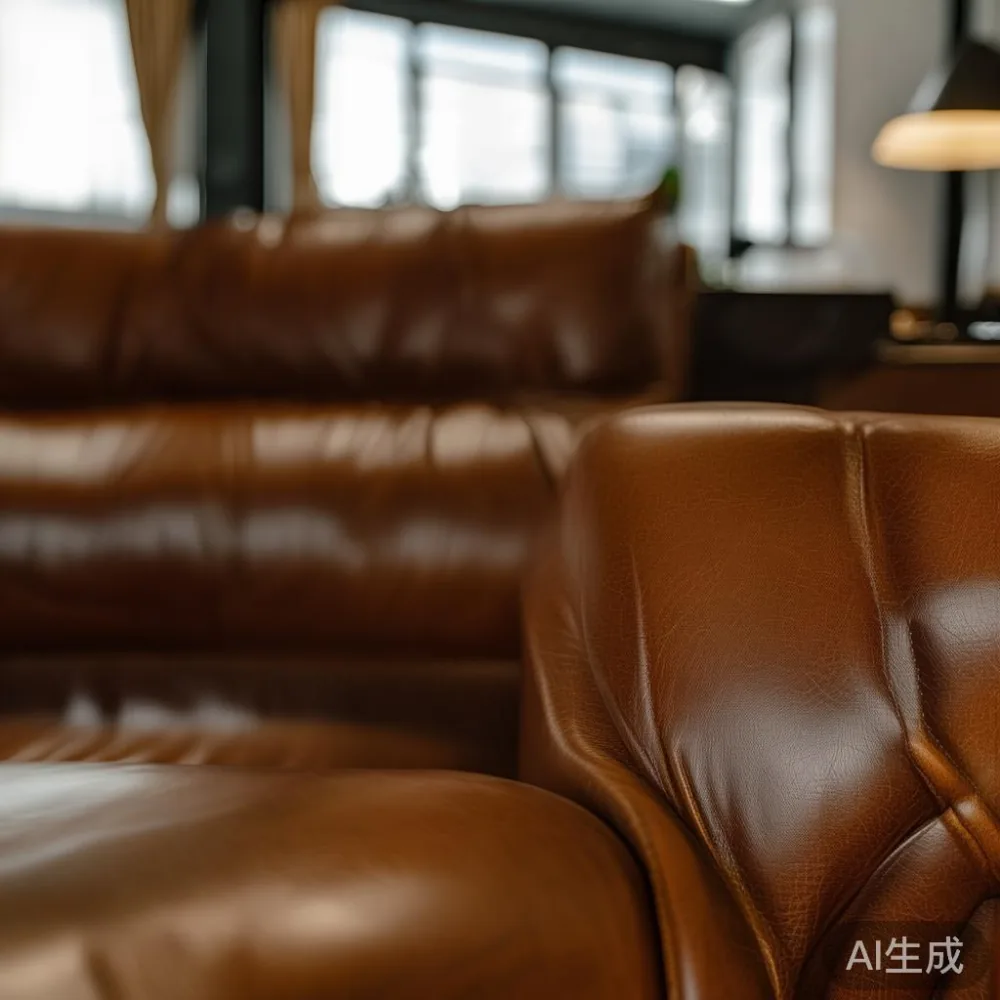
What dimensions should I measure before buying a leather sofa for an HDB flat?
Start with the path from the lift to your door, not the living room. Most Singapore HDB lift cabins measure roughly 2.1 m in height with door openings between 80 cm and 110 cm. Service lifts in older blocks around Bedok and Tampines can be tighter, around 1.9 m tall. Corridors are typically 1.2 m to 1.5 m wide, and right-angle turns at stairwells can reduce usable turning radius to about 1.8 m. Write down three numbers before you browse: lift door width, corridor width, and the diagonal of your smallest hallway turn. Then measure your living room wall length (most 4-room HDB living walls run 2.9 m to 3.4 m), ceiling height (about 2.6 m for newer BTOs), and the clear floor space after your TV console and dining table placement.
A practical rule of thumb: your sofa footprint should occupy no more than 60% of your usable living wall. In a 4-room BTO with a 3.1 m living wall, that leaves roughly 1.86 m for a sofa. A 180 cm two-seater fits with room to breathe; a 220 cm three-seater fits snugly but leaves only 45 cm per side for a side table. If you are browsing for sale European furniture on sites that ship to Singapore, the cartons are usually 10 to 15 cm taller and 8 to 12 cm wider than the assembled piece, so confirm carton dimensions, not just product dimensions, before you commit.
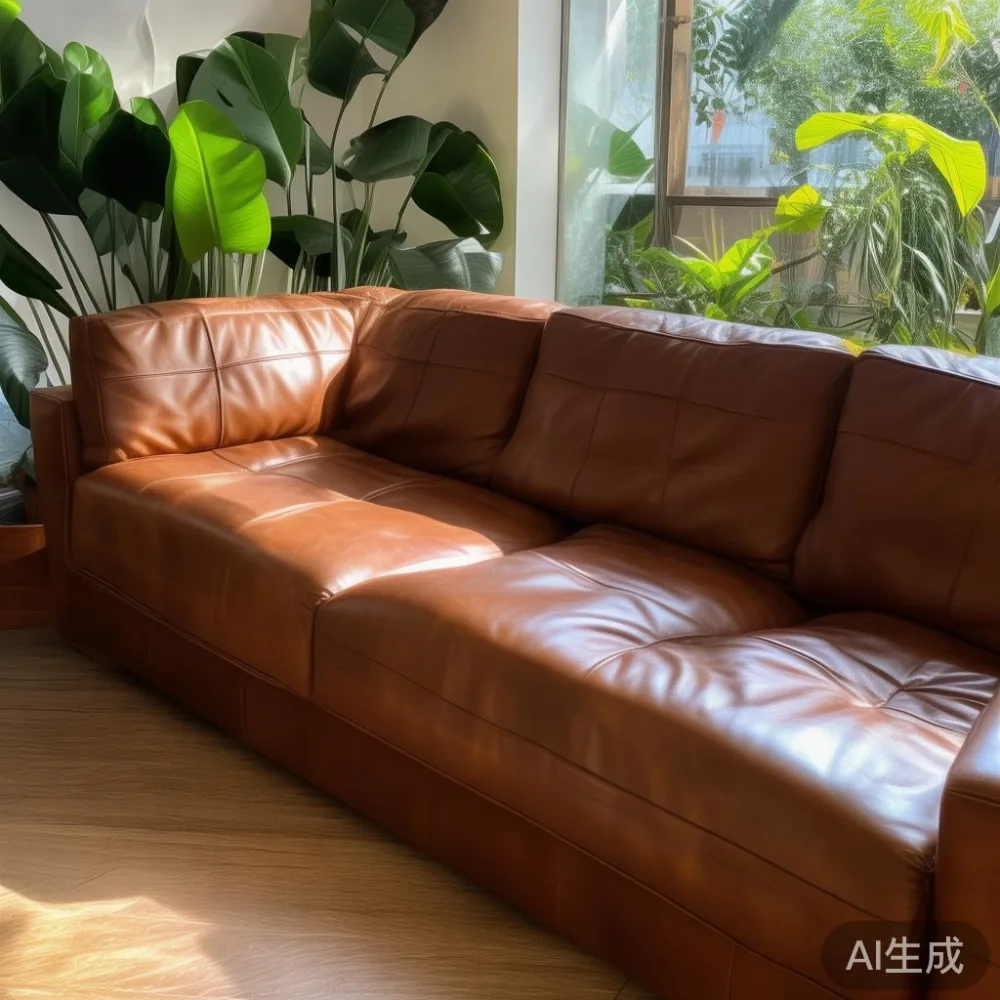
How do I match sofa size to common HDB layouts in Tampines, Bedok, and Punggol?
Layout matters as much as raw size. A 4-room HDB in Punggol typically gives you a living-dining rectangle of about 4.2 m x 3.0 m once you place a six-seater dining table against the dry kitchen wall. A 5-room flat in Tampines often opens up to a 4.8 m x 3.2 m living area. In both cases, the cleanest setup is a three-seater sofa (210 cm to 230 cm) on the longest wall, a 120 cm x 70 cm coffee table in front, and a 70 cm to 80 cm TV console on the opposite wall, leaving a walking path of 75 cm to 90 cm between the coffee table and the sofa. That single corridor is what keeps the room from feeling cramped after you add a rug and a floor lamp.
Condos follow a different rhythm. A 1-bedroom condo in Bedok might offer a 3.4 m x 3.0 m living zone where a 160 cm to 180 cm loveseat is the smarter pick. A 3-bedroom condo around Punggol or the upcoming Tampines North can stretch to 4.5 m or wider, which finally justifies a 260 cm to 280 cm sectional with a chaise on either end. The catch is that sectional cartons often exceed 230 cm, so confirm with your supplier whether the sofa splits into two pieces. Most quality makers, including MIDHILL with their solid wood sofa range, design their frames so the chaise can detach, which solves the lift problem entirely.
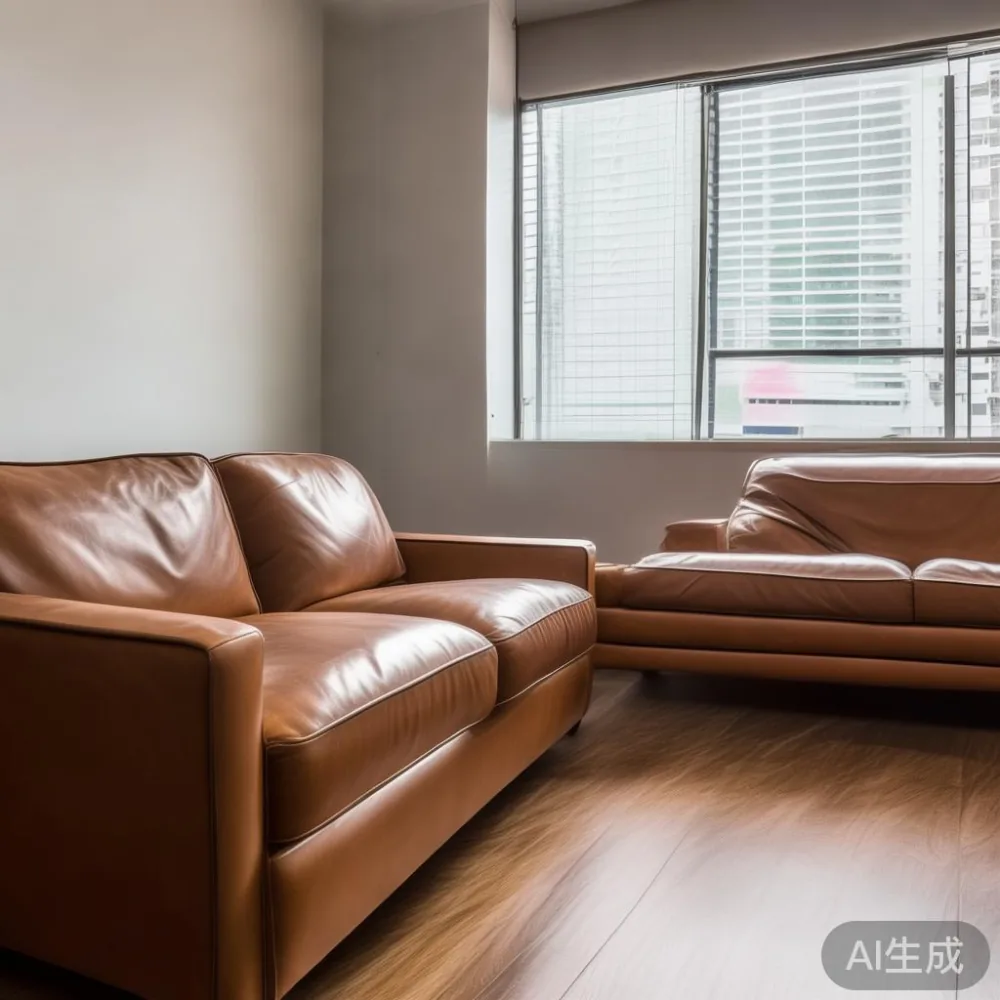
Does a leather sofa actually fit smaller HDB rooms, or is fabric smarter?
Leather sofas carry a reputation for being bulky, but the size of the frame has very little to do with the upholstery. A compact two-seater leather sofa measures 150 cm to 170 cm wide and seats two adults comfortably at 90 cm seat depth. Fabric sofas in the same size class are usually within 2 cm to 3 cm. The real differences are visual weight and maintenance. A dark-toned leather sofa reads as a single visual mass, which can make a 4-room BTO feel more compact than a pale fabric equivalent. A lighter tan or stone-colored leather reflects more light and helps the room breathe, which is why most interior designers in Singapore steer HDB clients toward mid-tone leathers like taupe, cognac, or olive.
If you are comparing a Japanese bed vs French provincial bed for your bedroom and a leather sofa for the living room, the same logic applies: the silhouette should match the room scale. A Japanese bed sits low (frame height 20 cm to 30 cm) and visually opens a 10 sqm bedroom, while a French provincial bed with carved headboards dominates a similar space. Pair whichever bed style you pick with a sofa whose arm height and back height echo that line, so the whole apartment feels like one design language rather than a clearance bin.
What about pricing, GST, and the real cost of owning a leather sofa in Singapore?
A genuine leather sofa from a Foshan workshop costs noticeably less than a European or American equivalent once you account for shipping, GST, and warranty. Entry-level full-grain leather two-seaters start around SGD 1,200 to SGD 1,800 landed, mid-range three-seaters with solid wood frames run SGD 2,200 to SGD 3,800, and full four-seater configurations with chaise and recliners land between SGD 4,500 and SGD 7,500. Singapore adds 9% GST on top of the declared value above SGD 400, so a SGD 3,000 sofa costs SGD 3,270 at checkout. Free shipping kicks in around SGD 350 to SGD 500 for most direct-from-factory brands, which matters when you live on the 14th storey of a HDB block in Tampines and the courier charges per floor.
Look past the sticker price. A solid wood sofa with kiln-dried hardwood frame should carry at least a 10-year structural warranty, and the supplier should offer lifetime refinishing or at least 5 years of leather conditioning service. MIDHILL publishes both of these on every leather sofa they ship from their Foshan factory, which is unusual for the category. Cheaper frames use plywood or rubberwood with veneers that warp within two humid Singapore summers, so the SGD 800 you save upfront usually disappears by year three when a leg cracks or the leather starts peeling at the seams.
How should I plan delivery day so the sofa actually reaches my living room?
Delivery day is where most sizing mistakes show up. Confirm three things before you pay: carton dimensions in centimetres, gross weight in kilograms, and whether the sofa arrives assembled or in two or three boxes. A three-seater leather sofa typically weighs 65 kg to 95 kg unpacked, and the carton adds another 5 kg to 10 kg. Two delivery men can usually carry a single box up to 80 kg through a standard lift, but anything over 100 kg often requires a third handler, which suppliers in Singapore quietly add at SGD 80 to SGD 150 per trip. Ask for the carton measurements against your lift opening, and ask whether the supplier has delivered to your specific block before. Some older blocks around Bedok Reserve have lift doors that swing inward and reduce the clear opening by another 10 cm.
My Punggol friend's sofa arrived in two boxes: 218 cm x 95 cm x 75 cm and 145 cm x 95 cm x 75 cm. The larger box did not fit through the lift door diagonally even with both doors held open, so the team used the service lift, which was 60 cm wider and 30 cm deeper. If your block only has one passenger lift, measure the diagonal of the lift interior, not just the door. The diagonal of a 1.5 m x 2.1 m lift is roughly 2.58 m, which sounds generous until you remember that a sofa carton needs 10 cm of clearance on every side to avoid scraping the leather.
How do I coordinate the sofa with a dining table, bed frame, wardrobe, and nightstand without breaking the style?
A leather sofa anchors the living room, but the rest of your furniture pulls the apartment together. In a 4-room HDB you usually have a dining table for four to six (140 cm x 80 cm for four, 160 cm x 90 cm for six), a queen or king bed frame in the master bedroom (a queen bed frame runs about 160 cm x 210 cm), a wardrobe between 180 cm and 240 cm wide, and one or two nightstands around 50 cm x 40 cm. A marble table in the dining zone (160 cm x 85 cm with a sintered stone top, for example) pairs well with a cognac or espresso leather sofa because both materials share a warm undertone. Avoid mixing a cool grey marble top with a warm tan leather unless you add a grey rug and grey curtains to bridge the two palettes.
If you are shopping for for sale European furniture with French light luxury cues (think curved silhouettes, brass-tipped legs, and cream-toned upholstery), keep the leather sofa in the same family. A camel or sand-colored three-seater with rolled arms, paired with a marble dining table and a fluted bed frame, reads as American light luxury. A cleaner, sharper profile with slim metal legs and a stone-grey or charcoal leather reads as post-modern light luxury and suits newer BTOs in Punggol and Sengkang. The frame material matters too: a solid wood sofa base in ash or walnut ages far more gracefully than engineered wood, and you can sand out a scratch after five Singapore years with a 120-grit pad and a fresh coat of oil.
Can I make a small HDB living room look more spacious with the right leather sofa?
Yes, and most of the trick is in the legs. A leather sofa with a 12 cm to 15 cm leg clearance visually floats above the floor and lets light travel under it, which adds about 20 cm of perceived depth to a 3 m living room. A skirted leather sofa with legs hidden behind a fabric panel cuts that perception in half. Pick slim tapered legs in matte brass or blackened steel if you want a modern feel, or turned wooden legs in walnut if you want something softer. Seat depth is the second lever: 90 cm to 95 cm is generous for lounging but eats floor space; 85 cm is the sweet spot for most HDB layouts and still supports an average-height adult.
Cushion fill also changes the room. High-resilience foam keeps a tight silhouette and suits modern and post-modern light luxury looks, while down-wrapped foam slumps softly and reads as more traditional. In a 4-room flat with strong afternoon sun from a west-facing window, leather can heat up, so place the sofa at least 1 m away from the window or add sheer linen curtains to diffuse the light. A leather sofa positioned under direct afternoon sun in Tampines or Jurong will fade 10% to 15% over five years if it is unprotected, but a simple curtain or blind fixes that within minutes of setup.
Where can I find under 2000 Mid-century modern furniture that pairs well with a leather sofa?
Mid-century modern pieces pair unusually well with leather because the walnut and teak tones of the era sit in the same warm palette. Under 2000 Mid-century modern furniture is harder to find in Singapore retail, which is why direct-from-Foshan makers like MIDHILL have become a quiet favourite among local interior designers. A walnut-tone solid wood sofa frame, a 140 cm walnut dining table, and a 180 cm fluted bed frame can all land below SGD 4,000 combined if you order during a factory promotion, and you skip the retail markup that pushes the same look past SGD 6,000 at local showrooms.
When you shop the mid-century category, look for solid wood sofa frames with mortise-and-tenon joinery rather than staples, full-grain leather (the surface should show natural grain and small scars), and sintered stone or marble dining tops rather than glass. A marble table in the dining zone plus a walnut bed frame in the bedroom plus a leather sofa in the living room is a triple anchor that holds the whole apartment together, even if the nightstand, wardrobe, and curtains come from cheaper sources. The rule of thumb: spend on the three largest pieces, save on the small ones.
What about styling a leather sofa around a Japanese or Japandi bed theme?
Many Singapore couples now choose a Japanese platform bed or a Japandi-inspired low-profile frame for the master bedroom, then try to echo that calm aesthetic in the living room. The translation works better than people expect. A low-profile leather sofa (seat height around 38 cm to 42 cm) in stone grey, sage, or dark olive picks up the muted tones of a Japanese bed, while slim ash wood legs echo the light timber of a Japanese platform frame. If you are deciding between a Japanese bed vs Japandi bed, the Japandi version typically adds a slightly taller headboard (60 cm to 80 cm) and a touch of warmth through wool or linen upholstery, which lets you push the leather sofa a little richer in tone without breaking the calm.
The styling question of how to style Japanese bed in apartment spaces usually comes down to negative space. Leave at least 40 cm of floor visible around the bed, hang a single wide piece of art above the headboard instead of a gallery wall, and keep the nightstand surface mostly clear. Repeat that same restraint in the living room: one leather sofa, one coffee table, one floor lamp, one rug. The result is a quiet, cohesive apartment rather than two rooms that argue with each other.
How do I style a light luxury bed frame to match the leather sofa?
Light luxury, whether French, American, or post-modern, depends on three signatures: a soft neutral palette, one piece of brass or gold-toned metal, and a single curved or upholstered silhouette. How to style light luxury bed in room settings that already contain a leather sofa means repeating those signatures in both rooms so the eye travels smoothly through the apartment. If the sofa has brass-tipped legs, the bed frame should carry brass at the headboard detail or the nightstand handles. If the sofa is in a warm taupe, the bedding should pick up that undertone with linen sheets in oat or sand.
For a French light luxury take, choose a velvet-upholstered bed frame with a gently curved headboard and brushed brass legs, then pair it with a cognac leather sofa that has matching brass feet and rolled arms. For an American light luxury feel, swap velvet for tailored linen in cream or dove grey, and pick a leather sofa with a tufted back and dark walnut legs. Post-modern light luxury is the cleanest option for compact HDB layouts: sharp lines, no tufting, slim metal legs, and a leather sofa in stone grey or charcoal.
How do I decide between two similar sofa sizes for the same HDB living room?
When a 200 cm and a 220 cm three-seater both fit your lift and your wall, the decision usually comes down to three small details: how many adults sit there daily, how often you host overnight guests, and how much floor space you want to keep around the coffee table. If two people use the sofa 80% of the time, the 200 cm version leaves you 20 cm of extra breathing room and a more generous walkway. If you host family from Bedok or Malaysia every month, the 220 cm version gives your guests proper elbow room. If you entertain six or more, skip both and consider a 240 cm to 260 cm three-seater with a chaise, which doubles as a single bed and removes the need for a spare bedroom mattress.
Final checks before you pay: confirm the leather grade (top grain or full grain, never split leather), ask for a moisture reading on the solid wood frame (kiln-dried wood reads below 12%), request a swatch in natural Singapore light, and read the warranty line by line. A 14-day return window protects you if the leather tone looks different in your living room than on your phone screen, and a 10-year structural warranty protects you for the decade of humid Singapore summers ahead. With those numbers locked in, the right-sized leather sofa will arrive, fit through the lift, slide along the corridor, and quietly anchor your HDB living room for years to come.