Solid Wood Price Dynamics in Singapore Leather Sofas
Solid wood furniture is often sold on a simple promise: timeless material, dependable construction and a look that suits both a Tampines HDB flat and a Punggol condo. The promise is accurate, but it does not explain the full price. Two dining tables made from solid wood can differ by several thousand dollars because board species, thickness, joinery, finish, hardware, design and logistics all carry a cost.

For Singapore buyers, the practical question is not simply whether a piece is “solid wood.” It is which parts are solid wood, how those parts are built, how large the finished item is and whether it can pass through your lift and corridor. A narrow entry does not make timber cheaper, but it can affect the design, delivery method and installation choices.
This guide examines the real cost drivers behind a solid wood sofa, bed frame, dining table, wardrobe, nightstand and marble table. It also considers the difference between mass-produced furniture and small-batch light-luxury pieces shaped by American light luxury, French light luxury or post-modern light luxury.
Why does the same solid wood furniture cost so much more?
The short answer is that “solid wood” describes a material category rather than a complete specification. A manufacturer may use solid hardwood for visible faces and lower-grade solid timber for hidden components. Veneers may also appear on structural panels. None of these approaches is automatically poor; each has a legitimate place when the construction and price are properly disclosed.
Timber price is affected by species, grade, moisture treatment and board dimensions. Oak, walnut, ash, teak and rubberwood do not behave as interchangeable commodities. A wider solid board is generally harder to mill, dry and flatten than a narrow strip, and defects cannot always be concealed. Thickness adds material and machining time: a 25 mm dining table top uses more wood than a 15 mm top, while a 40 mm table edge adds still more.

Construction is another major factor. Mortise-and-tenon joints, dowels, screws and concealed metal brackets distribute load differently. A bed frame with a reinforced centre rail and properly sized joints may require more timber and several hours of assembly. A wardrobe needs uprights, shelves, backing panels, door frames and hardware that remain aligned after years of daily use. The price of the visible board is only one line in the calculation.
Design also has a labour cost. French light luxury often favours restrained profiles, shaped edges, tapered feet and finely proportioned storage. American light luxury tends toward generous upholstered forms, clean lines and substantial-looking frames. Post-modern light luxury may introduce asymmetric details, mixed materials or more complex machining. None is defined by decoration alone; the price comes from resolving the geometry and producing it consistently.
Finish is easy to overlook. Paint can disguise lower-grade timber and simplify production, while a natural oil, matte lacquer or stained finish may require sanding, sealing, colour matching and careful repair. A light-luxury finish often requires more passes than a straightforward painted surface. It also influences the lifetime refinishing promise: some surfaces can be restored more readily than others.
How much do wood species, thickness and joinery affect the price?
Material cost can vary by several multiples, but there is no honest universal rate because timber grades and supplier terms move. A practical Singapore buyer should compare the specification rather than rely on a vague wood name. Ask whether the entire dining table is solid timber or only the top, whether the wardrobe carcass and shelves are solid wood, and whether the bed frame uses solid wood slats or another support system.
For a dining table seating 6, a top thickness of roughly 20–30 mm is common in solid wood furniture. Heavy slab or post-modern designs may use 40–60 mm sections. Under a 10-year structural warranty, the manufacturer should still explain expected movement, care and environmental conditions. Wood remains sensitive to humidity; a stable Singapore interior usually sits around 55–70% relative humidity, while direct air-conditioning airflow can dry exposed surfaces.
Joinery affects durability and assembly time. A mortise-and-tenon rail can carry substantial load without relying on a single screw. Dowelled joints can work well in lighter frames. Brackets may make sense in flat-pack wardrobes designed for frequent disassembly. In a leather sofa, the timber frame must support the seat, back and arms while accommodating the flex of upholstery. A frame assembled only with thin dowels may feel adequate on day 1 but develop movement after 3–5 years of use.
Hardware should be judged by function, not by its decorative finish. Hinges rated for 25–35 kg are sensible for many solid wood cabinet doors; larger wardrobe doors may need adjustable 35–50 kg hinges. Drawer runners supporting 30–50 kg are appropriate for many domestic storage applications. The cost is modest compared with the cabinet, yet poor hardware can spoil daily use and make servicing frustrating.
What does a quality leather sofa add to the final price?
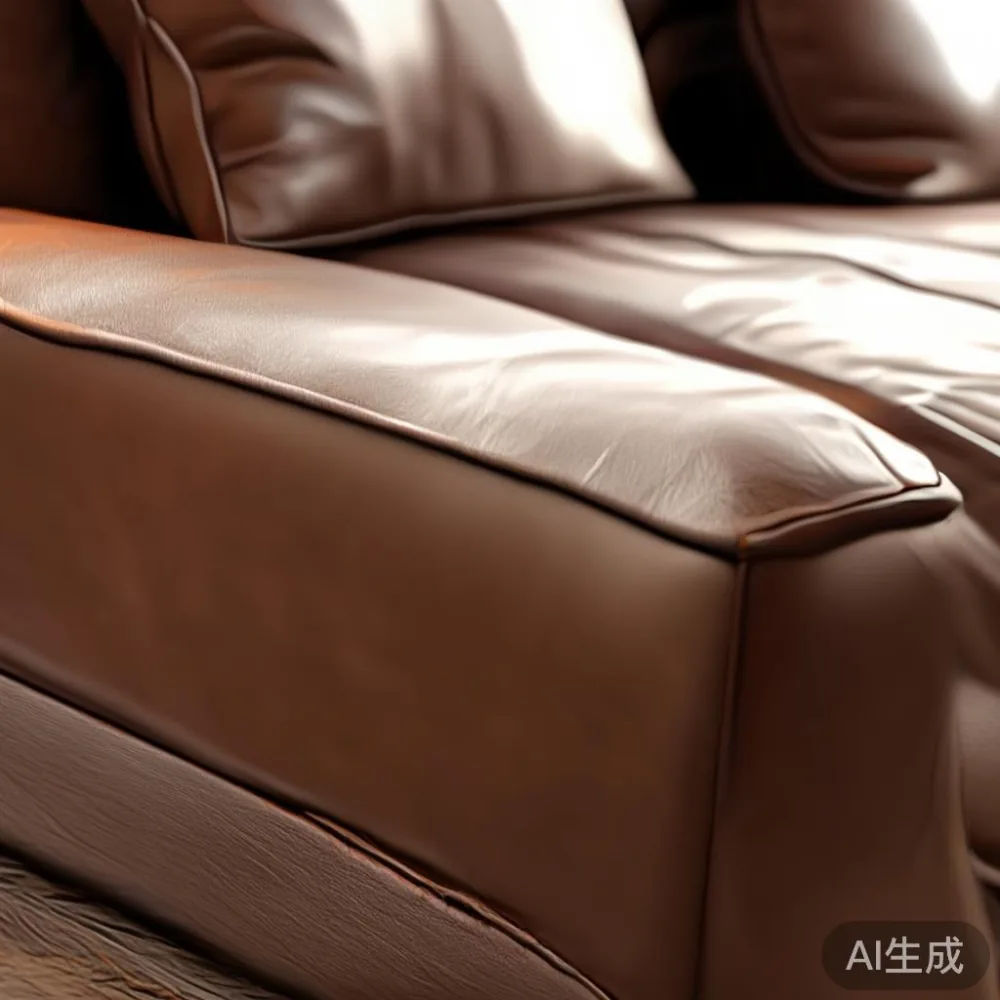
For a solid wood sofa, upholstery contributes to both cost and longevity. Genuine leather is not one product with one price. Full-grain leather retains more of the hide’s natural surface, while corrected-grain leather is sanded and coated for a more uniform appearance. Thickness matters: a 1.2–1.4 mm hide generally feels substantial, although performance depends on the hide, finish and construction rather than thickness alone.
Cutting patterns affect yield. A tightly matched set of panels can leave more hide unused than loosely coordinated pieces, so precise cutting and skilled sewing can raise the price of a leather sofa while improving visual consistency. However, oversized cutting can waste material without improving comfort, and elaborate tufting can require additional labour. Buyers should assess seam alignment, support and comfort, not simply the number of stitches.
The frame and suspension system remain central. A kiln-dried hardwood frame, properly spaced supports and a tested suspension system should be specified. The seat height of many sofas is around 40–45 cm, with a usable seat depth of roughly 55–65 cm. For HDB living rooms, check that the sofa fits the intended wall and still leaves a practical walkway of at least 60 cm where possible.
Leather also needs different care from fabric. Dust the sofa weekly, wipe spills promptly and keep it away from prolonged direct sunlight. Condition the leather every 6–12 months if the finish permits. A 3-seat leather sofa can weigh 70–120 kg depending on its timber and suspension construction, so moving it is not a casual task.
For visual research, French sofa gallery photos can be useful for studying silhouette, cushion proportion and leg placement, although a staged image cannot confirm frame quality. Anyone comparing options can search for the best French sofa for 2026, then use the photographs as a style reference rather than a technical specification. A showroom or supplier should provide current samples, dimensions and warranty terms.
How should I compare dining tables, wardrobes and bed frames for value?
Compare furniture using a written specification. For a dining table, record the dimensions, top thickness, timber species, finish, extension method and supported load. A 180 cm table can seat 6 people at about 60 cm per place, while a 220–240 cm model may seat 8. Solid wood tops can warp if oversized support systems are not engineered correctly; the apron, legs and bracing must work together.
For a bed frame, compare the external width with the mattress size. A queen mattress measuring 152 cm wide may require a frame around 158–166 cm wide to allow for the frame structure and side clearance. Confirm the internal mattress length, centre-rail support and slat spacing. A slat gap of roughly 5–8 cm can provide support for many foam mattresses, but the manufacturer should specify compatibility.
When considering how to choose French bed, focus on the platform, clearance and room dimensions rather than the label. A low French-style platform may suit a compact bedroom, but the mattress needs adequate support. In a Tampines HDB flat, a bed with a high headboard can visually shorten the room, so allow at least 55–70 cm of circulation beside the frame where possible. For European visual references, the phrase how to style European light luxury bed in apartment appears often in design notes, but styling cannot compensate for unsuitable clearances.
A wardrobe should be priced by usable capacity and construction. Record the internal width, depth and height, the number and positions of shelves, hanging rails and drawer boxes. A 180 cm-wide unit may look generous but hold little if deep drawers or thick shelf boards consume space. A practical guide to how to style French wardrobe in apartment should account for door swing, skirting clearance and lift access. Choose wall-mounted sliding storage only when the mechanism has proper floor guidance and service access.
Nightstands are small, but their material and hardware still affect price. A 45 cm-wide solid wood nightstand with one drawer may weigh 15–25 kg. Soft-close slides add cost but improve daily use. The drawer should run smoothly when partially loaded, and the top should be stable enough for a 2 kg lamp and a 250 ml glass of water.
Are delivery, lift access and GST included in the furniture price?
In Singapore, displayed prices may include GST, but the invoice must state this clearly. GST is currently 9%. A product listed at SGD 3,000 before GST becomes SGD 3,270 after tax. A responsible comparison should also include delivery, installation, removal of packaging and any stair or lift surcharge.
Measure the route before ordering. Many HDB and condo lift doors are around 80–90 cm wide, with lift cars that restrict turning clearance. A 180 cm dining table cannot enter as one rigid piece unless it has removable leaves and detachable legs. Check the longest narrow corridor, the width of doorways, the turn into the lift and the route to the unit. A delivery crew may be able to turn and tilt furniture that appears impossible from a floor plan, but they should assess the route with photographs and measurements first.
Stairs and older walk-ups can add time and labour. Standard furniture delivery might take 7–14 days after production, while made-to-order pieces can require 4–8 weeks. The supplier should give a written dispatch estimate and clarify whether the delivery day is a range or a fixed date. Installation may add 30–90 minutes for a bed, 1–3 hours for a large wardrobe and roughly 30–60 minutes for a dining table.
Protection matters too. A solid wood dining table should arrive with adequate corner, top and leg protection. Wardrobes need edge guards, and a leather sofa should have fitted covers or reinforced protective wrapping. Scratches discovered after the packaging is removed create disputes, so photographs of the delivered condition should be taken before assembly.
MIDHILL states that orders over US$350 qualify for free shipping, and its export history to more than 15 countries suggests an established international packing process. International shipping should still be checked against the Singapore delivery terms; a global free-shipping threshold does not automatically mean a free lift-to-room service in Singapore.
What does light luxury mean in solid wood furniture?
Light luxury is not a fixed material or price band. It usually refers to controlled proportions, tactile materials and restrained detailing rather than exaggerated ornament. A French light-luxury dining table may have a clean rectangular top, softened corners and tapered legs. An American light-luxury bed frame may use broad upholstered surfaces and visually substantial rails. Post-modern light luxury may pair solid timber with shaped supports, stone accents or deliberately contrasting geometry.
A marble table illustrates the difference between surface and structure. The marble top may be 12–20 mm thick and weigh 60–150 kg depending on dimensions and pattern. Its base must be designed around that load; thin generic legs are not enough. Marble also reacts differently from wood, requiring careful handling and level support. Its price includes stone selection, templating, edge processing and the engineering of the base.
At MIDHILL, the 2008 operating history, 10-year structural warranty and lifetime refinishing service provide context for the price. These are meaningful commitments, although the warranty document should define coverage, exclusions and claim procedures. Lifelong refinishing is especially relevant to solid wood surfaces, but it may not include leather replacement, stone repair or accidental damage. Free shipping over US$350 and a 14-day returns period also need to be read alongside delivery, assembly and return-condition terms.
I visited a furniture workshop last month and watched a dresser move through assembly. The visible timber cost represented only part of the quotation. The drawer boxes were fitted by hand, the runners were checked under load, and each joint received several sanding passes. A technician spent around 35 minutes on the drawer alignment that a less experienced worker might have rushed in 10 minutes. That observation explains why similarly named furniture can carry different prices.
Buyers should look for evidence of controlled work: tolerance checks, finish samples, labelled components and clear instructions. Ask to see the frame, underside, drawer interior and hardware. A good showroom explains why a piece costs what it costs and where cost can be reduced without compromising daily performance.
How can Singapore buyers judge whether a price is fair?
Begin with function, then material, construction, dimensions and service. A fair price is not the lowest quotation; it is the one that provides the expected use over 10 years or more. Compare at least 3 written quotations and check that each covers GST, delivery, assembly and after-sales support.
For a leather sofa, sit on it for at least 10–15 minutes if possible. Check whether the seat supports the hips without forcing a slouch, and whether the back angle suits the household’s posture. Confirm that the frame, suspension, leather specification and cushion density are documented. For a dining table, inspect the underside and joins rather than only the top. For a wardrobe, open every drawer and door. For a bed frame, review the slat system and centre support. For a nightstand, check drawer movement. For a marble table, assess the base connection and top support.
Care requirements should match the household. Solid wood needs regular dusting, prompt spill removal and protection from heat. Leather needs gentle cleaning and periodic conditioning. Marble needs pH-neutral products and should not be exposed to acidic spills. If a supplier offers a 14-day return period, confirm whether assembled or used furniture can be returned, how removal and return freight are handled and whether a restocking charge applies.
Finally, retain the dimensions at the point of purchase. Even a 5 cm error can affect a corridor turn or a bedroom route. For coordinated interiors, styling guides on Rustic for guest room can help with secondary pieces, but the primary bed frame, wardrobe and nightstand should still be specified for the actual room.
The price of solid wood furniture is driven by a stack of decisions: timber source and grade, board thickness, joint design, suspension, hardware, finish, tolerances, design development, quality control, packaging and delivery. Once those elements become visible, a quotation can be judged with realistic expectations. The most useful question is not “Is this the most affordable?” but “Does this specification support the way my household will use the piece, and does the supplier stand behind it for the long term?”